
Plant profile
Black mulberry
Morus nigra
Also known as mulberry.
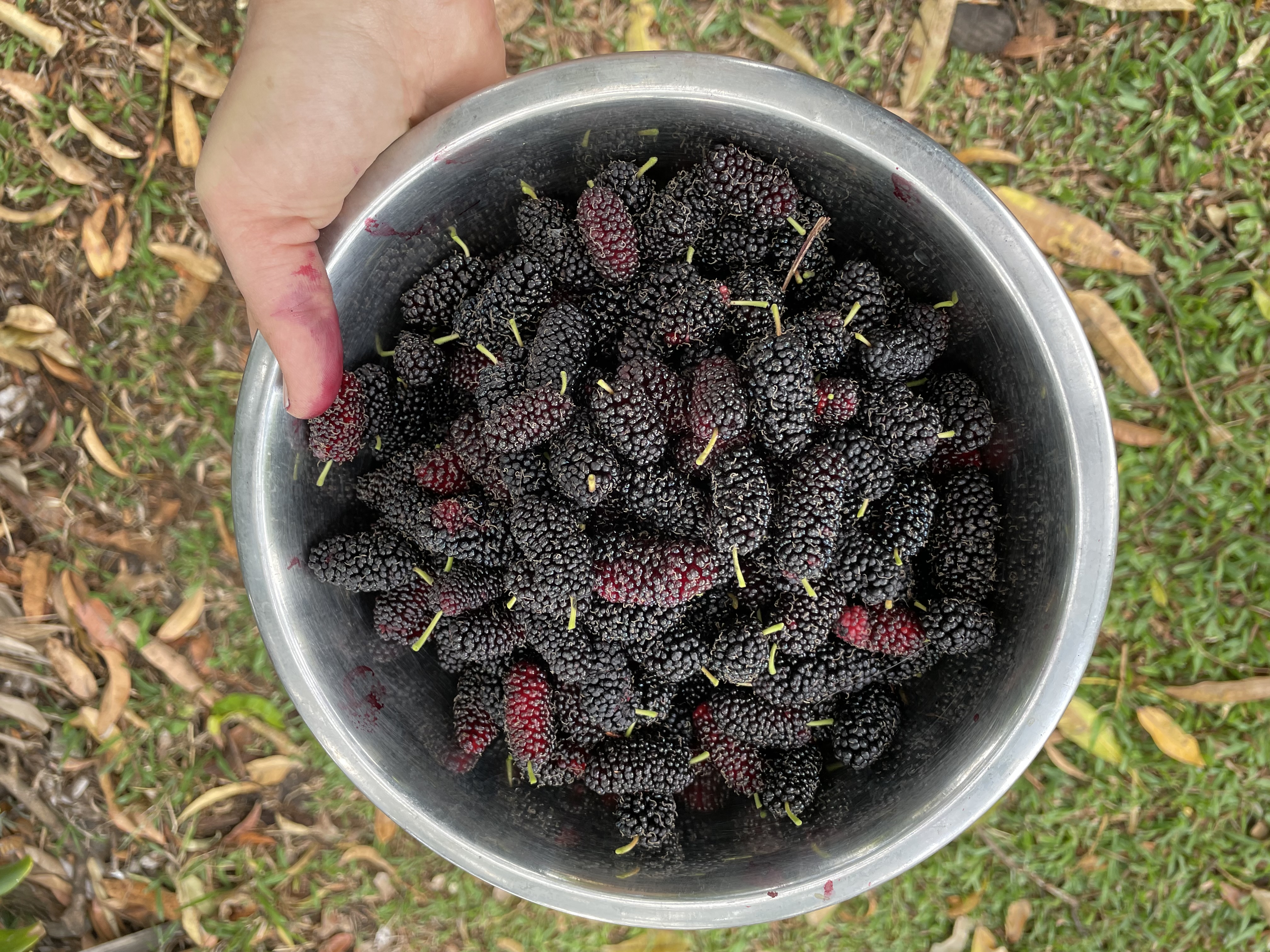
Black mulberry is a deciduous fruit tree grown for intensely flavoured dark berries. It handles heat and dry conditions once established and can be kept to a practical picking height with regular pruning.
- Grows well in
- Subtropical, Temperate, Cool / mountains, Arid / inland, Mediterranean
- Lifecycle
- Deciduous perennial fruit tree
- Light
- Full sun
- Mature size
- Commonly 6–10 m tall and broad, but can be kept smaller with pruning
- Spacing
- Allow 5–8 m for an unpruned tree
- Growth habit
- Broad-crowned deciduous tree with rough leaves and fruit on short shoots
- Native range
- Western and south-western Iran
- Natural habitat
- Temperate woodland and open rocky slopes.
When to plant
Subtropical
April–August
Temperate
May–August
Cool / mountain
May–August
Arid inland
May–August
Mediterranean
May–August
Plant bare-root or dormant trees in winter in cool and temperate areas. Container trees can be planted in autumn or spring. In subtropical areas, plant through the cooler part of the year and water while establishing.
Planting
Plant in full sun with plenty of room for the mature crown and roots. Keep it away from paving, tanks, washing lines and pale surfaces because ripe fruit stains heavily.
Position and light
Full sun gives the strongest growth and fruiting. Light shade is tolerated but usually reduces crop size.
Soil
Adaptable to a wide range of soils, with best growth in deep fertile free-draining loam. Established trees handle dryness better than waterlogged roots.
Watering
Water regularly while establishing. Mature trees are drought tolerant but crop better with deep watering during prolonged dry periods and fruit development.
Feeding
Established trees usually need little feeding in reasonable soil. Compost or a light balanced fruit-tree feed in spring is enough where growth is weak.
Pruning
Prune in winter dormancy or immediately after harvest to control size and remove crossing or damaged wood. Avoid unnecessary large cuts because mulberries can bleed sap when pruned at the wrong time.
Harvest
Pick when berries are fully dark and come away easily. Lay a sheet under the tree and gently shake branches if you want to collect a large crop quickly.
Propagation
Hardwood cuttings are a practical way to copy a good tree. Seedlings are variable and can contribute to unwanted spread.
Common problems
Birds, bats and fruit fly can take fruit. Scale and mites sometimes occur. Fallen fruit stains surfaces and attracts insects, so regular picking makes the tree much easier to live with.
Safety notes
Ripe fruit is edible. Unripe fruit and milky sap can irritate some people, so avoid eye contact and wash sap from skin.
Worth knowing
The fruit is soft, richly flavoured and best eaten fully ripe. Mulberries respond well to size control, which makes harvesting easier and reduces the amount of fruit dropping beyond reach.
Featured In
Grow Black mulberry with Brancho
Add it to My Garden and Brancho works out what it needs next, timed for your climate.
How it grows around Australia
Growing this too? Share what you've noticed in your garden.
Grow a Little Wild
New plants to try, useful growing tips and a few garden jobs based on what you grow.