


Plant profile
Cousin It
Casuarina glauca 'Cousin It'
Also known as Cousin It plant, prostrate swamp she-oak, prostrate casuarina.
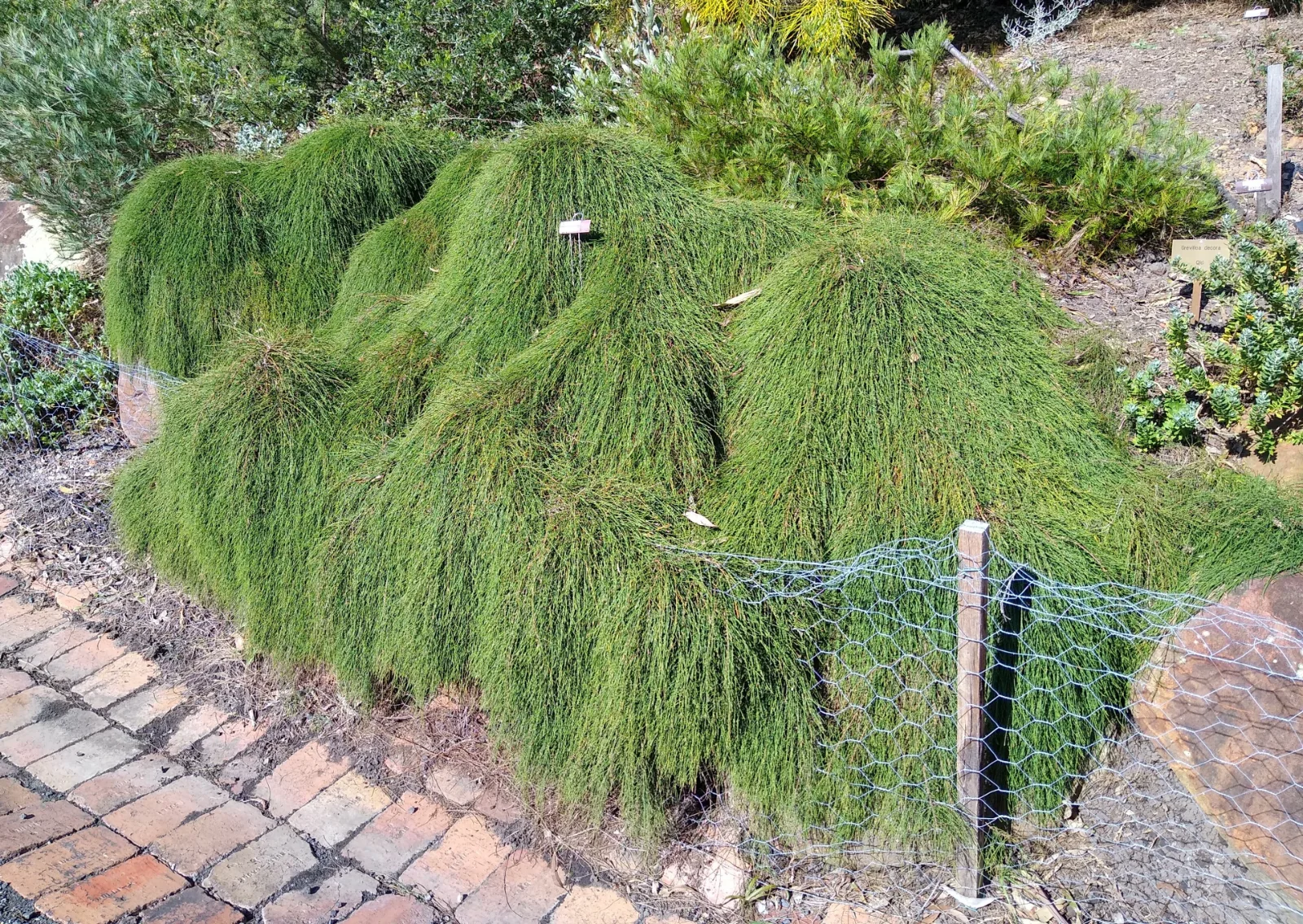
Cousin It is a low, cascading form of swamp she-oak that makes a dense curtain of fine green branchlets over banks, walls and large pots. It is grown for texture rather than flowers.
- Grows well in
- Subtropical, Temperate, Cool / mountains, Arid / inland, Mediterranean
- Lifecycle
- Long-lived evergreen prostrate native cultivar
- Light
- Full sun, Part shade, Shade
- Mature size
- Usually around 20–40 cm high, spreading roughly 1–2 m or more as a cascading groundcover.
- Spacing
- About 1–1.5 m apart for broad groundcover; allow extra room where it can spill over a wall or bank.
- Growth habit
- Dense prostrate mound with long cascading branchlets rather than an upright she-oak form.
- Native range
- Cultivar of Casuarina glauca, a species native to eastern and south-eastern Australia
- Natural habitat
- The parent species grows around estuaries, saltmarsh edges, coastal floodplains and river margins.
When to plant
Subtropical
March–October
Temperate
March–May, September–November
Cool / mountain
September–November
Arid inland
March–May, September–November
Mediterranean
March–May, September–November
Plant in autumn or spring in cool and temperate districts. In subtropical gardens, plant through the milder months or whenever you can keep a new plant reliably watered.
Planting
Plant at the same depth it grew in the pot and water deeply while roots establish. Leave enough horizontal room for the plant to spill well beyond its original pot width.
Position and light
Full sun gives dense growth, but Cousin It also handles part shade and can grow under established trees. Very deep shade can make the cover looser.
Soil
Adaptable once established, but drainage still matters around a newly planted root ball. It handles sandy and heavier soils better than many ornamental groundcovers.
Watering
Water regularly through establishment. Once rooted in, established plants cope with dry periods, though occasional deep watering keeps growth fuller through prolonged heat.
Feeding
Use a light native-friendly fertiliser only if growth is weak. Heavy feeding is unnecessary.
Pruning
Trim trailing growth when it blocks paths or smothers smaller plants. Avoid repeatedly cutting back into old bare wood; shape the soft green growth instead.
Propagation
Named cultivars are normally propagated vegetatively so new plants keep the same low habit. Buy true-to-name nursery stock rather than relying on seedlings.
Common problems
Poor establishment from a dry root ball, frost scorch in colder districts and occasional dieback where roots stay wet can occur. The main practical issue is simply giving the spreading plant enough room.
Safety notes
The fine branchlets can feel scratchy on bare skin. Wear gloves if you are doing a large trim.
Worth knowing
The long trailing growth is at its best spilling over a retaining wall, raised bed or tall container. Once established, it needs very little shaping beyond trimming growth that reaches paths or other plants.

Grow Cousin It with Brancho
Add it to My Garden and Brancho works out what it needs next, timed for your climate.
How it grows around Australia
Growing this too? Share what you've noticed in your garden.
Grow a Little Wild
New plants to try, useful growing tips and a few garden jobs based on what you grow.