


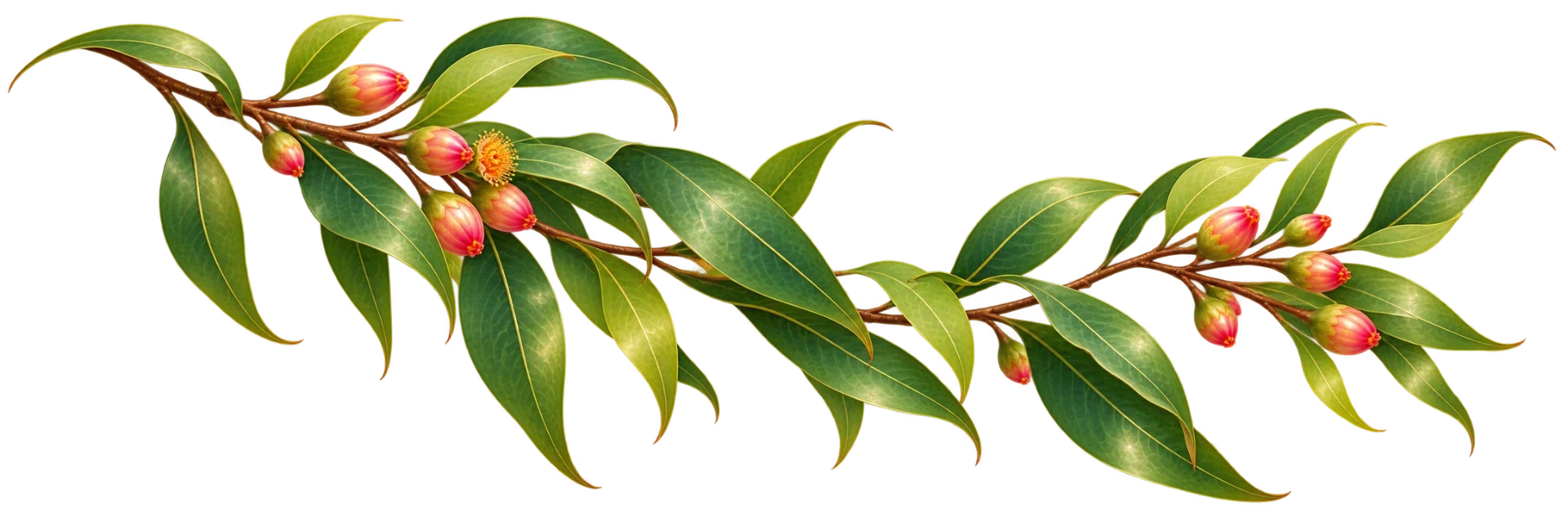

Plant profile
Crown of thorns
Euphorbia milii
Also known as Christ plant.
A thorny semi-succulent shrub grown for repeated displays of colourful bracts around its tiny flowers. Crown of thorns suits warm Australian gardens, sunny courtyards and containers where drainage is excellent.
- Grows well in
- Tropical, Subtropical, Temperate, Arid / inland, Mediterranean
- Lifecycle
- Evergreen to semi-evergreen semi-succulent shrub
- Light
- Full sun, Part shade
- Mature size
- Usually 0.6–1.5 m high and wide, with older plants larger in warm frost-free conditions.
- Spacing
- About 60–100 cm, with extra clearance beside paths.
- Growth habit
- Branching semi-succulent shrub with woody thorny stems and fleshy leaves concentrated on newer growth.
- Native range
- Madagascar.
- Natural habitat
- Dry shrubland and desert-type vegetation in Madagascar.
When to plant
Plant during warm weather. In cooler districts wait until frost risk has passed.
Planting
Plant at its existing depth in a position where the spiny stems will not obstruct a path. Use a stable pot with drainage holes for container plants. In heavy garden soil, a raised or mounded planting position gives the roots more air after rain.
Position and light
Give it plenty of direct sun for compact growth and reliable flowering. Part shade works in very hot districts, especially as protection from fierce afternoon sun, but deep shade produces weaker growth and fewer flowers. Indoor plants need the brightest practical position.
Soil
Use sharply drained soil. Sandy or gritty garden soil suits it better than dense clay that stays saturated. In pots, choose a free-draining succulent mix. Avoid oversized pots around small root systems because the unused mix can remain damp for too long.
Watering
Water regularly while roots establish, then let the upper soil dry before watering again. Established plants handle missed watering better than saturated roots. Container plants still need checking during hot weather because a small pot can dry quickly. Reduce watering during cool, slow growth.
Feeding
Feed lightly during warm active growth. A modest controlled-release fertiliser or occasional dilute balanced feed is enough. Heavy nitrogen feeding produces soft leafy growth and is not needed to keep a healthy plant flowering.
Pruning
Shorten awkward stems and remove damaged growth with clean tools. Wear gloves and eye protection because cuts release irritating milky sap. Older bare stems can be shortened to encourage branching lower on the plant. Keep thorny prunings where nobody will step on them.
Harvest
This is an ornamental plant, not a harvest crop. The showy red, pink, cream or yellow parts are bracts surrounding the small true flowers. Do not use plant material as food or a home remedy.
Propagation
Take stem cuttings in warm weather. Wear gloves, allow the cut surface to stop bleeding and dry, then place the cutting into a clean free-draining propagation mix. Keep it lightly moist while roots form. Cuttings are the simplest way to preserve a named form.
Common problems
Root and stem rot are most likely after prolonged saturation. Mealybugs, scale and spider mites can occur on sheltered plants. Sparse flowering often points to insufficient light. Long stems can become top-heavy, and the spines make moving a mature plant awkward.
Safety notes
Queensland Poisons Information Centre lists Euphorbia milii as potentially toxic. Milky sap can injure skin and eyes and the stout spines cause mechanical injury. Keep it away from children and pets likely to chew plants. If sap enters an eye, rinse for 15 minutes and seek medical help.
Worth knowing
Cultivated forms vary far more than the familiar red plant suggests. Compact selections and larger hybrids can differ markedly in height, bract size and colour, so a cultivar label is useful when planning permanent spacing.

Grow Crown of thorns with Brancho
Add it to My Garden and Brancho works out what it needs next, timed for your climate.
How it grows around Australia
Growing this too? Share what you've noticed in your garden.

Grow a Little Wild
New plants to try, useful growing tips and a few garden jobs based on what you grow.