
Plant profile
Davidson plum
Davidsonia pruriens
Also known as Davidson's plum, Rainforest plum.
Davidson plum is an Australian rainforest tree with tart purple fruit. It grows well in warm, sheltered gardens and can handle part shade.
- Grows well in
- Tropical, Subtropical, Temperate
- Lifecycle
- Evergreen rainforest fruit tree
- Light
- Full sun, Part shade
- Mature size
- Usually a small to medium rainforest tree around 4–10 m tall in cultivation, with a relatively narrow canopy.
- Spacing
- Allow roughly 3–5 m between trees in a garden, or more if you want them to develop a broad natural canopy.
- Growth habit
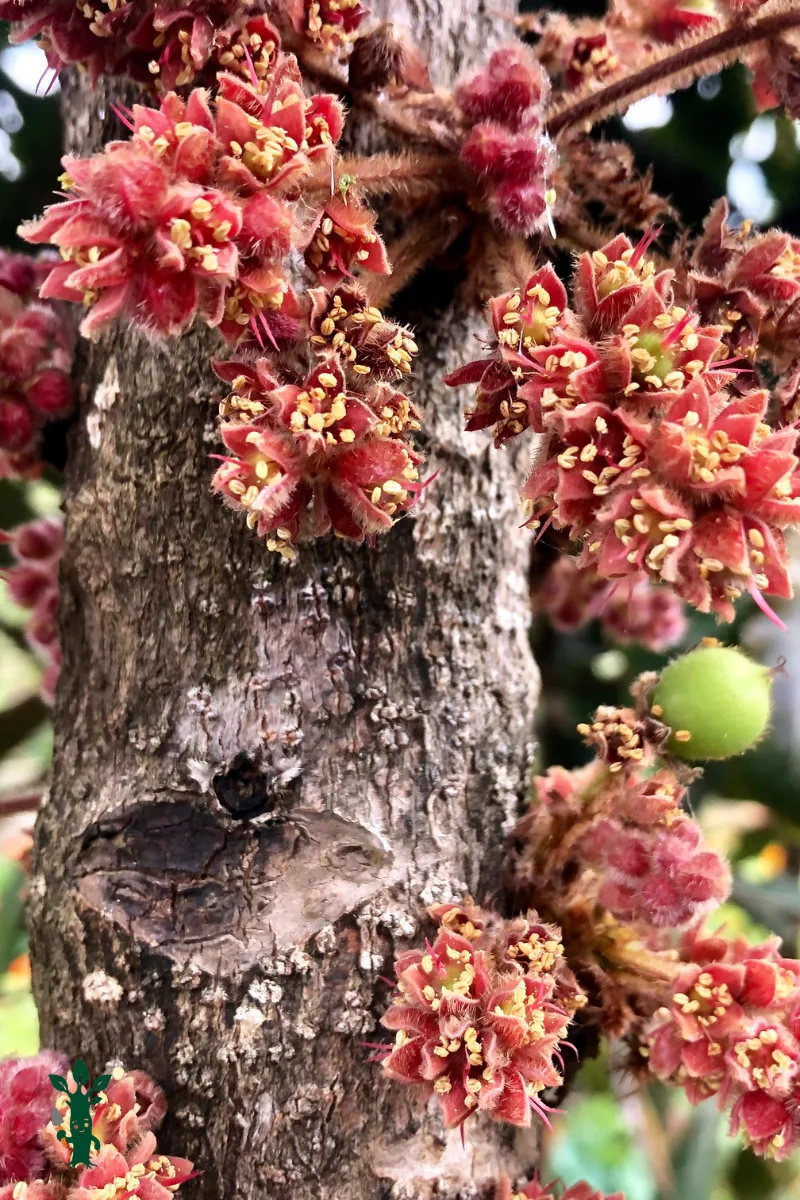
- Evergreen, upright rainforest tree with very large divided leaves and fruit borne directly from the trunk and older branches.
- Native range
- Queensland to north-eastern New South Wales
- Natural habitat
- Subtropical rainforest.
When to plant
In tropical and subtropical areas, plant as reliable warm-season or wet-season rain begins so the young tree can establish with steady moisture. Protect young plants from harsh sun, drying wind and frost while they settle in.
Planting
Plant in a sheltered position in improved soil with good moisture retention and drainage. Water in well and mulch after planting.
Position and light
Part shade to full sun, depending on climate and exposure. Young trees and plants in hot districts benefit from protection from harsh afternoon sun and drying wind.
Soil
Moist, fertile, well-drained soil with organic matter suits this rainforest species. Mulch helps keep the root zone cool and evenly moist.
Watering
Water regularly while the tree establishes and through long dry periods. Do not leave the root zone waterlogged.
Feeding
Use a complete garden fertiliser or gentle organic feed during active growth. Container-grown plants need more regular feeding than trees in rich garden soil.
Pruning
Only light shaping is normally needed. Remove damaged growth and shorten branches if required to keep the tree at a practical size.
Harvest
Fruit develops on the trunk and larger branches. Pick or collect fully coloured purple fruit as it ripens; fruit is very tart and is commonly cooked or processed.
Propagation
Fresh seed is commonly used. Cuttings can also succeed. Seed does not store well for long periods, so sow fresh material promptly.
Common problems
Drying out, sun scorch in exposed sites and poor drainage can slow growth. Myrtle rust affects many rainforest species in Australia, so investigate unusual rust-like symptoms rather than moving infected material.
Safety notes
The fruit is very tart and usually used in cooked or processed foods. Correctly identify the species before eating native fruits.
Worth knowing
The deep-purple fruit is intensely sour rather than a sweet eating plum, but it is excellent for jam, sauces, desserts and preserves. The flowers and fruit can form directly on the trunk, a habit known as cauliflory.
Grow Davidson plum with Brancho
Add it to My Garden and Brancho works out what it needs next, timed for your climate.
How it grows around Australia
Growing this too? Share what you've noticed in your garden.
Grow a Little Wild
New plants to try, useful growing tips and a few garden jobs based on what you grow.