
Plant profile
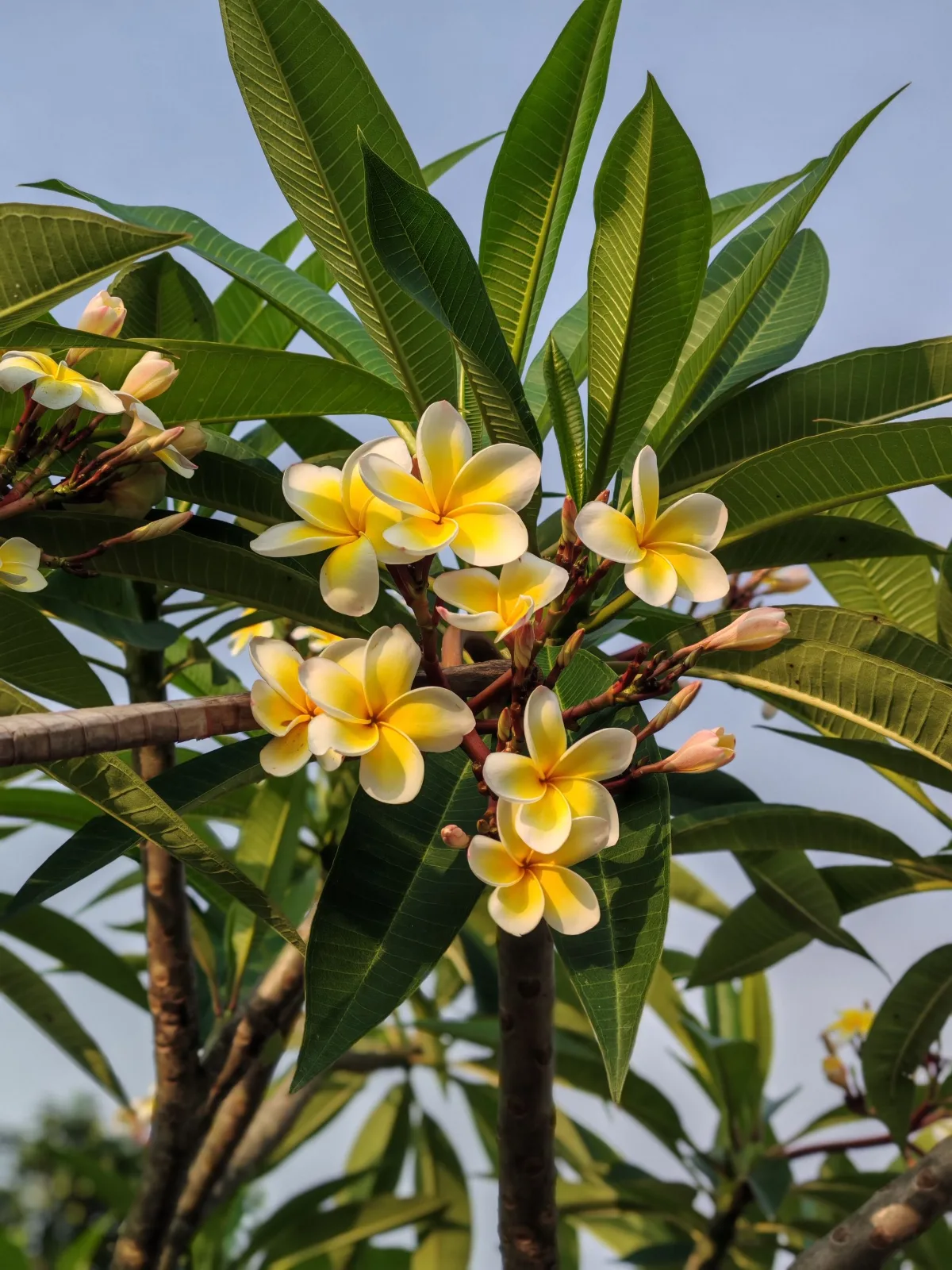
Frangipani
Plumeria spp.
Also known as Plumeria.
Frangipani is a warm-climate flowering tree that needs sun and excellent drainage. It is easy to propagate from large cuttings once the cut end has callused.
- Grows well in
- Tropical, Subtropical, Temperate, Arid / inland, Mediterranean
- Lifecycle
- Deciduous or semi-deciduous flowering tree
- Light
- Full sun
- Mature size
- Most common frangipanis grow about 4–6 m tall and can become almost as wide, although dwarf cultivars stay much smaller.
- Spacing
- Allow roughly 4–5 m between full-sized trees, or choose a dwarf cultivar where space is limited.
- Growth habit
- Open-branched deciduous or semi-deciduous tree with thick succulent stems and clusters of leaves and flowers at the branch tips.
- Native range
- Mexico to northern South America and the Caribbean
- Natural habitat
- Seasonally dry tropical forest, scrub and rocky coastal or inland slopes.
When to plant
Tropical
February–October
Subtropical
September–April
Temperate
October–March
Arid inland
September–April
Mediterranean
October–March
Planting
Plant in a warm, sunny, free-draining position. Protect from hard frost, especially while young.
Position and light
Full sun for strong growth and flowering.
Soil
Free-draining soil, with sandy or sandy-loam conditions particularly suitable.
Watering
Water while young plants establish, then let the soil drain between waterings. Dormant plants need much less water.
Feeding
Feed lightly at the beginning of spring and during summer if needed.
Pruning
Prune damaged or unwanted branches after frost risk or when shaping is needed. Avoid unnecessary heavy pruning.
Harvest
Frangipani is grown for flowers rather than food.
Propagation
Take a substantial cutting, remove leaves and flowers, allow the wound to callus in a dry airy place, then plant the base only a few centimetres deep and stake it.
Common problems
Frangipani rust shows as orange-yellow pustules on the undersides of leaves and is worse in warm, humid weather. Remove badly affected fallen leaves and keep air moving through the canopy. Stem rot is more likely when cuttings or established plants stay wet for long periods.
Safety notes
Frangipani sap can irritate skin and eyes. Wear gloves when taking cuttings or pruning.
Worth knowing
Frangipani cuttings root readily in warm weather, but let the cut end dry and callus before planting. The milky sap can irritate skin and eyes, so wear gloves when pruning or taking cuttings. Leaf drop during the cooler or drier part of the year is normal for many frangipanis. A bare tree is not necessarily in trouble if the stems remain firm and healthy.
Grow Frangipani with Brancho
Add it to My Garden and Brancho works out what it needs next, timed for your climate.
How it grows around Australia
Growing this too? Share what you've noticed in your garden.
Grow a Little Wild
New plants to try, useful growing tips and a few garden jobs based on what you grow.