
Plant profile
Grumichama
Eugenia brasiliensis
Also known as Brazil cherry, Brazilian cherry, Grumixama.
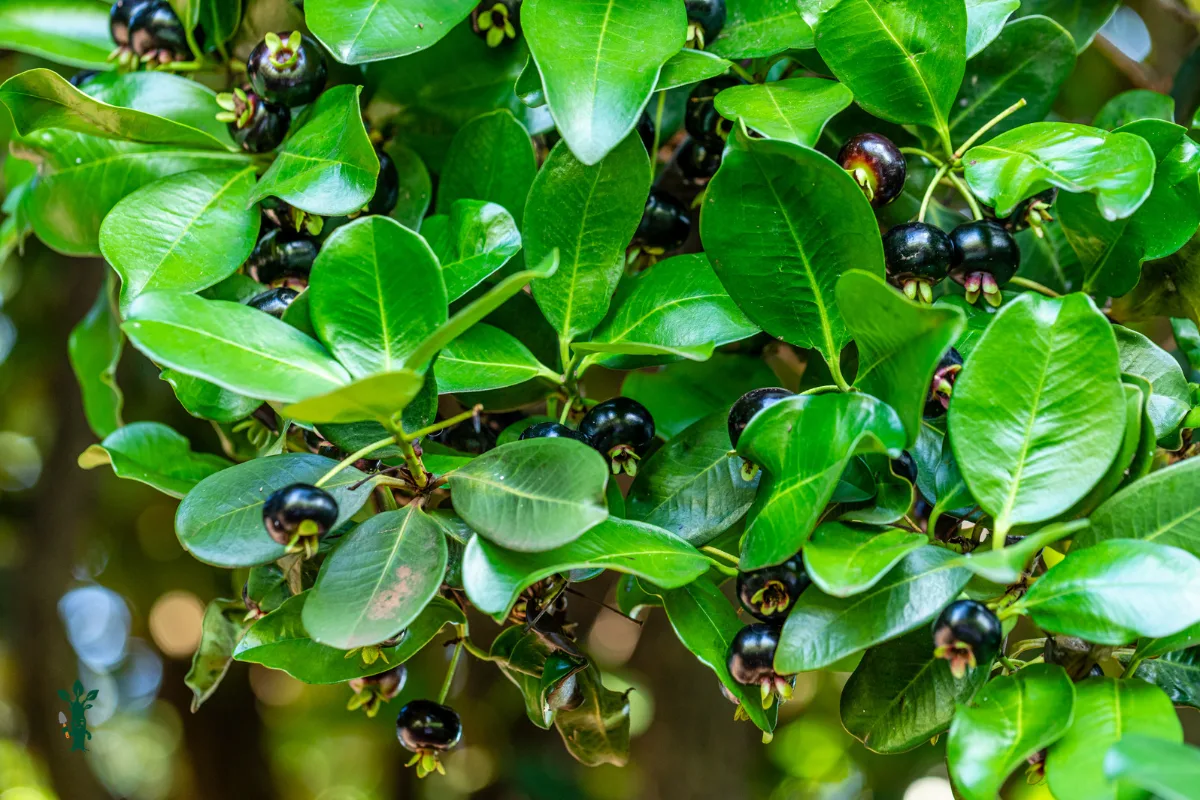
Grumichama is a glossy-leaved subtropical fruit tree with white flowers and cherry-like fruit that ripens from red to dark purple or almost black.
- Grows well in
- Tropical, Subtropical
- Lifecycle
- Evergreen subtropical fruit tree
- Light
- Full sun, Part shade
- Mature size
- Usually 4–8 m high and 3–5 m wide, smaller with pruning
- Spacing
- About 3–4 m apart
- Growth habit
- Dense evergreen small tree with glossy opposite leaves
- Native range
- Eastern and southern Brazil
- Natural habitat
- Seasonally dry tropical forest and woodland.
When to plant
Tropical
February–May, September–November
Subtropical
March–May, September–November
Temperate
September–November
Mediterranean
September–November
Tropical and subtropical: plant during warm, moist weather.
Planting
Plant into rich, free-draining soil and water regularly while young. Give it room to develop as a small tree or keep it lower with pruning.
Position and light
Full sun to part shade. Good light supports heavier flowering and fruiting.
Soil
Fertile, free-draining soil with compost and mulch.
Watering
Water regularly while establishing and during flowering and fruit development. Established trees handle short dry periods.
Feeding
Use compost and a light fruit-tree feed during active growth if needed.
Pruning
Prune after harvest to keep fruit within reach and remove crowded growth.
Harvest
Pick fruit when fully coloured and soft-ripe. The flesh is sweet-tart and surrounds one to a few seeds. Ripe fruit softens quickly and is attractive to birds, so check the tree often once colour starts to deepen. Pick gently; fully ripe fruit bruises easily and is best eaten or processed soon after harvest.
Propagation
Fresh seed germinates readily and is the simplest way to raise new plants. Seedlings can vary in fruit size and sweetness; cuttings or grafting are useful for selected forms when consistent fruit quality is wanted.
Common problems
Fruit fly, birds and scale can affect crops. Myrtle rust is a possible issue because grumichama belongs to the Myrtaceae.
Safety notes
Ripe fruit is edible.
Worth knowing
Grumichama fruit ripens through red to deep purple or nearly black. The glossy opposite leaves are typical of the myrtle family. It is closely related to Brazilian cherry and Surinam cherry, and fruit is best eaten fresh soon after picking because it does not store well. Trees can crop for many years once established, and a single well-grown specimen can produce a useful home harvest without needing a second tree for pollination.
Featured In
Grow Grumichama with Brancho
Add it to My Garden and Brancho works out what it needs next, timed for your climate.
How it grows around Australia
Growing this too? Share what you've noticed in your garden.
Grow a Little Wild
New plants to try, useful growing tips and a few garden jobs based on what you grow.