
Plant profile
Kalanchoe
Kalanchoe blossfeldiana
Also known as Flaming Katy, Christmas kalanchoe.
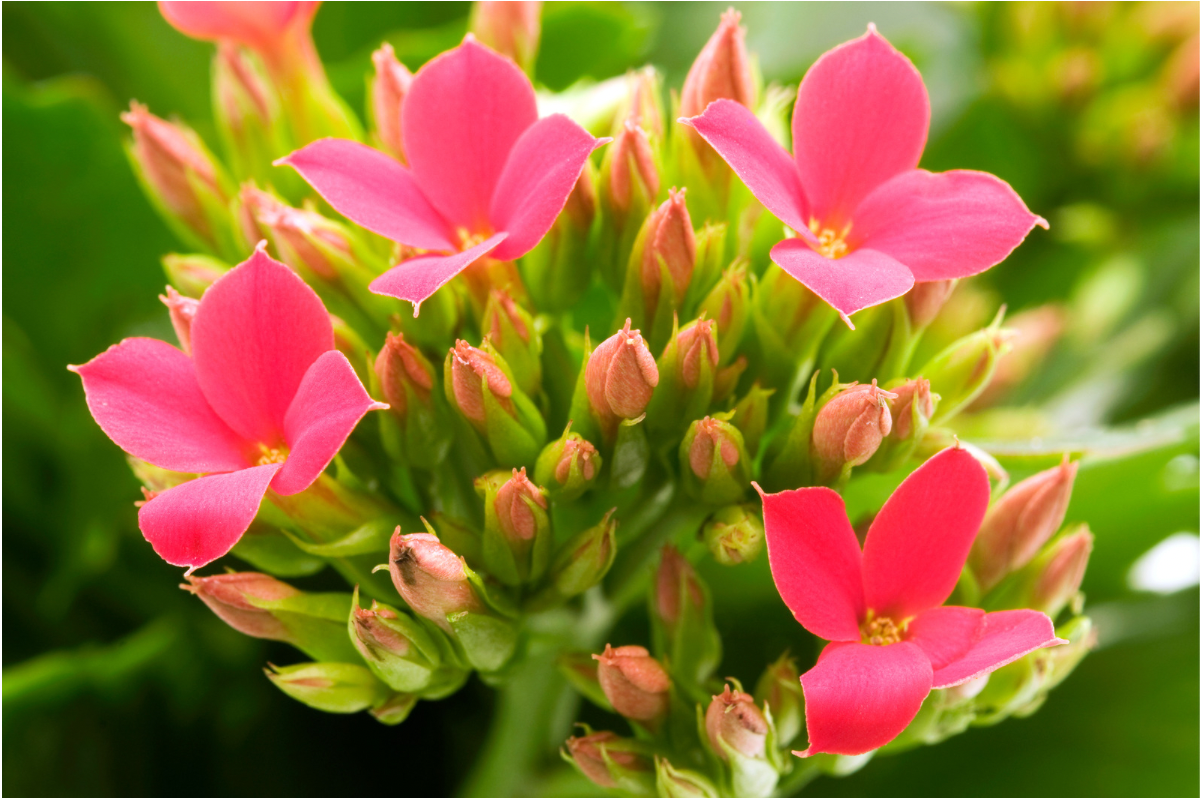
Kalanchoe is a compact flowering succulent grown for fleshy green leaves and long-lasting clusters of bright flowers. Kalanchoe blossfeldiana is the familiar florist and garden species, performing best with bright light, free-draining soil and a drier interval between waterings.
- Grows well in
- Tropical, Subtropical, Temperate, Mediterranean
- Lifecycle
- Evergreen succulent perennial
- Light
- Full sun, Part shade
- Mature size
- Usually 20–45 cm high and about 20–40 cm wide, depending on cultivar and pruning.
- Spacing
- About 25–35 cm apart in garden plantings.
- Growth habit
- Compact branching succulent with fleshy leaves and upright clusters of four-petalled flowers.
- Native range
- North-eastern Madagascar.
- Natural habitat
- Seasonally dry tropical habitats on rocky ground and slopes in north-eastern Madagascar.
When to plant
Plant outdoors during warm frost-free weather. Potted plants can be established at any time if protected from temperature extremes.
Planting
Plant at nursery depth and keep the crown above surrounding soil. In humid or high-rainfall districts, a raised position or pot is easier to manage than heavy ground. Give outdoor plants airflow and move frost-sensitive pots under cover before cold snaps.
Position and light
Bright light is important for compact growth and flowering. Outdoors, morning sun with protection from fierce afternoon sun suits hot Australian districts, while mild climates allow more direct sun. Indoors, use the brightest window available.
Soil
Use coarse, free-draining succulent mix in pots. Garden soil should drain promptly after rain; raised beds or mounds help on heavy ground. Fine roots can decline when a small plant sits in a large volume of dense damp soil.
Watering
Water thoroughly, then let much of the mix dry before watering again. Plants need more regular water during active growth and flowering, but far less in cool dull weather. Check the mix rather than watering by calendar and never leave pots standing in water.
Feeding
Feed lightly during active growth with balanced fertiliser. Potted plants benefit from occasional feeding, but heavy nitrogen encourages soft leafy growth at the expense of a compact flowering plant.
Pruning
Remove spent flower clusters back to healthy foliage. After flowering, trim lanky stems above a leaf pair to encourage branching. Older sparse plants can be reshaped while healthy tip cuttings are rooted as replacements.
Propagation
Stem cuttings are simple in warm active growth. Let the cut end dry briefly, place it into barely moist free-draining propagation mix and increase watering after roots form. Leaves can also root, though stems produce useful-sized plants faster.
Common problems
Soft translucent stems, leaf drop and blackened roots usually point to excess moisture or poor drainage. Mealybugs and scale hide around leaf joints. Low indoor light causes stretching and poor flowering, while frost can leave soft marked foliage.
Safety notes
Kalanchoe blossfeldiana is toxic to cats, dogs and livestock if eaten because it contains cardiac glycosides. Keep plants and fallen pieces away from animals that chew foliage and seek veterinary advice if ingestion is suspected.
Worth knowing
Flowering kalanchoes respond to day length. Commercial plants are often manipulated to flower at sale time, so a plant may not repeat that exact schedule at home. Naturally shorter days can initiate buds when nights remain genuinely dark.
Grow Kalanchoe with Brancho
Add it to My Garden and Brancho works out what it needs next, timed for your climate.
How it grows around Australia
Growing this too? Share what you've noticed in your garden.
Grow a Little Wild
New plants to try, useful growing tips and a few garden jobs based on what you grow.