
Plant profile
Macadamia
Macadamia integrifolia
Also known as Queensland nut, bush nut.
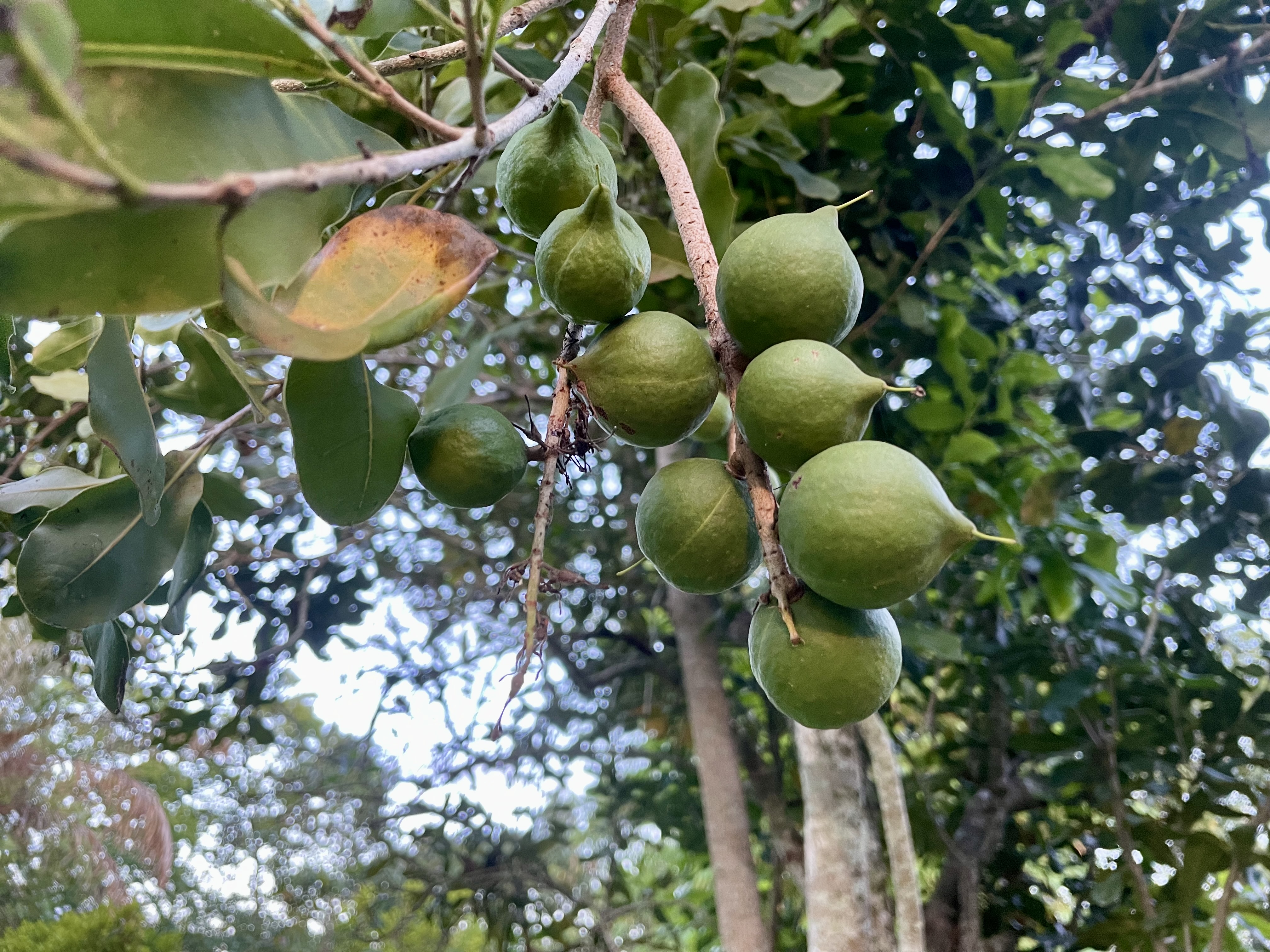
Macadamia is an Australian rainforest tree grown for rich edible nuts inside very hard shells. It prefers warm frost-free to lightly frosted climates, deep free-draining soil and shelter from strong wind when young. Trees become large and take time to crop, so cultivar choice, pollination and long-term space matter.
- Grows well in
- Tropical, Subtropical, Temperate
- Lifecycle
- Evergreen perennial nut tree
- Light
- Full sun, Part shade
- Mature size
- Often 8–15 m tall and 6–10 m wide if unpruned
- Spacing
- About 6–10 m apart for full-sized trees
- Growth habit
- Dense evergreen subtropical rainforest tree with long flower racemes
- Native range
- South-eastern Queensland to north-eastern New South Wales
- Natural habitat
- Subtropical rainforest and rainforest margins.
When to plant
Tropical
April–September
Subtropical
April–September
Temperate
September–November
Tropical and subtropical: plant in the cooler dry-season months where irrigation is available, or early in the warm wet season on very free-draining sites. Warm temperate: spring after frost risk.
Planting
Plant a grafted tree into deep free-draining soil and give it room for a broad canopy. Keep the graft above soil level, mulch widely and protect young trees from wind. More than one cultivar can improve pollination and nut set in some plantings.
Position and light
Full sun for best cropping. Young trees tolerate light shade and often establish well with some shelter from hot wind.
Soil
Deep, fertile, free-draining soil with organic matter and a slightly acidic to neutral reaction. Avoid saline sites and heavy ground that remains saturated.
Watering
Water young trees regularly while roots establish. Mature trees need reliable moisture during flowering and nut fill for good crops, but drainage remains essential.
Feeding
Use a fertiliser suitable for macadamias or other low-phosphorus-sensitive Australian plants, following label rates. Small regular applications during active growth are safer than heavy feeds.
Pruning
Train young trees to a strong framework and remove low, crossing or damaged branches. Mature trees mainly need size control and access pruning rather than hard annual pruning.
Harvest
Collect mature nuts after they fall naturally. Remove the green husk promptly, dry the nuts in shell and crack only once the kernel has cured sufficiently.
Propagation
Commercial and garden trees are best bought grafted for known nut quality and earlier production. Seedlings are variable and take longer to crop.
Common problems
Macadamia nut borer, fruit spotting bug, lace bug and rats can damage crops depending on district. Root rot is a risk in poorly drained soil. Wind can break young growth.
Safety notes
Macadamia nuts are edible for people but are toxic to dogs; keep fallen nuts and kernels away from pets.
Worth knowing
Macadamia integrifolia is native to south-east Queensland and is listed as Vulnerable under the EPBC Act in the wild. Garden and orchard cultivars are common, but that does not reduce the conservation importance of wild populations.
Featured In
Grow Macadamia with Brancho
Add it to My Garden and Brancho works out what it needs next, timed for your climate.
How it grows around Australia
Growing this too? Share what you've noticed in your garden.
Grow a Little Wild
New plants to try, useful growing tips and a few garden jobs based on what you grow.