
Plant profile
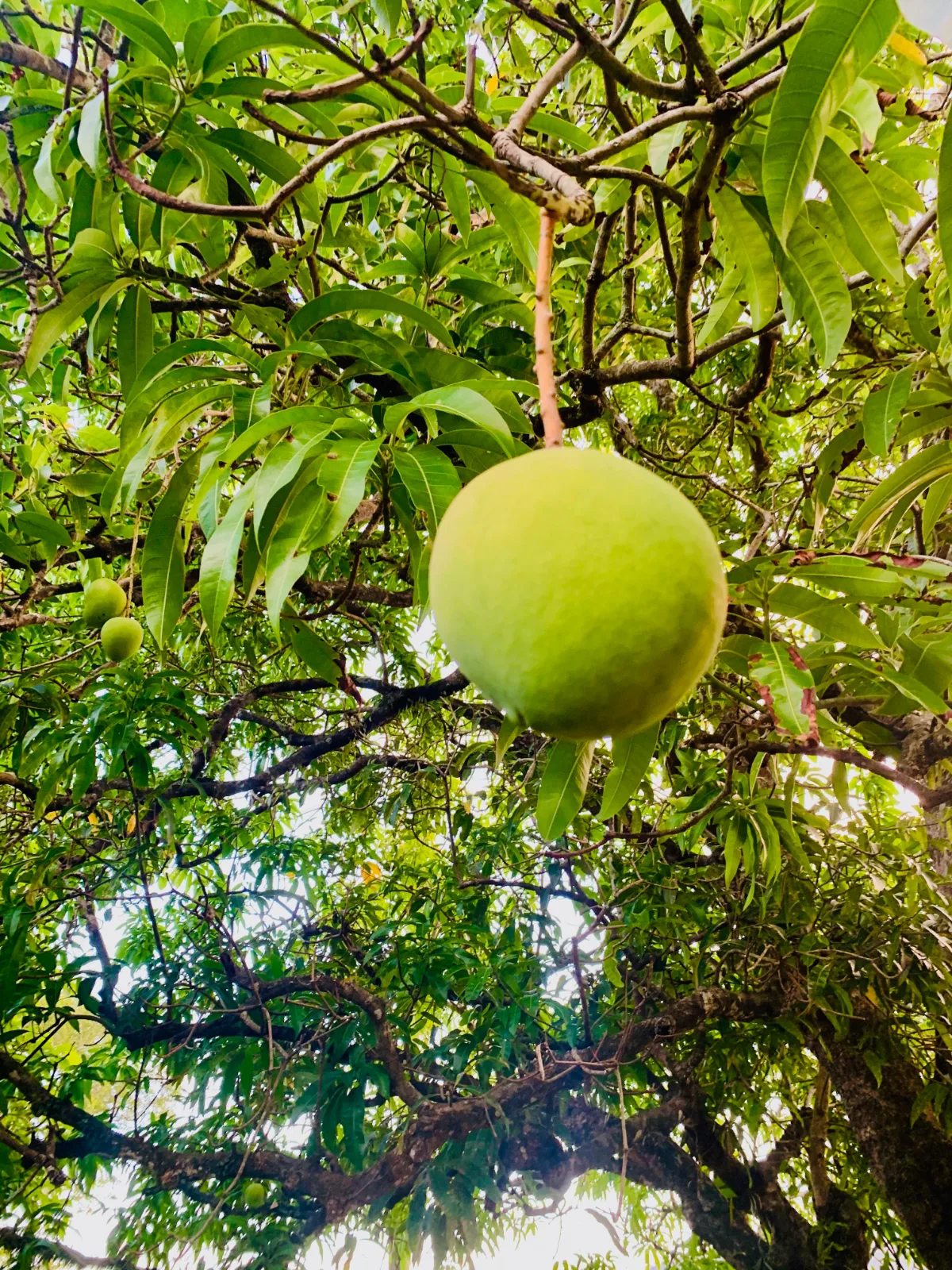
Mango
Mangifera indica
Mango trees need warmth, sun and good drainage. Pruning after harvest helps keep the tree at a useful size without removing the mature shoots needed for flowering.
- Grows well in
- Tropical, Subtropical, Arid / inland
- Lifecycle
- Evergreen perennial fruit tree
- Light
- Full sun
- Mature size
- Mango trees can become very large, commonly 10–15 m tall in gardens and potentially much taller if left unpruned.
- Spacing
- Allow about 8–10 m for a full-sized unmanaged tree. Backyard trees can be planted closer if they are pruned regularly from a young age to keep the canopy compact.
- Growth habit
- Long-lived evergreen fruit tree forming a broad, dense canopy with strong flushes of new growth.
- Native range
- Assam and the eastern Himalayas through Myanmar and Thailand to southern Yunnan in China
- Natural habitat
- Seasonally dry tropical forest and monsoon woodland.
When to plant
In tropical areas mangoes can be planted through much of the year when water is available. In cooler subtropical areas, warm spring to early summer weather gives young trees time to establish before winter.
Planting
Plant in warm weather when the tree has time to establish before cold or very dry conditions. Choose a grafted variety suited to the district and allow enough room for the mature canopy.
Position and light
Full sun with good airflow. Protect young trees from frost and strong wind.
Soil
Deep, well-drained soil is best. Mangoes cope with a range of soils if drainage is good. Mulch the root zone but keep mulch clear of the trunk.
Watering
Water young trees regularly until established. Mature trees need water through long dry periods and while fruit is developing, but avoid constantly wet soil.
Feeding
Feed during active growth, with rates based on tree size and the fertiliser label. Avoid pushing heavy leafy growth just before flowering. Potassium is important for fruiting but should not be applied blindly at high rates.
Pruning
Prune soon after harvest if the tree needs size control. Remove dead, damaged and crossing wood and shorten the canopy to a safe picking height. Avoid hard pruning close to flowering because mangoes flower on mature shoot tips.
Harvest
Harvest timing depends on variety. Fruit is usually ready when it has filled out, the shoulders near the stem are developed and the fruit has reached mature size. Some varieties are picked mature and ripened off the tree.
Propagation
Grafted trees give more predictable fruit quality and usually crop sooner than seedlings.
Common problems
Anthracnose can damage flowers and fruit in wet or humid weather. Fruit fly, scale, sap-sucking insects and wind damage can also occur. Disease treatment depends on region and severity.
Safety notes
Mango sap can cause strong skin irritation in sensitive people. Wear gloves and avoid getting fresh sap on skin, especially when harvesting or pruning.
Worth knowing
A mango is much easier to manage if you decide early that you want a small tree. Regular pruning after harvest can keep fruit within reach instead of eventually having most of the crop several metres above your head.
Featured In
Grow Mango with Brancho
Add it to My Garden and Brancho works out what it needs next, timed for your climate.
How it grows around Australia
Growing this too? Share what you've noticed in your garden.
Grow a Little Wild
New plants to try, useful growing tips and a few garden jobs based on what you grow.