
Plant profile
Native leek
Bulbine bulbosa
Also known as Bulbine lily, Golden lily, Wild onion, Leek lily.
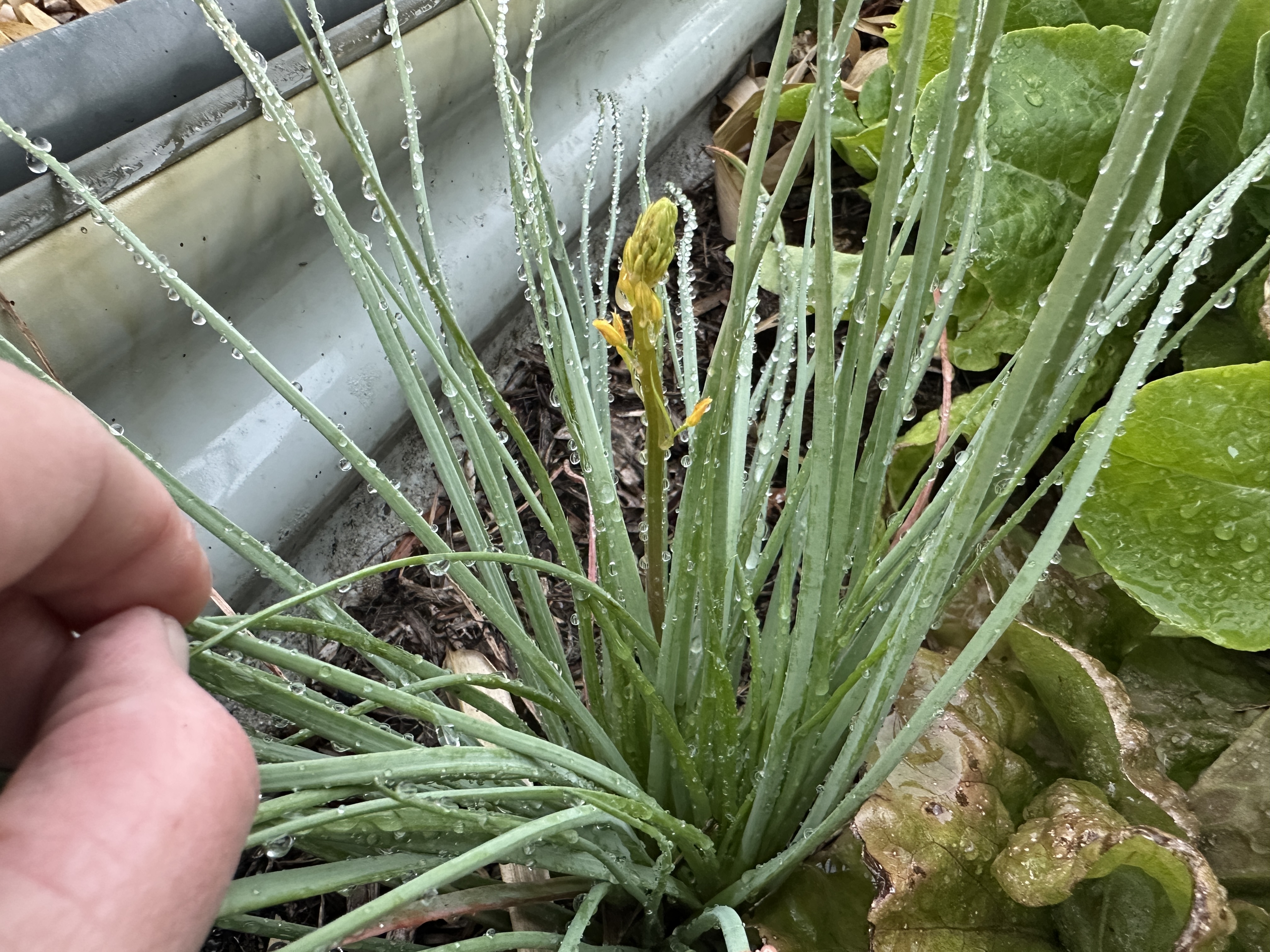
Native leek is an Australian perennial with narrow fleshy leaves and bright yellow star-shaped flowers held above the clump. It grows from an underground corm-like stem rather than a true bulb and is useful in native food gardens, grassy plantings, rockeries and pots.
- Grows well in
- Subtropical, Temperate, Mediterranean
- Lifecycle
- Perennial herb
- Light
- Full sun, Part shade
- Mature size
- Usually about 20–75 cm high in flower, with leaves around 20–40 cm long and a compact basal clump.
- Spacing
- About 20–30 cm apart for a grouped planting; allow a little more room if you want individual clumps to stand out.
- Growth habit
- Tufted perennial herb with narrow succulent leaves arising from an underground corm-like stem. Upright flower stalks carry successive yellow star-shaped flowers.
- Native range
- Central and south-eastern Australia: Queensland, New South Wales, Victoria, South Australia and Tasmania; also native in the ACT within its south-eastern Australian range.
- Natural habitat
- Open woodland, dry sclerophyll forest, native grassland and rocky sites, often on heavier water-retentive or seasonally inundated soils; it also occurs in moist alpine grassland at higher elevations.
When to plant
Subtropical
April–July
Temperate
March–June
Mediterranean
March–June
Autumn to early spring is a useful planting window through much of its natural range, matching the period when rain commonly starts active growth. Spring planting also works where you can keep new plants watered. In tropical coastal climates outside its natural range, heat and humidity may be less suitable than the cooler temperate and subtropical conditions where it naturally occurs.
Planting
Plant the crown at roughly the same level it was growing in the pot, with the underground storage organ covered but the leaves above the soil. Groups look better than isolated plants and make the flower display more noticeable. In its natural range, growth often starts after autumn rain and continues through spring into summer while moisture is available.
Position and light
Full sun to part shade. Good light produces sturdy growth and plenty of flowers, but the species also occurs in open woodland and can handle filtered light. In hotter parts of its cultivated range, some protection from harsh afternoon sun can reduce stress.
Soil
Native leek occurs naturally on a broad range of soils, including heavier water-retentive ground and shallow soils over rock. In the garden, aim for soil that can hold some moisture through active growth but still drains between prolonged periods of rain. It suits loam and clay-based soils as well as improved garden beds.
Watering
Water newly planted clumps regularly until established. During active leafy growth and flowering, regular moisture keeps plants growing for longer. In naturally seasonal conditions the foliage can die back as the ground dries, with the underground corm-like stem surviving until growth resumes after rain.
Feeding
It generally needs little fertiliser in ordinary garden soil. A light layer of compost around the clump before active growth is enough in most beds. Avoid burying the crown under thick compost or mulch, and do not push soft growth with repeated high-nitrogen feeds.
Pruning
Remove old flower stalks once seed has been collected or when you no longer want them. Leave healthy green foliage in place while it is feeding the underground storage organ. If the leaves die back naturally, wait until they are dry before clearing them away.
Harvest
The underground corm-like stem and fleshy roots have a documented history as Aboriginal food and were traditionally cooked before eating. Because identification and preparation matter, do not treat an unidentified wild bulbine as food or dig plants from bushland. Garden-grown plants should be positively identified as Bulbine bulbosa.
Propagation
Seed is the usual way to raise larger numbers. Collect capsules as they mature and begin to turn brown, before they split and release the seed. Australian National Botanic Gardens notes that stored seed germinates readily. Established clumps can also be divided carefully after flowering or while growth is quiet, keeping a sound section of the underground storage organ and roots with each division.
Common problems
Slugs and snails can chew fresh leaves and flower stems, especially in damp spring conditions. Poor establishment is more likely if a newly planted clump dries completely before its roots settle in. Plants may disappear above ground during dry conditions, so mark the position before assuming a dormant plant has died.
Safety notes
Bulbine bulbosa has documented traditional food use after cooking. Similar common names are used for other plants, so use the botanical name when sourcing plants for food. There are reports of stock toxicity after heavy grazing, although Australian sources note the evidence is not conclusive.
Worth knowing
The common name can be misleading in two ways: it is not a true leek, and the underground organ is not a true bulb. The yellow flowers open successively along the stalk rather than all at once, extending the display. It is particularly useful in naturalistic native beds because its seasonal growth fits among grasses and other small Australian herbs without becoming a large permanent mound.
Grow Native leek with Brancho
Add it to My Garden and Brancho works out what it needs next, timed for your climate.
How it grows around Australia
Growing this too? Share what you've noticed in your garden.
Grow a Little Wild
New plants to try, useful growing tips and a few garden jobs based on what you grow.