


Plant profile
Rue
Ruta graveolens
Also known as Common rue, Herb-of-grace.
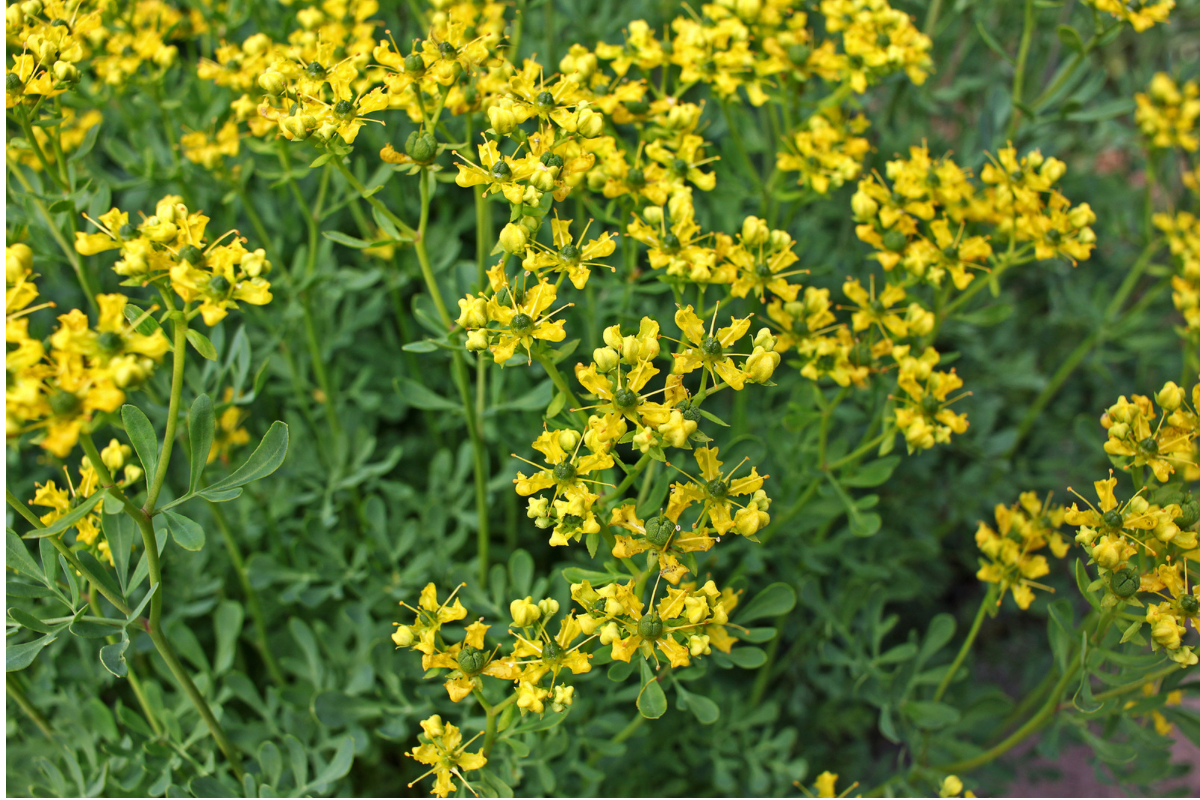
Rue is a small aromatic shrub with blue-green divided leaves and yellow summer flowers. Ruta graveolens has a long history in herb gardens but today is often grown ornamentally and should be handled carefully because its sap can irritate skin.
- Grows well in
- Subtropical, Temperate, Arid / inland, Mediterranean
- Lifecycle
- Evergreen or semi-evergreen perennial shrub
- Light
- Full sun, Part shade
- Mature size
- Usually 50–100 cm high and roughly 50–80 cm wide.
- Spacing
- Allow about 50–75 cm between plants for airflow and access.
- Growth habit
- Small woody-based perennial shrub with branching stems, divided aromatic blue-green foliage and clusters of yellow flowers.
- Native range
- Northern Balkan Peninsula east to Crimea.
- Natural habitat
- Dry open temperate habitats including rocky slopes, stony ground and scrub in south-eastern Europe.
When to plant
Plant in spring in cold districts. Autumn or spring suit mild Mediterranean climates; subtropical gardeners can favour the cooler less humid part of the year.
Planting
Plant into open soil during mild weather and keep the crown at nursery depth. Rue is easiest to manage where air moves freely and ground drains after rain. Give it enough room to prune without brushing against the plant unnecessarily.
Position and light
Full sun gives compact growth and good flowering. Light part shade is tolerated in hot climates, but heavy shade makes stems looser and reduces flowering. In humid subtropical districts, morning sun and airflow can be useful.
Soil
Use moderately fertile free-draining soil. Rue grows well in stony and calcareous ground and does not need a rich vegetable bed. Improve heavy soil structurally or use a raised position so rain does not sit around the root crown.
Watering
Water regularly while roots establish, then reduce frequency and let the upper soil dry between waterings. Established plants handle dry conditions reasonably well. Pots need more attention, but repeated watering into damp mix is harmful.
Feeding
Rue is a light feeder. Compost around, not over, the crown in spring and use modest balanced fertiliser only if growth is pale or weak. Heavy nitrogen creates soft stems that need more pruning.
Pruning
Trim lightly after flowering to keep the shrub compact and remove old flower stems. Older woody plants can be shortened gradually. Wear gloves and cover arms when pruning because sap can cause skin reactions.
Propagation
Sow seed in spring or take semi-ripe cuttings in warm weather. Seedlings can vary slightly while cuttings preserve the parent plant. Keep propagation mix lightly moist with good airflow and pot rooted cuttings on before crowding.
Common problems
Root problems occur in poorly drained ground. Aphids, whitefly or mites may appear on stressed plants. Leggy growth usually points to insufficient light or lack of pruning rather than a need for extra fertiliser.
Safety notes
Rue should not be treated as an everyday culinary herb. It can be toxic if consumed in quantity and its sap contains compounds that can cause severe skin reactions when exposed skin subsequently receives sunlight. Wear gloves and avoid handling before strong sun exposure.
Worth knowing
Rue is easily confused in common-name material with other Ruta species, so botanical identification matters. Its yellow flowers can attract small beneficial insects, while blue-green foliage provides a different texture from softer culinary herbs.

Grow Rue with Brancho
Add it to My Garden and Brancho works out what it needs next, timed for your climate.
How it grows around Australia
Growing this too? Share what you've noticed in your garden.
Grow a Little Wild
New plants to try, useful growing tips and a few garden jobs based on what you grow.