


Plant profile
Sensitive plant
Mimosa pudica
Also known as Touch-me-not, Shameplant, Mimosa.
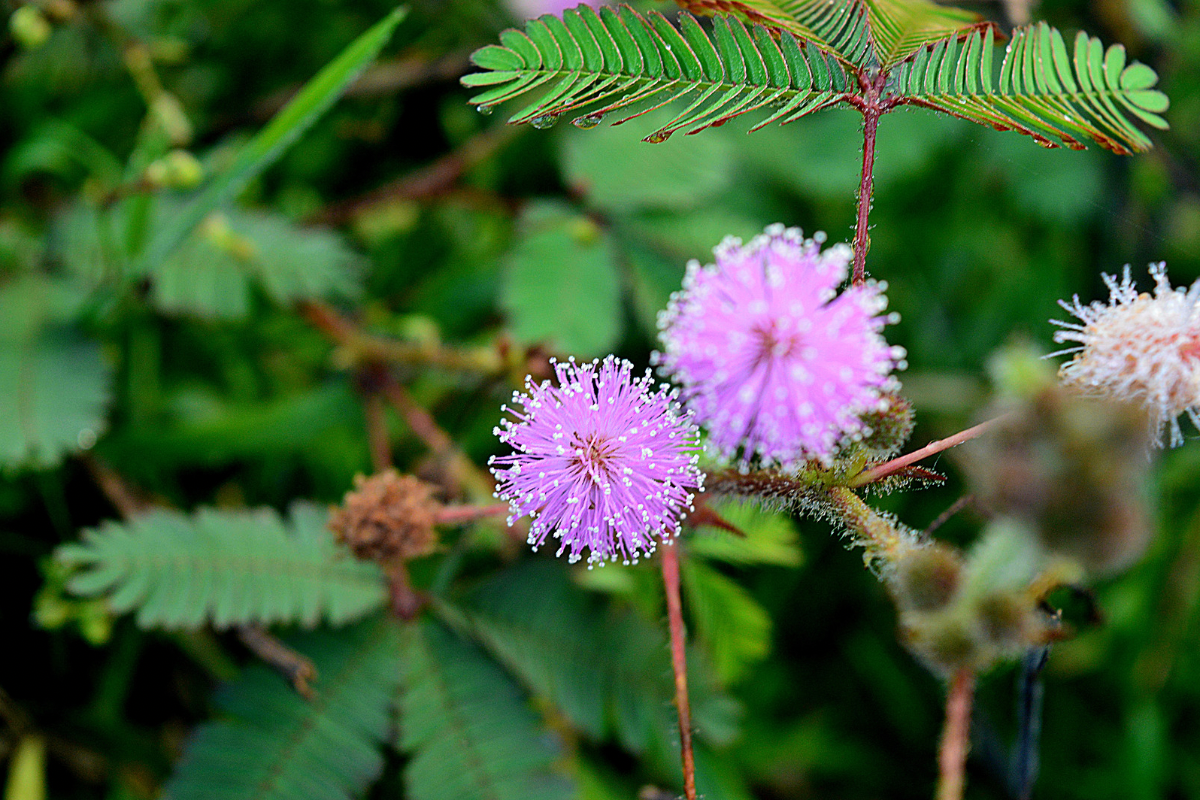
Sensitive plant is a low tropical legume famous for leaflets that fold rapidly when touched. Mimosa pudica grows as a short-lived perennial in warm climates or an annual where cold limits it, producing pink pom-pom flowers followed by prickly seed pods.
- Grows well in
- Tropical, Subtropical
- Lifecycle
- Short-lived perennial in warm climates; often annual elsewhere
- Light
- Full sun, Part shade
- Mature size
- Usually 30–100 cm high, with sprawling or ascending stems spreading around 1 m.
- Spacing
- About 30–50 cm apart in managed beds; one plant per medium pot is easier to control.
- Growth habit
- Low branching often sprawling prickly legume with bipinnate touch-sensitive leaves, pink spherical flower heads and clustered seed pods.
- Native range
- Mexico through tropical Central and South America and the Caribbean.
- Natural habitat
- Wet tropical biome, particularly open or disturbed ground such as grassland edges, roadsides and other sunny sites.
When to plant
Sow during reliably warm weather. Tropical gardeners have a long growing window; subtropical gardeners get best establishment from spring into early summer after cool conditions ease.
Planting
Sow into warm soil or potting mix after cold weather passes. Lightly scarifying the hard seed coat or soaking seed can improve germination. In warm Australian districts where the species can persist outside gardens, a pot makes seed collection and removal easier.
Position and light
Full sun to light part shade. Strong light keeps plants compact and supports flowering, while deep shade produces weak stretched stems. In very hot exposed sites, afternoon protection can reduce leaf scorch while seedlings are small.
Soil
Use fertile free-draining soil or potting mix that retains some moisture between waterings. The plant grows in disturbed tropical soils of varying fertility, but potted specimens perform better when roots have both air and steady moisture.
Watering
Water regularly during active growth, allowing the surface to begin drying before watering again. Small pots can wilt quickly in hot weather. Avoid keeping the root ball saturated because fine roots still need oxygen.
Feeding
Feed potted plants lightly with balanced fertiliser during active growth if pale. As a legume, Mimosa pudica can form a symbiosis with compatible root bacteria that fix atmospheric nitrogen, but this does not supply every nutrient the plant needs.
Pruning
Pinch young stems for a denser potted plant. Remove unwanted seed pods before they mature, especially in warm climates where seedlings can establish beyond the original pot or bed. Wear gloves because stems and pods can be prickly.
Propagation
Sow seed in warm conditions. Light scarification or a soak in warm water can help water enter the hard seed coat. Keep mix evenly moist until germination, then give seedlings strong light. Avoid distributing seed or plants into bushland or unmanaged areas.
Common problems
Spider mites and aphids can affect potted plants or plants grown under cover. Long, weak stems usually mean the plant needs more light. The leaves naturally fold after touch, movement and at night, then open again.
Safety notes
The stems and seed pods can have small prickles, so gloves are useful when handling a mature plant or collecting seed.
Worth knowing
The folding leaves are the feature everyone notices. Touch triggers a rapid change in water pressure at the base of the leaflets, making them fold inward. The leaves open again after a short time, and they also close naturally at night.

Grow Sensitive plant with Brancho
Add it to My Garden and Brancho works out what it needs next, timed for your climate.
How it grows around Australia
Growing this too? Share what you've noticed in your garden.
Grow a Little Wild
New plants to try, useful growing tips and a few garden jobs based on what you grow.