

Plant profile
Starfruit
Averrhoa carambola
Also known as Carambola, Five-corner fruit.
Starfruit is a small warm-climate fruit tree with crisp, juicy yellow fruit that forms a star when sliced. It crops well in frost-free coastal Queensland and other warm humid districts, stays manageable with pruning and can produce more than one flowering and fruiting flush in a long growing season.
- Grows well in
- Tropical, Subtropical
- Lifecycle
- Evergreen tropical to subtropical fruit tree
- Light
- Full sun
- Mature size
- Usually about 4–8 m high, but readily kept around 3–4 m with pruning
- Spacing
- Allow roughly 4–6 m for an unconfined garden tree; closer only with deliberate size control
- Growth habit
- Evergreen small fruit tree with a rounded canopy and flowers borne along branches and older wood
- Native range
- Central and eastern Java to Maluku, Indonesia.
- Natural habitat
- Wet tropical forest environments in its native range; cultivated widely through tropical and subtropical regions.
When to plant
Tropical: plant during warm weather when reliable moisture is available. Subtropical: spring to early summer is easiest, after any frost risk has passed. Young trees are cold-sensitive.
Planting
Plant a grafted tree in a warm, sheltered position with reliable water. Starfruit has a relatively shallow root system and young trees dislike drying wind, so mulch broadly and protect the canopy while it establishes. Keep the trunk clear of wet mulch and leave enough room to prune around the whole tree.
Position and light
Full sun gives the heaviest crops. Shelter from strong wind matters because foliage, flowers and fruit can be damaged on exposed sites. In the cooler edge of its range, choose a warm north-facing microclimate.
Soil
Deep, fertile, free-draining clay loam or loam is ideal. Starfruit prefers slightly acidic soil, roughly around pH 5.5–6.5, but grows across a wider range where drainage and nutrition are good. It tolerates short periods of wet soil better than many fruit trees but should not be planted in a permanently stagnant site.
Watering
Keep moisture steady. Starfruit is much less drought tolerant than mango, fig or pomegranate, and dry soil can cause wilting, leaf drop, poor flowering and smaller fruit. Water young trees regularly and keep fruiting trees supplied through hot weather and fruit development.
Feeding
Feed little and often during active growth, especially on sandy or low-fertility soil. A balanced citrus or fruit-tree fertiliser with trace elements suits it. Yellowing leaves can reflect micronutrient shortages as well as root stress, so check soil conditions before simply adding more nitrogen.
Pruning
Light annual pruning keeps a backyard tree compact and easier to net and harvest. Thin crowded growth and shorten long branches after a major crop rather than repeatedly cutting all branch tips. Starfruit responds well to pruning and can be held well below its unpruned height.
Harvest
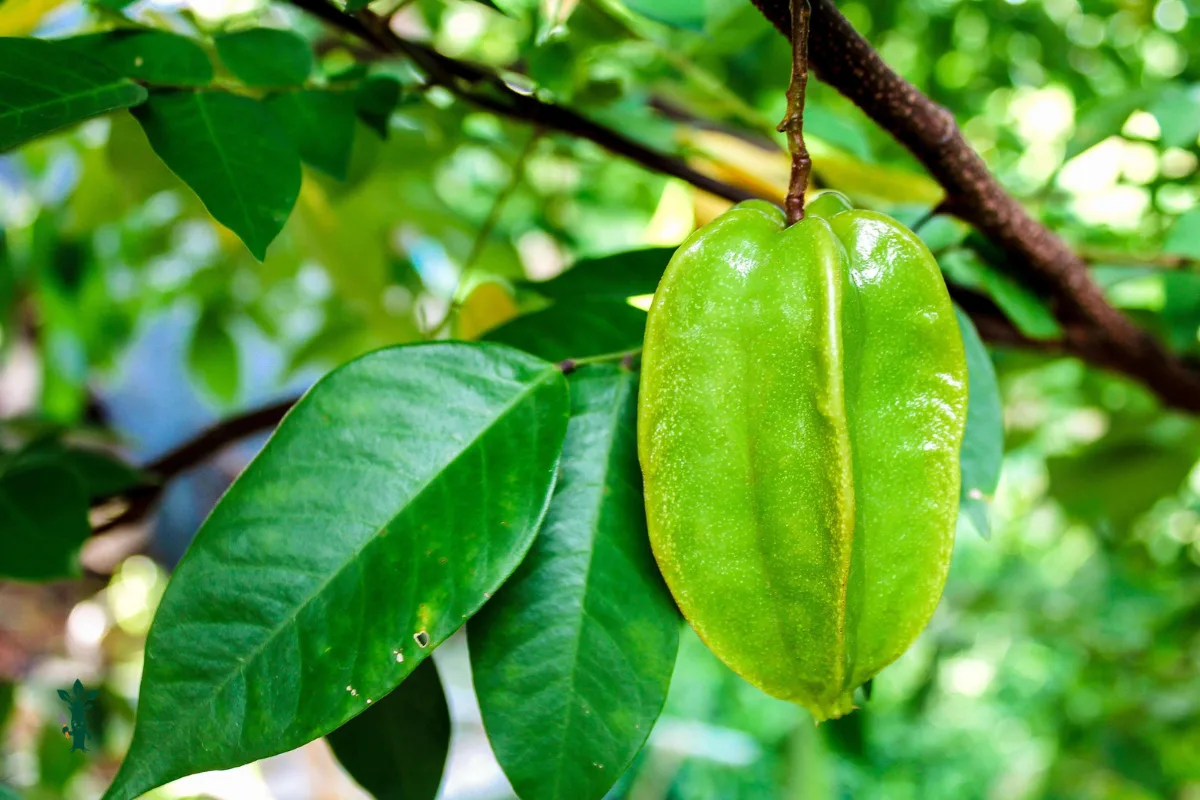
Pick fruit when the ridges and skin have turned yellow and the fruit has reached full size. Flavour varies by cultivar from tart to distinctly sweet. Handle fruit carefully because the ridges bruise easily. In very warm districts trees may crop in several flushes rather than one short season.
Propagation
Grow named cultivars as grafted trees for reliable fruit quality. Seedlings vary in sweetness, acidity and cropping and are slow to prove their quality. Fresh seed germinates readily if you are growing for interest rather than trying to reproduce a cultivar.
Common problems
Fruit fly, fruit-sucking moths, birds, caterpillars, green vegetable bugs and thrips can damage fruit. Wind and drought also cause significant crop loss. Netting and regular harvesting are useful where birds or flying foxes find the fruit before you do.
Safety notes
People with kidney disease should avoid starfruit because compounds in the fruit can cause serious neurological toxicity when kidney function cannot clear them normally. Anyone with kidney disease should follow medical advice about starfruit.
Worth knowing
Starfruit is also called carambola. Sweet cultivars are much better for eating fresh than strongly acid forms, so a named grafted tree is worth seeking out. The tree belongs to the Oxalidaceae family rather than the citrus family.
Featured In

Grow Starfruit with Brancho
Add it to My Garden and Brancho works out what it needs next, timed for your climate.
How it grows around Australia
Growing this too? Share what you've noticed in your garden.
Grow a Little Wild
New plants to try, useful growing tips and a few garden jobs based on what you grow.