

Plant profile
Strawberry
Fragaria × ananassa
Also known as Strawberries.
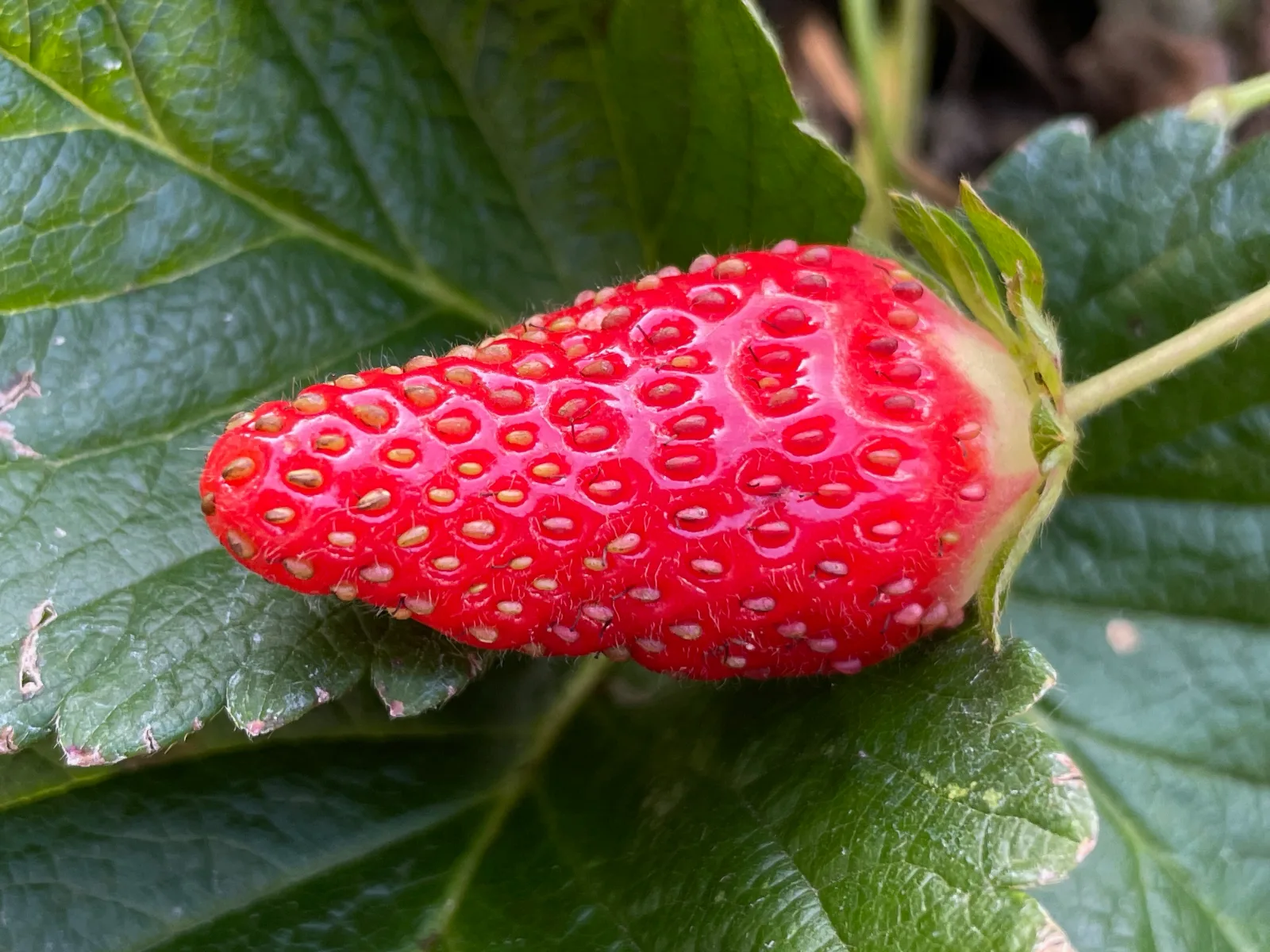
Strawberries are low-growing fruiting plants that crop best with sun, steady moisture and clean fruit kept off bare soil.
- Grows well in
- Tropical, Subtropical, Temperate, Cool / mountains, Arid / inland, Mediterranean
- Lifecycle
- Short-lived perennial fruiting plant
- Light
- Full sun, Part shade
- Mature size
- Usually about 15–25 cm tall and 30–45 cm wide, with runners spreading farther if they are allowed to root.
- Spacing
- About 30–40 cm apart, with the crown kept at soil level rather than buried.
- Growth habit
- Low, clumping perennial that spreads by above-ground runners which root to form daughter plants.
- Native range
- An artificial hybrid of the Chilean strawberry and Virginia strawberry; it has no original wild native range of its own
- Natural habitat
- The parent species naturally grow in temperate meadows, open woodland, coastal ground and forest margins.
When to plant
Tropical
April–July
Subtropical
April–July
Temperate
July–October
Cool / mountain
August–October
Arid inland
July–October
Mediterranean
July–October
Full growing guide
How to Grow Strawberry Plants in Australia
Strawberry plants crop best with good sun, steady moisture and varieties that suit your climate. Learn when to plant, how to feed them and how to keep fruit clean and productive.
Read the full growing guidePlanting
Use healthy plants or rooted runners. Plant with the crown at soil level, not buried. In warm districts, establish plants through the cooler months; in cool districts, plant from late winter into spring.
Position and light
Full sun gives the best crops in mild weather. In hot districts, morning sun with some afternoon shade can reduce heat stress.
Soil
Use fertile, well-drained soil with plenty of organic matter. Slightly acidic soil suits strawberries. Mulch around plants so fruit stays clean and off damp soil.
Watering
Keep the root zone evenly moist while plants establish and fruit is developing. Avoid long dry periods followed by heavy watering, and avoid keeping the crowns constantly damp.
Feeding
Prepare the bed well before planting. Feed lightly during active growth and fruiting with a suitable berry or fruiting-plant fertiliser at the label rate.
Pruning
Remove dead or diseased leaves when needed. Runners can be removed if you want the plant to put more energy into fruit, or rooted if you want new plants.
Harvest
Pick fully coloured berries with a short piece of stem attached. Harvest often once fruit begins ripening.
Propagation
Root runners after fruiting or grow from seed. Starting with certified or healthy stock reduces the risk of carrying disease into a new bed.
Common problems
Slugs, snails, birds, aphids, mites, fungal rots and virus problems can affect strawberries. Good airflow and keeping fruit off damp soil help reduce losses.
Worth knowing
Keep the crown right at soil level when planting: buried crowns can rot, while crowns sitting too high can dry out. Runners are an easy way to make replacement plants.

Grow Strawberry with Brancho
Add it to My Garden and Brancho works out what it needs next, timed for your climate.
How it grows around Australia
Growing this too? Share what you've noticed in your garden.
Grow a Little Wild
New plants to try, useful growing tips and a few garden jobs based on what you grow.