


Plant profile
Winter apple
Eremophila debilis
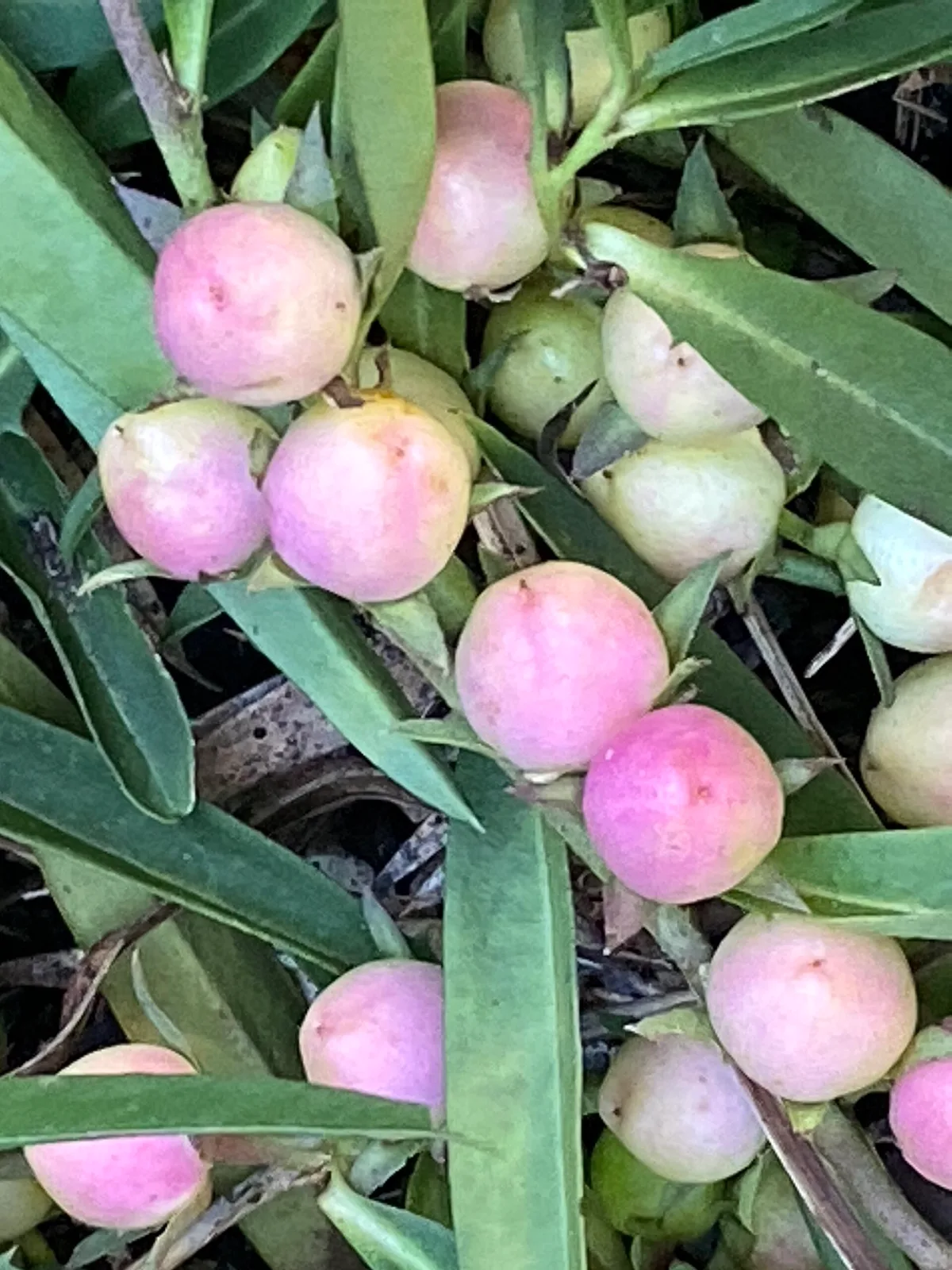
A creeping native with glossy leaves, small pale flowers and fleshy fruit. It makes a low natural-looking layer through woodland-style beds and under open shrubs.
- Grows well in
- Subtropical, Temperate, Cool / mountains
- Lifecycle
- Perennial native groundcover
- Light
- Full sun, Part shade
- Mature size
- 10–20 cm high, spreading 1 m or more
- Spacing
- Space about 50–80 cm apart for groundcover use.
- Growth habit
- Creeping to prostrate perennial subshrub.
- Native range
- Eastern Australia, particularly Queensland and New South Wales.
- Natural habitat
- Open forest, woodland and grassy woodland.
When to plant
Subtropical
March–August
Temperate
March–May
Cool / mountain
September–November
Plant during mild weather while you can provide reliable water for establishment. Autumn or spring suits temperate districts; in warmer subtropical gardens the cooler part of the year is often easier.
Planting
Plant into lightly prepared soil and leave open space around the new plant so the creeping stems are not lost beneath taller neighbours. A thin layer of leaf litter suits woodland-style planting, but avoid a deep wet mulch around the crown. Winter apple works well as part of a mixed ground layer with grasses and small herbs. Give it time to establish before expecting a closed carpet, and control weeds by hand while the stems are still filling the gaps.
Position and light
Grow winter apple in sun to light shade. Open light gives the densest groundcover, while some shelter suits woodland-style planting beneath taller shrubs and small trees.
Soil
Use reasonably drained soil that can hold some moisture between waterings. Improve very poor ground with organic matter, but avoid a root zone that stays wet for long periods.
Watering
Water regularly while new plants establish and through extended dry weather. Once the creeping stems have rooted into the soil, the patch becomes more resilient.
Feeding
Established native groundcovers usually need little feeding. If growth is weak, use a light application of a low-phosphorus fertiliser suitable for Australian natives during active growth.
Pruning
Trim wandering stems where they move over paths or into neighbouring plants. Light pruning also helps loose growth branch and fill small gaps in the ground layer.
Propagation
Take cuttings or lift naturally rooted pieces from an established patch. Replant rooted sections promptly and keep them moist while they settle into the new position.
Common problems
Poor drainage can lead to root and stem decline. Scale and other sap-sucking insects are possible, while deep dry shade can leave the groundcover sparse.
Worth knowing
Older references may list this plant as Myoporum debile. It now sits in Eremophila, but unlike many upright emu-bushes it creeps close to the ground. The small fleshy fruit is one reason for the common name, but this profile treats the plant as a native groundcover rather than a food crop. Featured image by Allthingsnative2576, CC BY-SA 4.0 <https://creativecommons.org/licenses/by-sa/4.0>, via Wikimedia Commons. No changes were made.
Featured In

Grow Winter apple with Brancho
Add it to My Garden and Brancho works out what it needs next, timed for your climate.
How it grows around Australia
Growing this too? Share what you've noticed in your garden.
Grow a Little Wild
New plants to try, useful growing tips and a few garden jobs based on what you grow.