


Plant profile
Atherton raspberry
Rubus probus
Also known as Wild raspberry, Native raspberry, Queensland raspberry, Tropical raspberry.
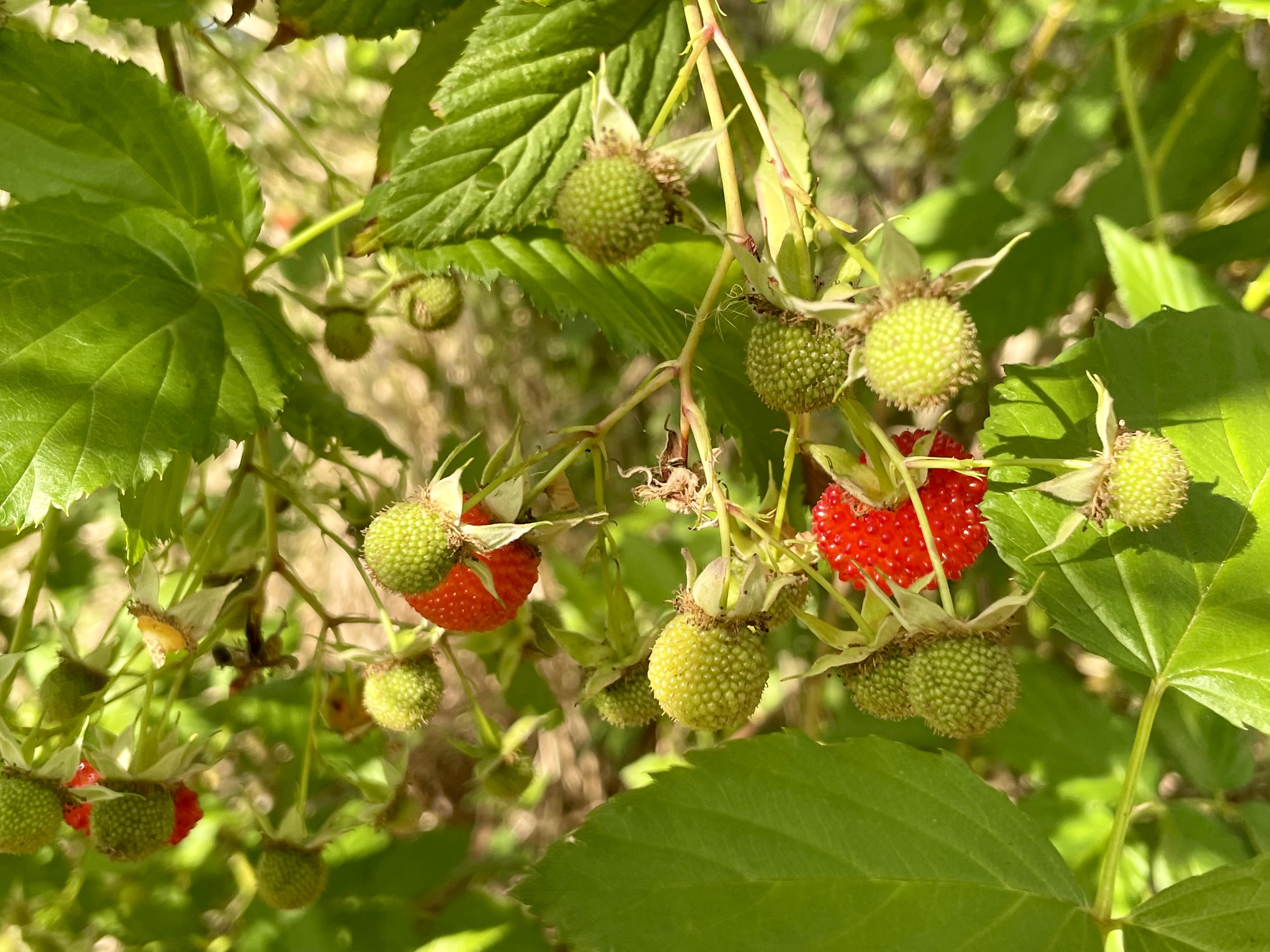
Atherton raspberry is a vigorous Queensland native bramble that handles warm, humid climates far better than ordinary European raspberries. It makes prickly scrambling canes, white flowers and bright red fruit with a sharper raspberry flavour. Give it room, regular water and pruning or it can form a dense thicket.
- Grows well in
- Tropical, Subtropical
- Lifecycle
- Perennial bramble; evergreen in warm climates
- Light
- Full sun, Part shade
- Mature size
- A large scrambling shrub that can reach roughly 2–3 m high and spread several metres if left unpruned
- Spacing
- Allow at least 1.5–2 m between plants and extra room for access, pruning and sucker control
- Growth habit
- Vigorous prickly scrambling bramble with arching canes that can form dense thickets
- Native range
- North-eastern and eastern Queensland
- Natural habitat
- Tropical forest and rainforest, including rainforest edges.
When to plant
Tropical: plant at the start of a reliably moist period or during the milder part of the year. Subtropical: autumn through spring is easiest; avoid planting into extreme heat unless irrigation is reliable.
Full growing guide
How to Grow Atherton Raspberry Plants in Australia
Atherton raspberry is a warm-climate raspberry that suits Queensland gardens. Learn how to support, prune and contain it for better fruit.
Read the full growing guidePlanting
Plant where you can reach the canes from both sides and where suckers will not be a problem. A fence, wires or sturdy trellis makes harvesting and pruning easier. Water well after planting and mulch the root zone, keeping mulch away from the crown.
Position and light
Full sun gives the heaviest flowering and fruiting, although light part shade suits very hot tropical gardens. Avoid deep shade, which produces long soft canes and less fruit.
Soil
Fertile, moisture-retentive but free-draining soil with plenty of organic matter. It naturally grows in tropical forest country but still performs poorly where roots stay waterlogged for long periods.
Watering
Keep moisture reasonably steady while the plant is establishing and while fruit is developing. Established plants are tough, but repeated drying during flowering and fruit fill reduces the crop.
Feeding
Compost and mulch do most of the work in good soil. If growth is weak, use a light balanced feed as new growth starts. Avoid heavy nitrogen feeding that produces a mass of soft cane growth.
Pruning
Prune regularly to keep the plant accessible. After the main fruiting flush, remove weak, damaged and badly placed canes and shorten long arching stems. Thin suckers that are spreading beyond the space you want the plant to occupy.
Harvest
Pick berries when they are fully red, soft and come away easily. Fruit is more tart and strongly flavoured than many cultivated European raspberries and is good fresh, cooked or made into jam.
Propagation
Grow from seed, although germination can be slow, or take cuttings of firm current-season growth. Established plants may also produce suckers that can be lifted with roots attached.
Common problems
Birds and fruit-eating wildlife can take a large share of the crop. Dense growth can make harvesting difficult and trapped humidity can encourage leaf and cane disease. Keep old tangled growth thinned and remove unwanted suckers before they become a thicket.
Safety notes
The ripe fruit is edible. Canes carry sharp prickles, so wear gloves and eye protection when pruning or working inside an established plant.
Worth knowing
This is a much better raspberry choice for warm Queensland gardens than ordinary Rubus idaeus. It is a different species with a stronger, sharper fruit flavour and a much more vigorous scrambling habit, so give it more room than a standard raspberry row.

Grow Atherton raspberry with Brancho
Add it to My Garden and Brancho works out what it needs next, timed for your climate.
How it grows around Australia
Growing this too? Share what you've noticed in your garden.
Grow a Little Wild
New plants to try, useful growing tips and a few garden jobs based on what you grow.