
Plant profile
Cordyline fruticosa
Cordyline fruticosa
Also known as Ti plant, Hawaiian ti, Good luck plant.
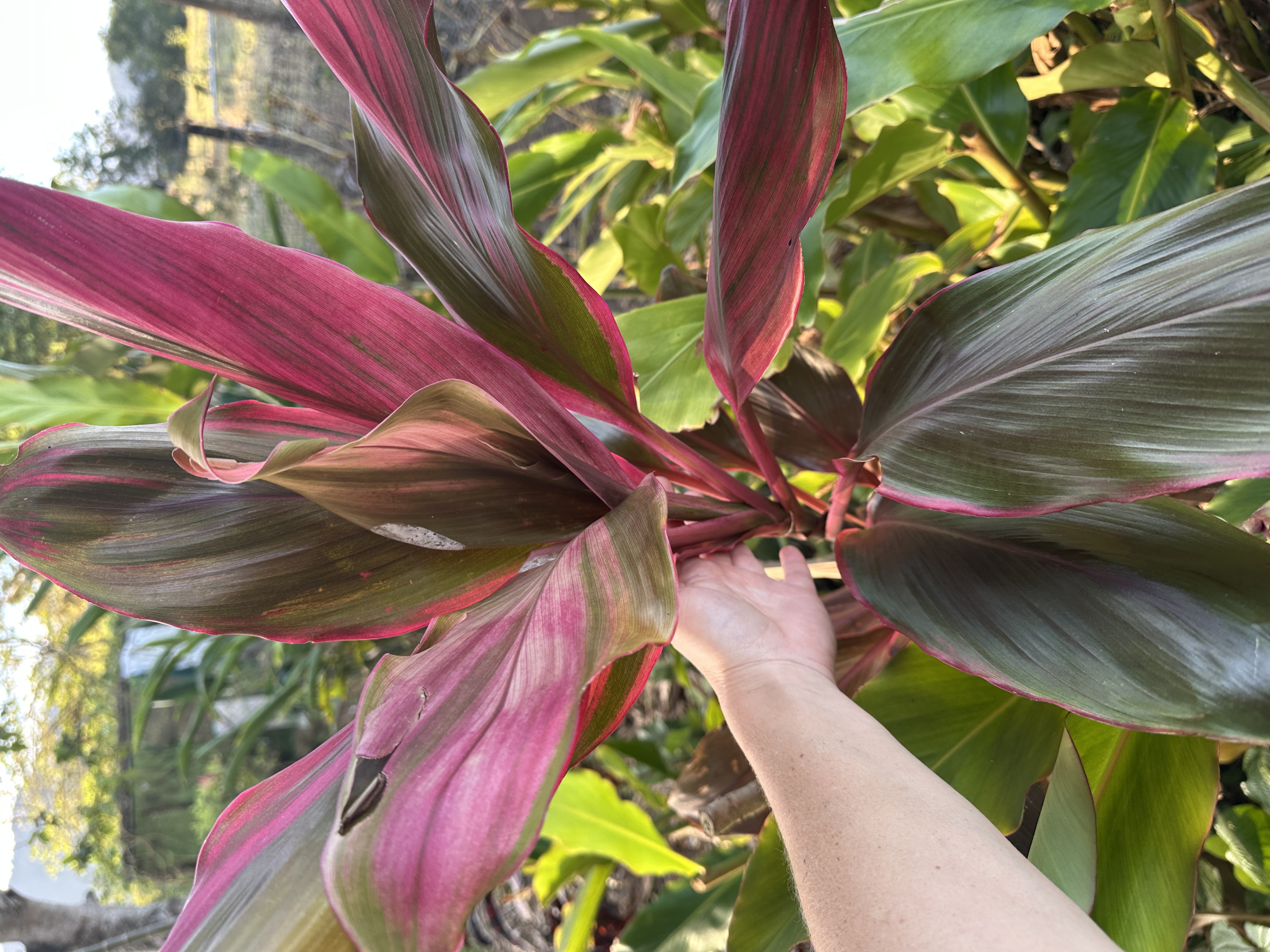
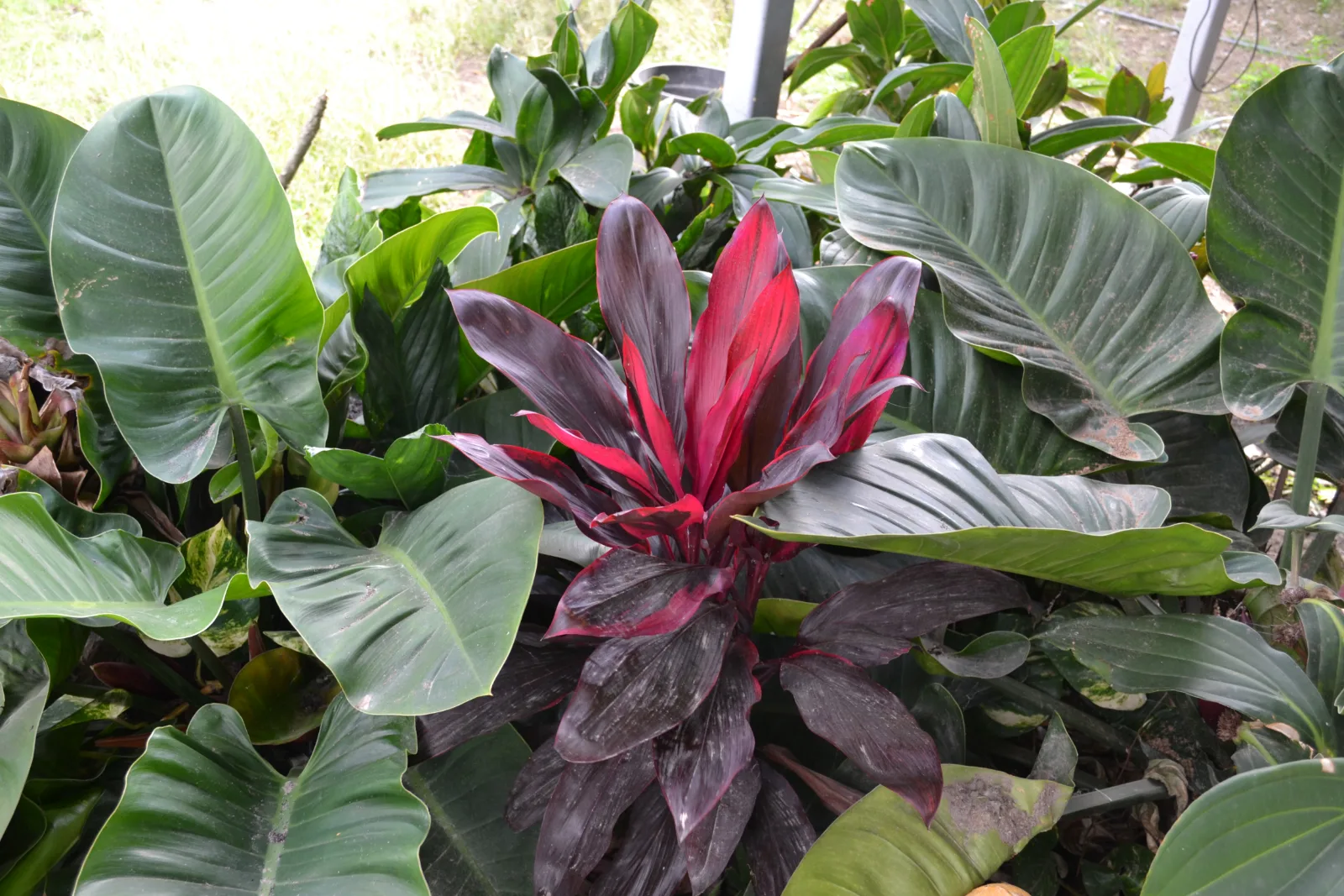
Cordyline fruticosa is a warm-climate foliage plant with broad leaves in green, burgundy, pink, red and variegated forms. It grows on upright canes and responds well when you cut tall stems back.
- Grows well in
- Tropical, Subtropical, Temperate
- Lifecycle
- Evergreen perennial shrub
- Light
- Part shade, Full sun
- Mature size
- Usually about 1–3 m tall in gardens, although cultivar, climate and pruning make a big difference. Some compact forms stay much smaller.
- Spacing
- About 80 cm–1.5 m apart for most garden plants, depending on the cultivar and the width you want the clump to reach.
- Growth habit
- Upright evergreen shrub with cane-like stems and broad leaves clustered near the stem tips. Pruned canes usually reshoot below the cut.
- Native range
- New Guinea and nearby islands through the western Pacific, including Queensland
- Natural habitat
- Wet tropical forest and rainforest margins.
When to plant
Tropical and subtropical: plant through warm weather when regular watering is available. Warm temperate: spring to early autumn. Cool districts: use a pot or a protected position and plant after frost risk.
Full growing guide
How to Grow Cordyline Plants in Australia
Cordylines bring bold pink, burgundy and green foliage to warm Australian gardens. Learn where they grow best and how to keep them looking good.
Read the full growing guidePlanting
Plant during warm weather so new roots establish quickly. Give it a sheltered position with bright filtered light or gentle sun, then water well after planting. In cooler districts, wait until frost risk has passed.
Position and light
Bright filtered light, morning sun or part shade suits most Cordyline fruticosa cultivars. Dark green and burgundy forms usually handle more direct sun. Pale or heavily variegated leaves can scorch in hot afternoon sun, while deep shade gives you greener leaves and longer stems.
Soil
Use fertile, free-draining soil with compost worked through it. If you have heavy clay, raise the planting area so water can move away from the roots. In pots, use a good-quality potting mix.
Watering
Keep the soil evenly moist through warm active growth. Water deeply, then let the upper layer begin to dry before watering again. In cool weather, reduce watering because the plant uses less moisture.
Feeding
Feed during warm active growth with a complete controlled-release fertiliser or a dilute liquid feed. Pots need more regular feeding than plants in fertile garden soil. Reduce feeding once growth slows in winter.
Pruning
Cut tall or bare canes back during warm weather. New shoots usually form below the cut and may also come from the base. Remove old lower leaves as they yellow, and keep healthy cut stems for propagation.
Harvest
Grow Cordyline fruticosa mainly for its foliage. The species has traditional food and cultural uses in parts of the Pacific, but do not treat an unidentified ornamental cultivar as food.
Propagation
Stem cuttings are the easiest method. Cut healthy cane into pieces about 10–20 cm long and plant them upright with the original top end facing up, or lay them partly into a free-draining propagation mix. Basal shoots with roots can also be separated and potted.
Common problems
Scale and mealybugs often hide where the leaves wrap around the cane. Brown tips can follow repeated drying, mineral-heavy water, fertiliser salts or root stress. Wind tears the broad leaves, and low light can make colourful cultivars greener.
Safety notes
Cordyline fruticosa has also been known as Cordyline terminalis. ASPCA lists the ti plant under that older name as toxic to dogs, cats and horses because of saponins, with vomiting and other gastrointestinal or behavioural signs possible after ingestion.
Worth knowing
Cordyline fruticosa is native to Queensland as part of a wider range through Papuasia and the western Pacific. Nursery plants include many named cultivars, so keep the cultivar label if you have one because size, leaf colour and sun tolerance can differ.
Grow Cordyline fruticosa with Brancho
Add it to My Garden and Brancho works out what it needs next, timed for your climate.
How it grows around Australia
Growing this too? Share what you've noticed in your garden.
Grow a Little Wild
New plants to try, useful growing tips and a few garden jobs based on what you grow.