



Plant profile
Creeping boobialla
Myoporum parvifolium
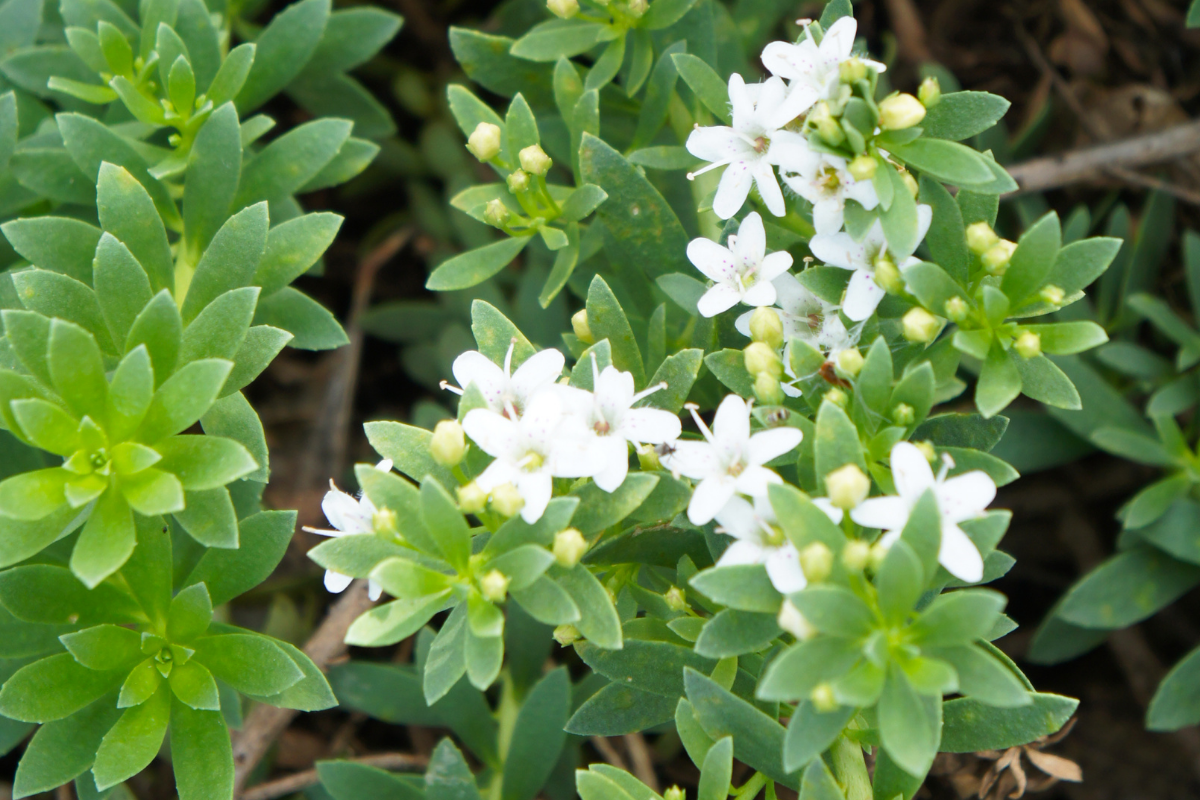
A broad, very low native groundcover for sunny banks and open beds. Fine green foliage forms a dense mat and small white to pale pink flowers appear through the warmer months.
- Grows well in
- Subtropical, Temperate, Cool / mountains
- Lifecycle
- Perennial native groundcover
- Light
- Full sun, Part shade
- Mature size
- 10–20 cm high, 1.5–3 m wide
- Spacing
- Space about 1–1.5 m apart for broad coverage; closer planting fills bare ground sooner.
- Growth habit
- Prostrate woody shrub with long rooting stems.
- Native range
- South-western New South Wales, central and western Victoria and eastern South Australia.
- Natural habitat
- Clay soils and open country, including naturally saline situations.
When to plant
Subtropical
March–August
Temperate
March–May
Cool / mountain
September–November
Plant during mild weather while you can provide reliable water for establishment. Autumn or spring suits temperate districts; in warmer subtropical gardens the cooler part of the year is often easier.
Planting
Set the root ball level with the surrounding soil and leave plenty of bare ground around it to spread into. On a bank, place plants far enough back from path edges that the first season of growth can run downhill without immediately needing trimming. Mulch between new plants, but keep coarse mulch away from stems that are trying to root into the soil. Once the mat closes, fallen leaves and its own foliage provide much of the surface cover.
Position and light
Full sun gives creeping boobialla its densest growth and best groundcover habit. It also handles light shade, although the mat can become looser where light is limited.
Soil
It grows in a wide range of soils, including clay. Drainage still matters, especially in humid weather or after heavy rain, because sections can decline where the root zone stays saturated.
Watering
Water regularly while new plants establish and the stems begin to spread. Once established, water deeply during prolonged dry weather rather than giving frequent shallow drinks.
Feeding
Established native groundcovers usually need little feeding. If growth is weak, use a light application of a low-phosphorus fertiliser suitable for Australian natives during active growth.
Pruning
Trim spreading edges when stems move over paths or into neighbouring plants. Older mats can be cut back during active growth to encourage fresh shoots and keep the groundcover dense.
Propagation
Take firm current-season cuttings, or lift naturally rooted stems from an established plant. Rooted pieces usually establish quickly when planted into moist soil and watered through the first few weeks.
Common problems
Growth becomes sparse in too much shade. Poor drainage can cause sections to die back, and scale or other sap-sucking insects may occasionally appear on stressed plants.
Worth knowing
One plant can cover far more ground than its nursery pot suggests. It is at its best in an open sunny position, where the stems form a much denser mat than they do in shade.
Featured In

Grow Creeping boobialla with Brancho
Add it to My Garden and Brancho works out what it needs next, timed for your climate.
How it grows around Australia
Growing this too? Share what you've noticed in your garden.

Grow a Little Wild
New plants to try, useful growing tips and a few garden jobs based on what you grow.