


Plant profile
Fan flower
Scaevola aemula
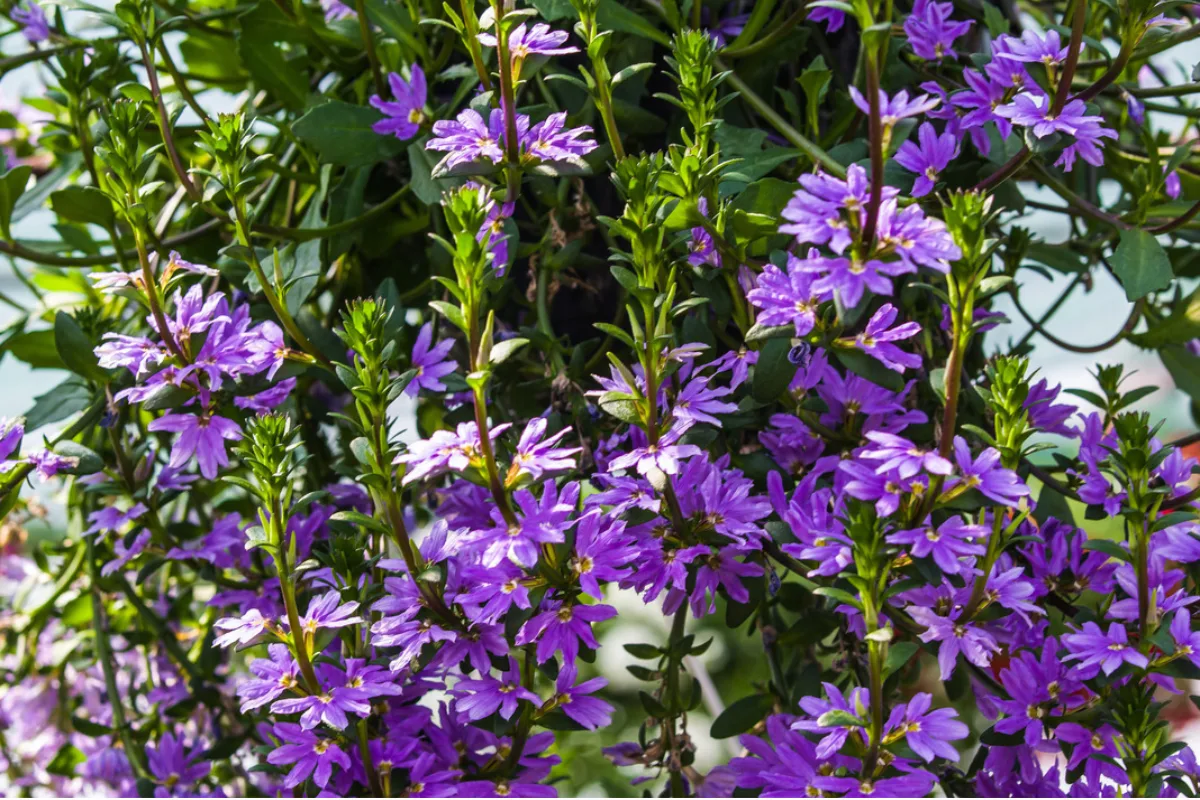
A flower-rich spreading native with distinctive fan-shaped blooms in mauve, purple, pink or white. It suits sunny borders, rockeries, hanging pots and the tops of retaining walls.
- Grows well in
- Subtropical, Temperate, Cool / mountains
- Lifecycle
- Perennial native groundcover
- Light
- Full sun, Part shade
- Mature size
- 15–30 cm high and 50 cm–1 m wide in common garden forms
- Spacing
- Space about 40–60 cm apart, adjusting for the mature spread of the cultivar.
- Growth habit
- Low spreading herbaceous subshrub.
- Native range
- Widespread through southern Australia, with many regional forms.
- Natural habitat
- Open habitats across southern Australia in varied soils and rainfall zones.
When to plant
Subtropical
March–August
Temperate
September–November
Cool / mountain
September–November
Plant during mild weather while you can provide reliable water for establishment. Autumn or spring suits temperate districts; in warmer subtropical gardens the cooler part of the year is often easier.
Planting
Plant at the same depth it was growing in the pot and allow enough room for the selected form to spread. Compact basket cultivars can be much smaller than landscape forms, so use the mature width on the nursery label when setting spacing. A row along a retaining wall can spill over the edge, while plants in a flat bed are better given room around the crown for air movement. Mulch lightly without packing material against the stems.
Position and light
Full sun gives fan flower the heaviest flowering and densest growth. It also handles light shade, which can be useful in very hot gardens where afternoon sun is harsh.
Soil
Use well-drained soil and choose a form suited to your climate. Good drainage is especially important in humid districts, where constantly wet soil can cause sudden decline.
Watering
Water regularly while new plants establish. During active growth, keep enough moisture available for steady flowering without leaving the root zone saturated for long periods.
Feeding
Established native groundcovers usually need little feeding. If growth is weak, use a light application of a low-phosphorus fertiliser suitable for Australian natives during active growth.
Pruning
Tip-prune young growth to encourage branching. After a heavy flowering flush, cut open or straggly stems back lightly so the plant fills out again.
Propagation
Firm current-season cuttings are the easiest way to copy a good garden form. Seed can also be used, but seedlings may not match a named cultivar.
Common problems
Poor drainage can cause sudden decline. Forms from drier regions may struggle in very humid, wet conditions, while aphids can gather on soft new shoots.
Worth knowing
Nursery selections vary considerably in spread and flower colour. Compact hanging-basket forms and broader landscape forms should not be given the same amount of space.
Featured In

Grow Fan flower with Brancho
Add it to My Garden and Brancho works out what it needs next, timed for your climate.
How it grows around Australia
Growing this too? Share what you've noticed in your garden.
Grow a Little Wild
New plants to try, useful growing tips and a few garden jobs based on what you grow.