
Plant profile
Feijoa
Feijoa sellowiana
Also known as Pineapple guava, Acca sellowiana, Feijoa sellowiana.
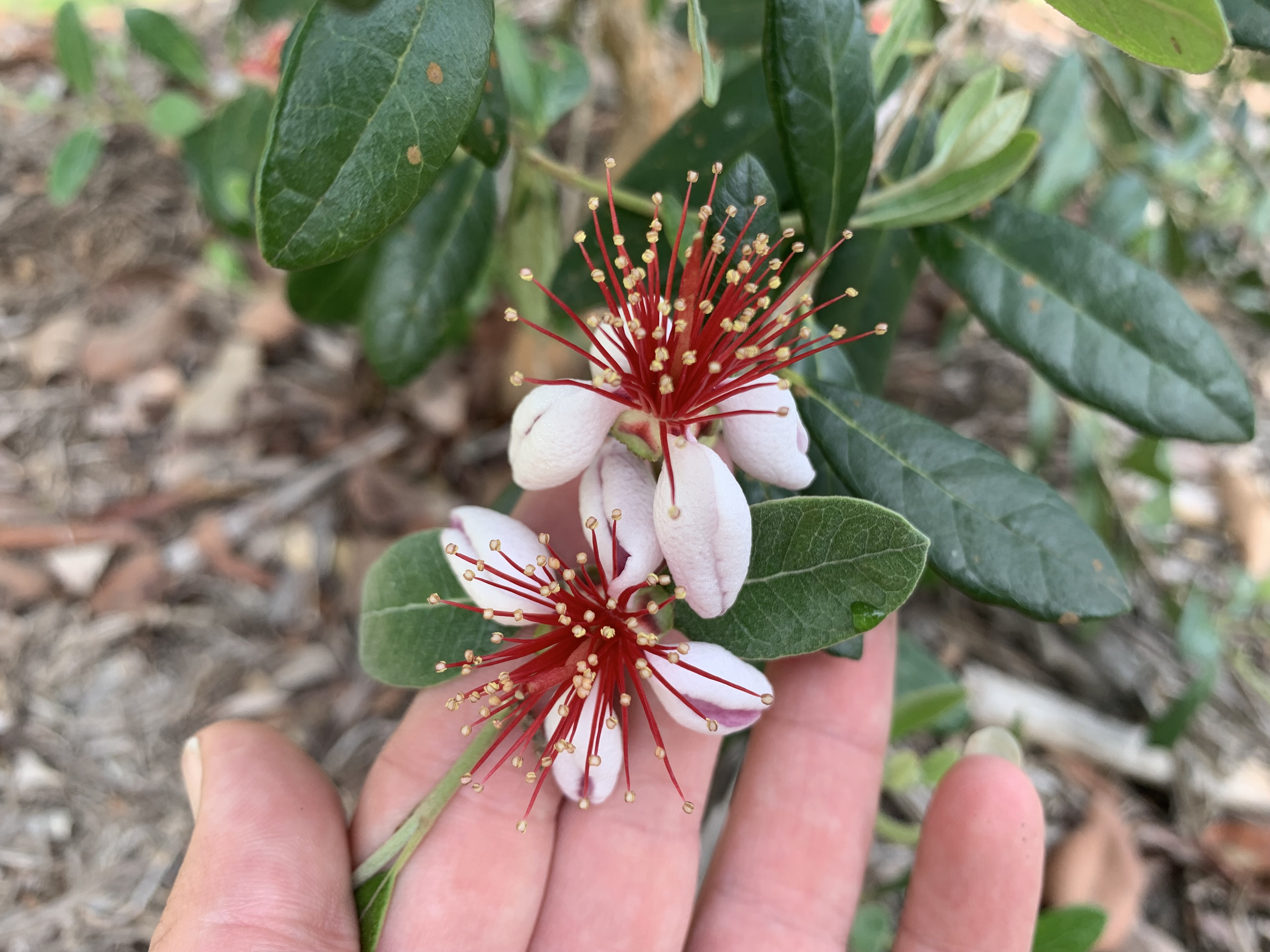
Feijoa is an evergreen subtropical fruit shrub or small tree with silver-backed leaves, edible flowers and fragrant green fruit. Cool winters, full sun and compatible pollination help it crop well.
- Grows well in
- Subtropical, Temperate, Cool / mountains, Mediterranean
- Lifecycle
- Evergreen subtropical fruit shrub or small tree
- Light
- Full sun, Part shade
- Mature size
- Usually 2–5 m high and 2–4 m wide, depending on cultivar and pruning.
- Spacing
- About 2.5–4 m apart for individual fruiting shrubs or trees; closer spacing can be used for a hedge.
- Growth habit
- Dense evergreen shrub or small tree with grey-green leaves and naturally branching growth.
- Native range
- Southern Minas Gerais in Brazil to Misiones in north-eastern Argentina, including Uruguay
- Natural habitat
- Subtropical forest, woodland and shrubland, often in upland areas.
When to plant
Subtropical
March–June
Temperate
March–May, September–October
Cool / mountain
September–October
Mediterranean
March–May
Plant in autumn or spring in mild climates. In warmer subtropical districts, choose a cultivar suited to lower winter chill.
Planting
Plant into full sun and free-draining soil during mild weather. If you want reliable fruit, check whether the cultivar is self-fertile and consider a second compatible cultivar for cross-pollination.
Position and light
Full sun gives the best flowering and fruiting. Light part shade is tolerated but can reduce cropping.
Soil
Adaptable to many free-draining soils, with best growth in fertile loam and regular organic matter.
Watering
Water regularly while establishing and keep moisture steadier during flowering and fruit development. Established plants handle some dry weather.
Feeding
Top-dress with compost and use a balanced fruit-tree fertiliser as spring growth begins if needed.
Pruning
Little pruning is needed for a naturally shaped tree. Prune after harvest only where you need to control height, thin crowded growth or form a hedge.
Harvest
Fruit is ready when it detaches easily or drops naturally. Collect promptly from the ground and use before the flesh browns or loses flavour.
Propagation
Named cultivars are best propagated vegetatively by grafting, cuttings or layering. Seedlings vary in fruit quality and may take longer to crop.
Common problems
Poor fruit set can come from inadequate winter chill, lack of compatible pollination or bad weather during flowering. Myrtle rust is a potential issue because feijoa belongs to the Myrtaceae.
Safety notes
Ripe fruit and flower petals are edible.
Worth knowing
Current Kew taxonomy accepts Feijoa sellowiana; Acca sellowiana remains widely used in Australian horticulture and government material. Cultivars vary in self-fertility and winter-chill needs, so keep the cultivar name if you know it.
Featured In
Grow Feijoa with Brancho
Add it to My Garden and Brancho works out what it needs next, timed for your climate.
How it grows around Australia
Growing this too? Share what you've noticed in your garden.
Grow a Little Wild
New plants to try, useful growing tips and a few garden jobs based on what you grow.