


Plant profile
Grass daisy
Brachyscome graminea
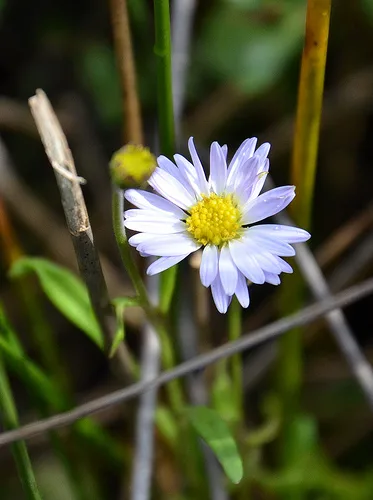
A low spreading daisy with narrow leaves and small mauve flowers. It is useful along paths, in rockeries and through the front of native beds where the soil holds some moisture.
- Grows well in
- Subtropical, Temperate, Cool / mountains
- Lifecycle
- Perennial native groundcover
- Light
- Full sun, Part shade
- Mature size
- 10–30 cm high and 40–80 cm or more wide
- Spacing
- Space about 30–40 cm apart for a joined low planting.
- Growth habit
- Stoloniferous perennial herb.
- Native range
- South-eastern Australia, including New South Wales, Victoria, Tasmania and South Australia.
- Natural habitat
- Open forest, grassland and moist sandy places from coastal districts into cooler uplands.
When to plant
Subtropical
March–August
Temperate
March–May
Cool / mountain
September–November
Plant during mild weather while you can provide reliable water for establishment. Autumn or spring suits temperate districts; in warmer subtropical gardens the cooler part of the year is often easier.
Planting
Plant rooted pieces into moist prepared soil and leave enough room for the stolons to spread. It works well as a loose flowering edge or woven through the front of a native bed rather than as a hard-wearing carpet. Fine mulch or leaf litter helps keep the shallow root zone cool, but do not bury the growing points. In warm districts, establish plants before the hottest weather so the root system is already moving when summer arrives.
Position and light
Grow grass daisy in sun to dappled shade. Good light supports flowering, while a little shelter helps the low foliage stay fresh in hot districts.
Soil
Use soil that holds some moisture but still drains freely. Loam, improved clay and sandy soil can all work if the root zone does not stay waterlogged.
Watering
Keep new plants moist while they establish. Once the patch is growing strongly, water during extended dry weather to keep the stolons active and the foliage from thinning.
Feeding
Established native groundcovers usually need little feeding. If growth is weak, use a light application of a low-phosphorus fertiliser suitable for Australian natives during active growth.
Pruning
Clip spent flower stems and untidy growth when needed. Older spreading clumps can be divided to renew the planting and fill new gaps.
Propagation
Propagate by division, rooted stolons, cuttings or seed. Rooted pieces are the quickest option when you already have an established patch.
Common problems
Long hot dry periods can thin the foliage if water is unavailable. Waterlogged soil can cause root decline, and slugs or snails may chew young shoots.
Worth knowing
Older references may use Brachyscome angustifolia for material now treated as Brachyscome graminea in current New South Wales taxonomy. It suits a lightly managed flowering ground layer rather than regular foot traffic. Featured image by Natalie Tapson, CC BY 3.0 <https://creativecommons.org/licenses/by/3.0>, via Wikimedia Commons. No changes were made.
Featured In

Grow Grass daisy with Brancho
Add it to My Garden and Brancho works out what it needs next, timed for your climate.
How it grows around Australia
Growing this too? Share what you've noticed in your garden.
Grow a Little Wild
New plants to try, useful growing tips and a few garden jobs based on what you grow.