


Plant profile
Lemon aspen
Acronychia acidula
Also known as Lemon wood, Pigeon berry.
Lemon aspen is a Queensland rainforest tree with small pale fruit carrying an intense tart citrus flavour somewhere between lemon, lime and grapefruit. It is useful as a native food plant, has glossy evergreen foliage and suits warm, moist rainforest-style gardens.
- Grows well in
- Tropical, Subtropical, Temperate
- Lifecycle
- Evergreen Australian native rainforest fruit tree
- Light
- Full sun, Part shade
- Mature size
- Often 6–15 m in cultivation or rainforest edges, potentially taller in ideal forest conditions; can be kept lower with pruning
- Spacing
- Allow roughly 4–6 m in a managed food garden, more if it will grow as a full tree
- Growth habit
- Evergreen rainforest tree with a dense glossy crown and clusters of small pale citrus-flavoured fruit
- Native range
- North-eastern Queensland, Australia.
- Natural habitat
- Wet tropical rainforest and tableland rainforest in north Queensland, including the Atherton Tableland region.
When to plant
Tropical and subtropical: plant during warm weather with reliable moisture. Warm temperate coastal districts: spring is safest. Protect young trees from frost and drying wind.
Planting
Plant into rich, free-draining soil where the tree has room to develop but can be reached for pruning and harvest. Shelter young trees from harsh drying wind and maintain mulch over the root zone. In cultivation it is sensible to manage the tree smaller than its rainforest height.
Position and light
Full sun to bright part shade. A sheltered sunny position gives good flowering and fruiting, while some filtered light suits young trees in hot districts. Avoid a dry exposed site where the large leaves are constantly stressed.
Soil
Rich, moist, free-draining loam or clay loam with plenty of organic matter suits lemon aspen. Its rainforest origin means it enjoys moisture, but garden roots still need oxygen and should not sit in stagnant water.
Watering
Water regularly while young and through long dry periods. Established trees perform best with reliable moisture, especially as flowers and fruit develop. A thick organic mulch helps keep the broad feeder-root zone cool and even.
Feeding
Use compost and a modest balanced native-appropriate fertiliser during active growth. There is no need to force a rainforest tree with heavy feeding; steady moisture, organic matter and healthy soil are more useful than repeated high-nitrogen applications.
Pruning
Prune after harvest or during active growth to keep the canopy at a practical height. Remove crowded, damaged and badly placed branches and shorten strong leaders while the tree is still young. Regular light size control is easier than reducing an old rainforest tree.
Harvest
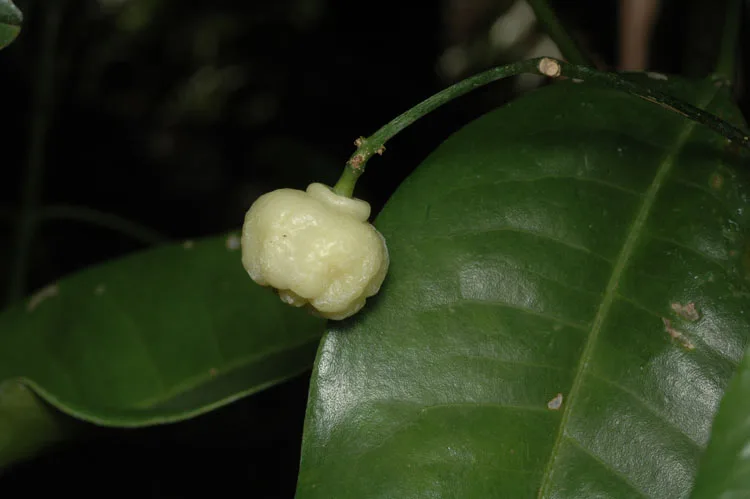
Fruit ripens from pale green to cream or yellowish and may fall naturally when ready. Collect ripe fruit promptly from beneath the tree or shake ripe clusters gently. The flavour is very sharp and aromatic, so the fruit is often used in sauces, jams, drinks, desserts and other recipes where a strong citrus note is useful.
Propagation
Fresh seed can be used for propagation and firm current-season cuttings may also root. Use fresh seed rather than storing it for long periods. Seedling trees are appropriate for this species because the profile is not tied to a named fruit cultivar.
Common problems
There is less documented backyard experience with lemon aspen than with common citrus trees. Watch for scale and leaf-chewing insects, and expect birds or other wildlife to find some of the fruit. In a dry garden, lack of moisture and an exposed position are often bigger causes of poor growth than leaf damage.
Safety notes
The ripe fruit is edible and strongly acidic. Use the fleshy fruit and discard the hard central seed material. If harvesting from wild populations, follow local rules and avoid damaging native vegetation.
Worth knowing
Lemon aspen is not a true citrus, but it is in the same family, Rutaceae. The common name is also used for Acronychia oblongifolia; this plant is Acronychia acidula, the north Queensland bushfood species.\n\nPlant profile image by Murray Fagg, CC BY 3.0 AU via Wikimedia Commons.
Featured In

Grow Lemon aspen with Brancho
Add it to My Garden and Brancho works out what it needs next, timed for your climate.
How it grows around Australia
Growing this too? Share what you've noticed in your garden.
Grow a Little Wild
New plants to try, useful growing tips and a few garden jobs based on what you grow.