


Plant profile
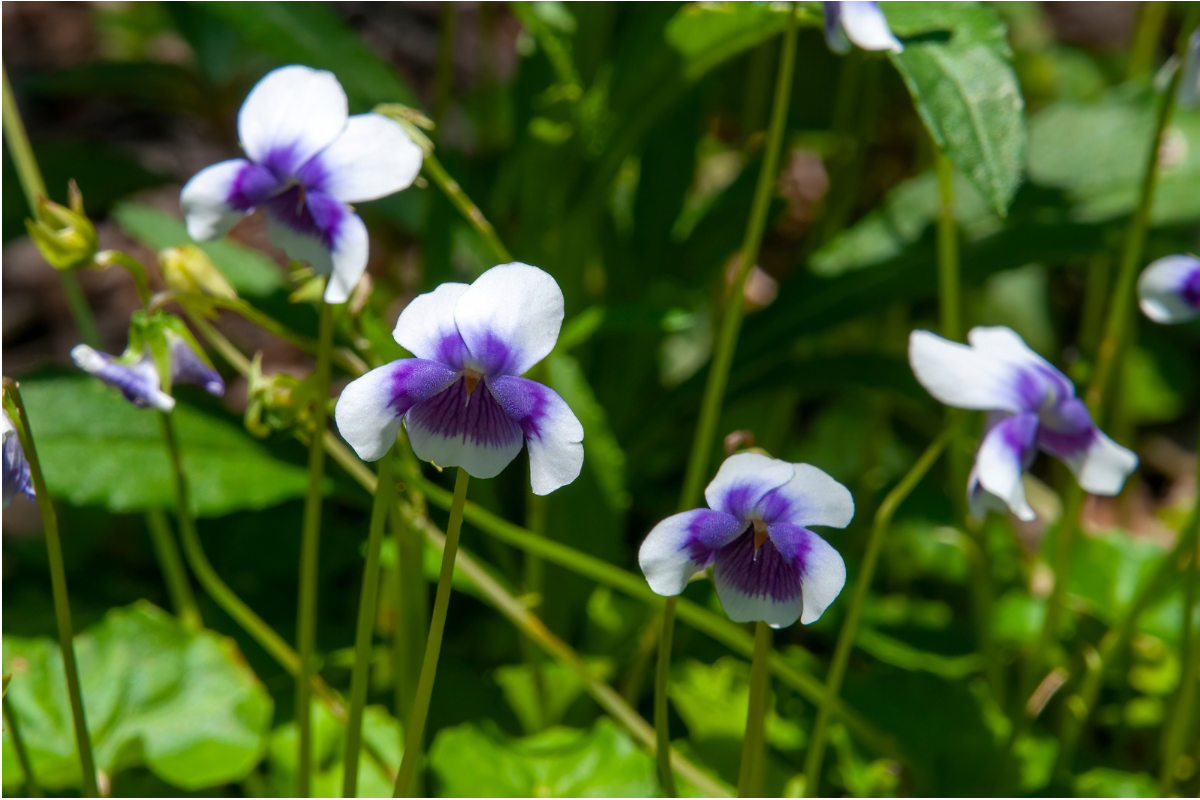
Native violet
Viola hederacea
A soft mat-forming native for sheltered shade, with small rounded leaves and white-and-mauve flowers. It is especially useful beneath shrubs, beside paths and around ferns where the soil stays moist.
- Grows well in
- Subtropical, Temperate, Cool / mountains
- Lifecycle
- Perennial native groundcover
- Light
- Part shade, Shade
- Mature size
- 5–10 cm high, spreading into broad mats
- Spacing
- Space divisions about 20–30 cm apart for a reasonably quick carpet.
- Growth habit
- Stoloniferous perennial herb forming low mats.
- Native range
- South-eastern Australia, including Queensland, New South Wales, Victoria, Tasmania and South Australia within the Viola hederacea complex.
- Natural habitat
- Sheltered moist places in forest, woodland and other protected habitats.
When to plant
Subtropical
March–August
Temperate
March–May
Cool / mountain
September–November
Plant during mild weather while you can provide reliable water for establishment. Autumn or spring suits temperate districts; in warmer subtropical gardens the cooler part of the year is often easier.
Planting
Plant rooted divisions into moist soil and water them in thoroughly. Leave leaf litter beneath shrubs where practical because the cool surface suits the shallow runners, but avoid burying the crowns under a thick layer of mulch. Native violet is particularly useful for joining small shaded planting pockets together. It can creep around rocks and ferns without creating the heavy woody layer you get from larger groundcover shrubs.
Position and light
Give native violet dappled light, morning sun or bright shade. It suits sheltered positions better than exposed hot sun, especially where the shallow root zone can dry quickly.
Soil
Grow it in moist, compost-rich soil with reasonable drainage. Leaf litter and organic matter help keep the surface cool without leaving the crown buried under a thick, wet mulch.
Watering
Keep the root zone evenly moist while it spreads. The shallow runners dry quickly in exposed positions, so check them during hot or windy weather rather than waiting for the whole patch to wilt.
Feeding
Established native groundcovers usually need little feeding. If growth is weak, use a light application of a low-phosphorus fertiliser suitable for Australian natives during active growth.
Pruning
Pull or clip wandering runners where they move beyond the area you want covered. Remove tired foliage as needed and divide crowded patches if they become thin or messy in the centre.
Propagation
Propagation is easiest from rooted pieces taken from the edge of an established patch. Separate a section with roots attached, replant it promptly and keep it moist while it settles in.
Common problems
Dry exposed positions cause scorched leaves and sparse growth. Slugs and snails may chew foliage in damp sheltered beds, particularly around fresh growth.
Worth knowing
Viola hederacea is variable across its range, so leaf and flower details differ between populations and nursery material. In the garden, think cool, sheltered ground rather than an exposed dry bank.
Featured In

Grow Native violet with Brancho
Add it to My Garden and Brancho works out what it needs next, timed for your climate.
How it grows around Australia
Growing this too? Share what you've noticed in your garden.
Grow a Little Wild
New plants to try, useful growing tips and a few garden jobs based on what you grow.