

Plant profile
Pigface
Carpobrotus glaucescens
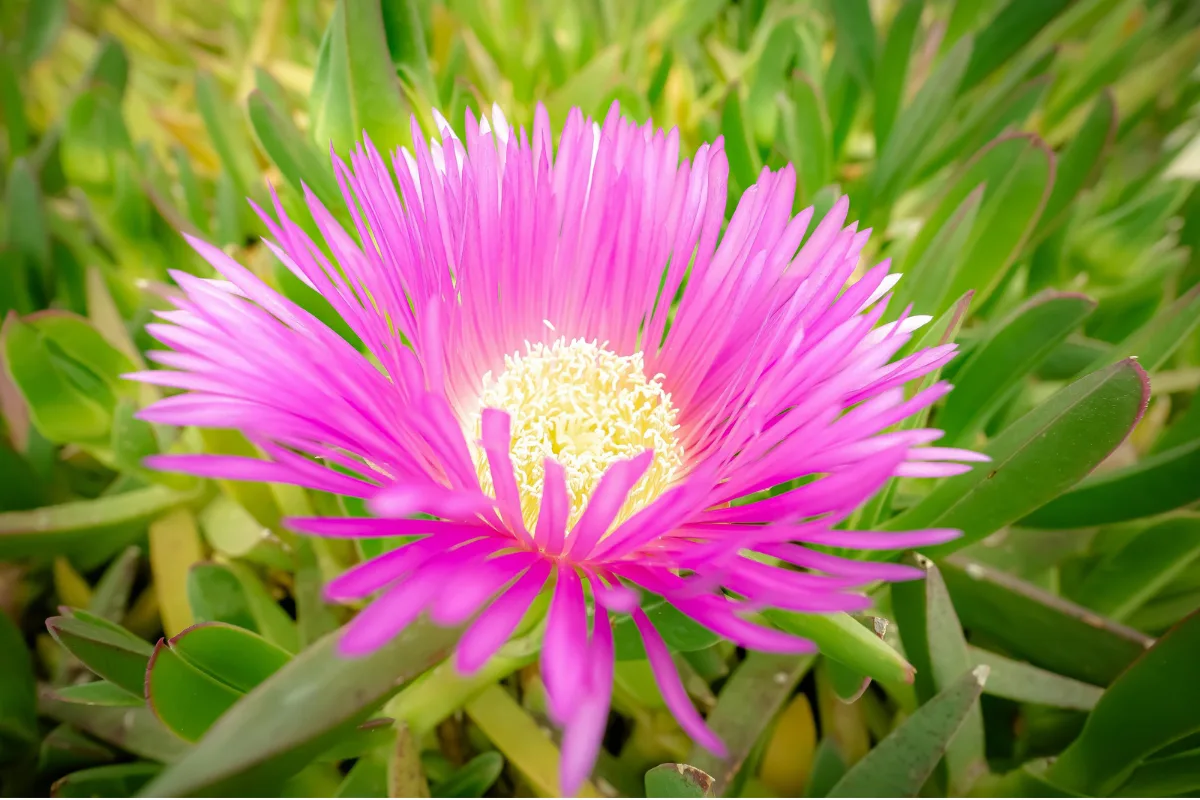
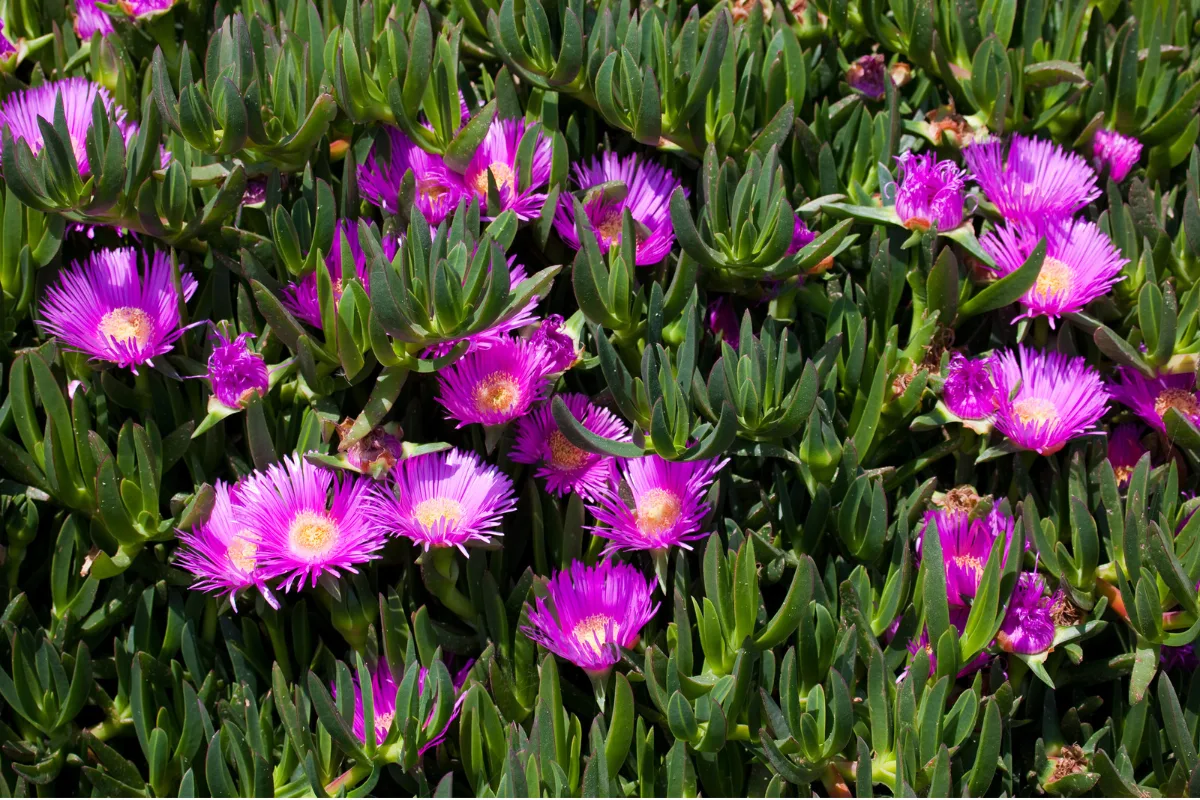
A tough east-coast native succulent for exposed sunny ground, with thick triangular leaves and large pink-purple flowers. It is particularly useful on coastal banks and sandy sites.
- Grows well in
- Tropical, Subtropical, Temperate
- Lifecycle
- Perennial native groundcover
- Light
- Full sun
- Mature size
- 10–20 cm high with stems to around 2 m
- Spacing
- Space roughly 60–100 cm apart where broad coverage is wanted.
- Growth habit
- Prostrate succulent perennial.
- Native range
- East coast of Australia, including Queensland, New South Wales and Victoria.
- Natural habitat
- Coastal sand dunes and exposed sandy sites, usually close to the sea.
When to plant
Tropical
April–August
Subtropical
March–August
Temperate
March–May
Plant during mild weather while you can provide reliable water for establishment. Autumn or spring suits temperate districts; in warmer subtropical gardens the cooler part of the year is often easier.
Planting
Plant on a mound, slope or other sharply drained position with the crown no deeper than it sat in the nursery pot. The long succulent stems can be directed across bare soil at planting, but they will quickly find their own path. Keep woody mulch away from the crown in humid climates and use gravel or a thin mineral mulch if you want the surface covered. On coastal banks, allow stems to spread naturally rather than clipping them into a formal edge.
Position and light
Give native pigface full sun. Strong light keeps the succulent stems compact and supports the best flower display, especially on open coastal banks and sandy sites.
Soil
Grow it in sharply drained sandy or gritty soil. Heavy soil should be raised or amended for drainage because persistently wet conditions are the main cause of rot.
Watering
Water regularly while new plants establish, then let the soil dry before watering deeply again. Established plants handle dry periods well once their roots have spread.
Feeding
Established native groundcovers usually need little feeding. If growth is weak, use a light application of a low-phosphorus fertiliser suitable for Australian natives during active growth.
Pruning
Cut stems back where they spread across paths or into neighbouring plants. Bare sections can be renewed by pegging healthy tips onto soil or replacing them with rooted cuttings.
Propagation
Stem cuttings are quick and reliable. Let healthy cut pieces settle into sharply drained soil, or grow the species from seed when you want greater genetic variation.
Common problems
Rot is the main problem in heavy or persistently wet soil. Snails may chew soft growth and scale can occasionally occur, especially on stressed plants.
Worth knowing
This profile is for the east-coast native Carpobrotus glaucescens. Do not assume every pigface growing or sold nearby is the same species, particularly where introduced Carpobrotus is present.
Featured In

Grow Pigface with Brancho
Add it to My Garden and Brancho works out what it needs next, timed for your climate.
How it grows around Australia
Growing this too? Share what you've noticed in your garden.
Grow a Little Wild
New plants to try, useful growing tips and a few garden jobs based on what you grow.