


Plant profile
Running postman
Kennedia prostrata
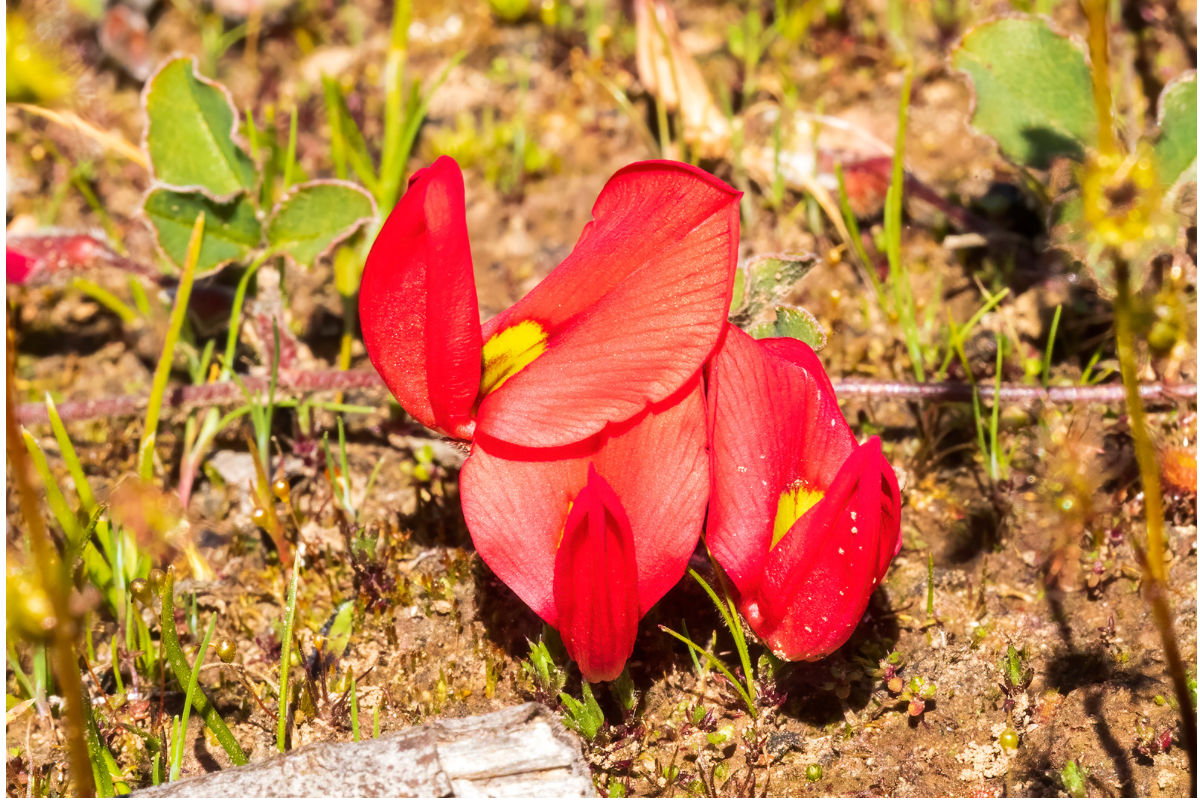
Running postman is a low Australian native groundcover with vivid scarlet pea flowers in spring. Unlike many kennedias, it stays prostrate rather than climbing, so it can spill over banks, rocks, retaining walls and hanging baskets without adding much height.
- Grows well in
- Subtropical, Temperate, Cool / mountains
- Lifecycle
- Perennial native groundcover
- Light
- Full sun, Part shade
- Mature size
- 10–20 cm high, spreading to about 2–2.5 m
- Spacing
- Allow roughly 1–1.5 m between plants where broad cover is wanted.
- Growth habit
- Non-climbing trailing native legume.
- Native range
- Southern Australia from south-western Western Australia through South Australia, Victoria and Tasmania to north-eastern New South Wales.
- Natural habitat
- Open forest, woodland, grassland and heath.
When to plant
Subtropical
March–August
Temperate
March–May
Cool / mountain
September–November
Plant during mild weather while you can provide reliable water for establishment. Autumn or spring suits temperate districts; in warmer subtropical gardens the cooler part of the year is often easier.
Planting
Plant into open soil where young stems can receive light and spread across the surface. Keep a clear ring around new plants until they have started running, because dense grasses and vigorous groundcovers can smother them early. On a bank or rockery, let the stems find their own route rather than trying to peg every shoot into a formal pattern. The plant looks best when the red flowers can sit above a loose natural mat.
Position and light
Grow it in full sun to light shade. Good light keeps the growth dense and supports the strongest flowering, while a little shelter is useful in hot or exposed sites.
Soil
It grows in a range of well-drained soils, including sandy heath and woodland soils. Avoid ground that stays saturated for long periods, because the roots need air as well as moisture.
Watering
Water regularly while the plant establishes. Once rooted in, give it an occasional deep watering through extended dry weather. In a long dry spell it may die back and reshoot when conditions improve.
Feeding
Established native groundcovers usually need little feeding. If growth is weak, use a light application of a low-phosphorus fertiliser suitable for Australian natives during active growth.
Pruning
Trim long stems after flowering or whenever they spread into paths or neighbouring plants. Light trimming is enough; the natural trailing habit is part of the appeal.
Propagation
Propagate from seed or firm current-season cuttings. Seed has a hard coat, so scarification or another suitable pre-treatment helps water reach the seed and improves germination.
Common problems
Young plants can be smothered by vigorous neighbours. Extended dry conditions can cause dieback, although established plants may reshoot when conditions improve. Persistently wet soil can damage roots.
Worth knowing
The scarlet pea flowers are one of the best reasons to grow it, and they can be especially striking when the stems spill over a bank, retaining wall or hanging basket. It usually flowers through spring, with some forms continuing into early summer.
Featured In

Grow Running postman with Brancho
Add it to My Garden and Brancho works out what it needs next, timed for your climate.
How it grows around Australia
Growing this too? Share what you've noticed in your garden.
Grow a Little Wild
New plants to try, useful growing tips and a few garden jobs based on what you grow.