

Plant profile
Yellow buttons
Chrysocephalum apiculatum
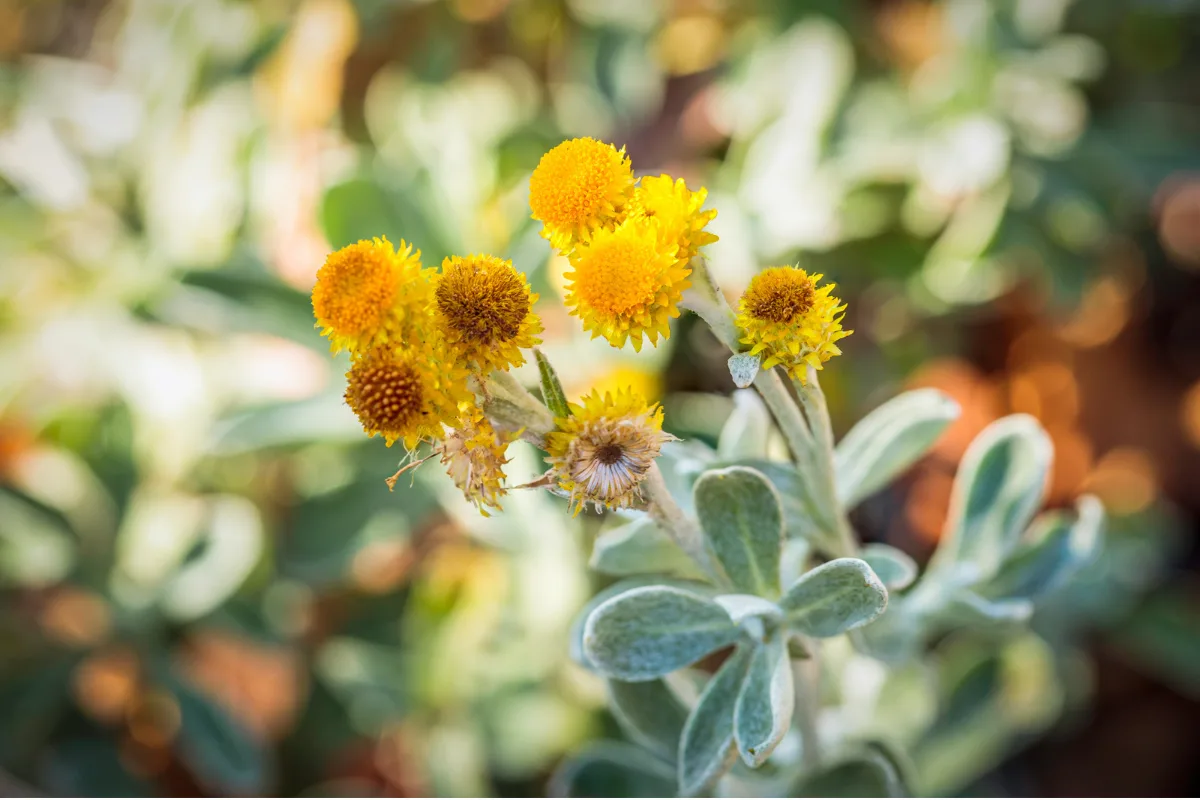
Golden papery flower heads sit above grey-green foliage on this extremely variable Australian native. Choose a low spreading form for groundcover use; upright forms behave more like small perennials.
- Grows well in
- Tropical, Subtropical, Temperate, Cool / mountains
- Lifecycle
- Perennial native groundcover
- Light
- Full sun, Part shade
- Mature size
- species 7–60 cm high; low forms commonly 40–80 cm wide
- Spacing
- For low forms, space about 30–50 cm apart. Upright forms need different spacing.
- Growth habit
- Variable perennial herb or small subshrub.
- Native range
- Native across every Australian state and the Northern Territory.
- Natural habitat
- Open and disturbed habitats across many vegetation communities and soil types.
When to plant
Tropical
March–August
Subtropical
March–August
Temperate
March–May
Cool / mountain
September–November
Plant during mild weather while you can provide reliable water for establishment. Autumn or spring suits temperate districts; in warmer subtropical gardens the cooler part of the year is often easier.
Planting
Choose a low-growing form before you plan the spacing because this species varies enormously. Plant into an open sunny bed with the crown at soil level and keep mulch clear of the stems. Low silver-leaved forms look particularly good repeated through gravelly beds and around rocks. If you are using it as living cover between shrubs, leave small gaps rather than planting a solid monoculture; the clumps will broaden and the gaps give you room to manage weeds while they establish.
Position and light
Full sun suits yellow buttons best. Light shade can be useful in very hot districts, especially for softer garden forms, but too much shade reduces the dense flowering habit.
Soil
The species is adaptable across many soil types, but garden plants perform best where excess water drains away. Low spreading forms are particularly useful in open, sunny, lightly mulched beds.
Watering
Water regularly until new plants establish. Once settled in, give occasional deep watering through prolonged heat or dry weather rather than keeping the soil constantly wet.
Feeding
Established native groundcovers usually need little feeding. If growth is weak, use a light application of a low-phosphorus fertiliser suitable for Australian natives during active growth.
Pruning
Trim spent stems and lightly shear spreading forms when they become untidy. Avoid cutting hard into bare old growth unless the particular cultivar is known to reshoot well.
Propagation
Use cuttings to keep the habit and flower display of a selected low form. Seed is suitable for the species, but seedlings can vary considerably in height and spread.
Common problems
Forms selected from dry regions may be shorter lived in dense humid conditions. Poor drainage can cause root decline, so choose a form suited to your climate.
Worth knowing
Check the mature habit of the actual plant you buy. Low selected forms make excellent groundcovers, while upright forms of this very variable species do not make the same carpet.
Featured In
Grow Yellow buttons with Brancho
Add it to My Garden and Brancho works out what it needs next, timed for your climate.
How it grows around Australia
Growing this too? Share what you've noticed in your garden.
Grow a Little Wild
New plants to try, useful growing tips and a few garden jobs based on what you grow.