
Plant profile
Acerola cherry
Malpighia emarginata
Also known as Barbados cherry, West Indian cherry, Acerola.
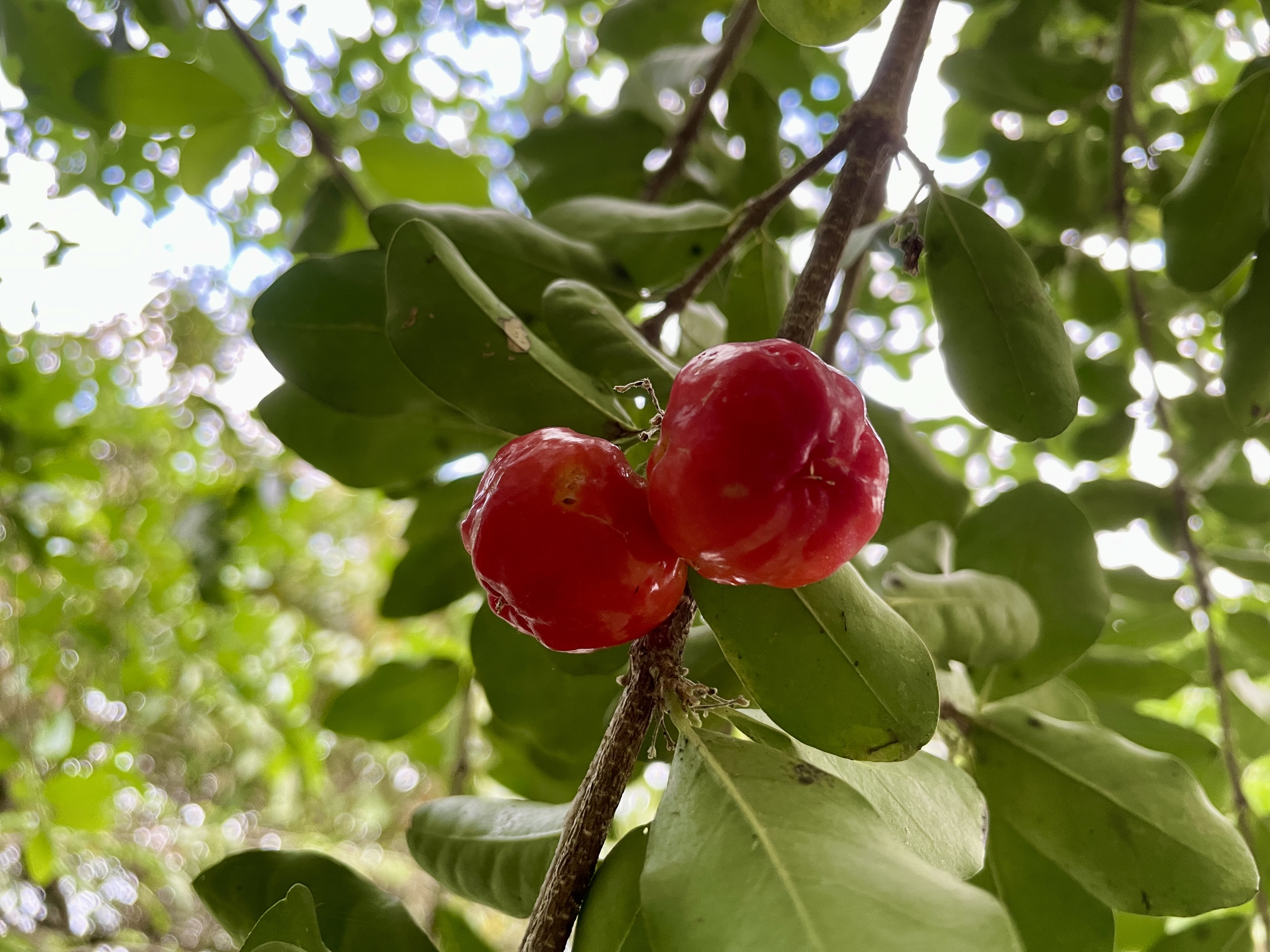
Acerola is a fast-growing tropical fruit shrub or small tree with bright red, tart-sweet fruit and very high vitamin C.
- Grows well in
- Tropical, Subtropical
- Lifecycle
- Evergreen to semi-evergreen tropical fruit shrub
- Light
- Full sun, Part shade
- Mature size
- Usually 2–4 m high and wide, smaller with pruning
- Spacing
- About 2–3 m apart
- Growth habit
- Fast-growing branching shrub or small tree
- Native range
- Mexico to northern Colombia
- Natural habitat
- Seasonally dry tropical habitats; grows as a shrub or small tree, including forest, woodland, savanna and shrubland.
When to plant
Tropical
February–May, September–November
Subtropical
March–May, September–November
Temperate
September–November
Mediterranean
September–November
Tropical and subtropical: plant during warm weather with reliable moisture. Acerola has little cold tolerance, so protect young plants from frost and use the warmest sheltered position available in marginal climates.
Full growing guide
How to Grow Acerola Cherry Plants in Australia
Grow Acerola cherry plants in Australia for vitamin C-rich red fruit, with practical care for healthy trees, flowering and regular warm-season crops.
Read the full growing guidePlanting
Plant into warm, free-draining soil and water regularly while roots establish. Give the shrub room to branch naturally or plan to prune it as a compact fruiting plant. In heavy ground, improve drainage across the planting area rather than creating a deep wet pocket around the root ball.
Position and light
Full sun gives the heaviest crops. Light part shade is tolerated in hot climates, but too much shade reduces flowering and fruiting.
Soil
Free-draining loam, sandy soil or clay soil with organic matter, ideally slightly acidic to neutral. Acerola can grow in clay, but compacted ground that stays saturated still needs drainage improved before planting.
Watering
Water regularly during establishment, flowering and fruit development, tapering off once trees are established. Established plants handle short dry periods but crop better with consistent moisture.
Feeding
Mulch and add compost, with a light fruit-tree feed containing potassium during active growth if needed, applied in spring and again after a heavy fruit flush.
Pruning
Prune after a heavy crop or growth flush to keep the plant compact and easy to pick.
Harvest
Pick fruit when fully red and slightly soft. Ripe acerola bruises easily and is best eaten or processed soon after picking. In warm climates, established plants can flower and fruit in repeated flushes across the warmer months rather than producing one single crop.
Propagation
Seed, cuttings and grafting are used. Seedlings can vary in fruit quality, so named selections are best propagated vegetatively.
Common problems
Fruit fly, scale and leaf spot can occur. Birds may take ripe fruit.
Safety notes
Ripe fruit is edible.
Worth knowing
Acerola cherry (Malpighia emarginata) is also called Barbados cherry. Its fruit is exceptionally high in vitamin C and is often processed into juice, pulp or powder because the soft fruit loses condition quickly after harvest. The many-branched shrub can also be managed as an informal fruiting hedge or screen.
Featured In
Grow Acerola cherry with Brancho
Add it to My Garden and Brancho works out what it needs next, timed for your climate.
How it grows around Australia
Growing this too? Share what you've noticed in your garden.
Grow a Little Wild
New plants to try, useful growing tips and a few garden jobs based on what you grow.