



Plant profile
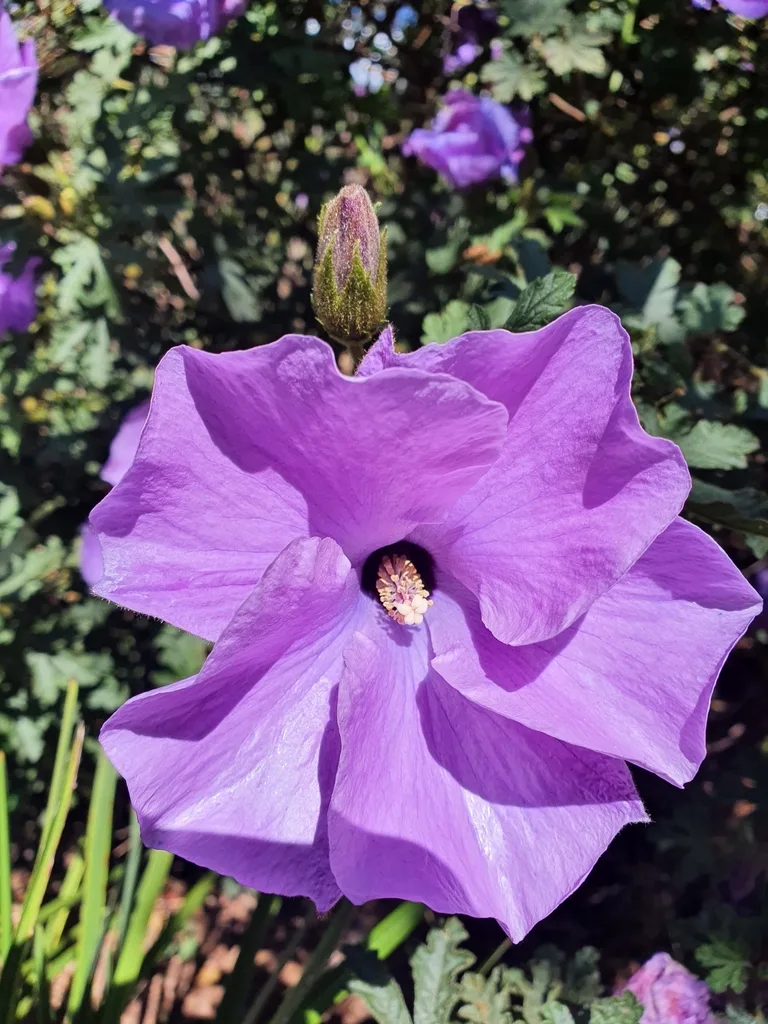
Lilac hibiscus
Alyogyne huegelii (Endl.) Fryxell
Also known as Native hibiscus, Blue hibiscus, Hibiscus huegelii.
Each lilac hibiscus flower lasts just a day or two, but a mature shrub can open hundreds through the season. Grow this fast-growing Australian native in sun and give it a good yearly prune for a beautiful purple-flowered hedge.
 By Elle · Published
- Grows well in
- Mediterranean, Temperate, Subtropical
- Lifecycle
- Evergreen perennial shrub
- Light
- Full sun, Part shade
- Mature size
- Usually 2–2.5 m high and wide; some named selections reach 3.5 m high and 4 m across.
- Spacing
- Around 1.5–2 m for a loose hedge; allow more for vigorous, wide cultivars.
- Growth habit
- Fast-growing evergreen shrub with upright, spreading woody branches.
- Native range
- Native to southern Western Australia and South Australia. It grows across much of south-western WA and in separated populations in South Australia.
- Natural habitat
- Grows in coastal and near-coastal heath and shrubland, often on sandy or gravelly soils. In parts of the WA Wheatbelt it also grows on heavier red loam, where populations can emerge strongly after bushfire.
When to plant
Subtropical
April–June
Temperate
September–November
Mediterranean
March–May
Planting
In Mediterranean parts of Australia, plant lilac hibiscus in autumn so it can establish through the cooler months. If your winters bring hard frosts, wait until spring. Allow around 1.5–2 m between ordinary shrubs for a loose flowering hedge, and more if you're growing a large selection like ‘West Coast Gem’. Plant at the same depth it was growing in its pot, water well and add mulch around the root area. Keep the mulch away from the main stems. Give young plants some protection from strong winds while they settle in.
Position and light
Grow lilac hibiscus in full sun for the best flowering. It also grows in part shade, although the display may be lighter. An open spot with some shelter from the strongest winds is ideal. In warm, humid districts, give it plenty of airflow and well-draining soil. Temperate and Mediterranean gardens are particularly good places to grow it. Established shrubs handle moderate frost, although very cold weather may damage new, soft growth.
Soil
Lilac hibiscus grows naturally on sandy and gravelly ground, but it can handle heavier soil if water drains away well. At the Australian National Botanic Gardens in Canberra, some of the best shrubs have grown in mulched, fairly heavy soil with good drainage. If your clay holds water for days after rain, grow it on a broad raised mound or in a large pot filled with a free-draining potting mix. You can grow it in acidic, neutral or alkaline soil.
Watering
Water new shrubs regularly while their roots spread into the surrounding soil. Check beneath the mulch and give them a deep soak when the soil starts drying out. Once established, lilac hibiscus is fairly drought tolerant, particularly in gardens with dry summers. Give it an occasional deep watering through extended hot, dry weather if flowering or new growth slows.
Feeding
A light application of native-plant fertiliser in spring is plenty for most shrubs. You can add a little compost under the mulch if your soil is very sandy or poor. You may find an established plant grows and flowers well without extra fertiliser. Registered ‘West Coast Gem’ growing notes describe good results with little or no supplementary feeding.
Pruning
Give lilac hibiscus a good prune once the main flowering flush finishes. Shorten long stems to encourage bushy new growth, and take off any dead or crowded branches. At the Australian Garden in Cranbourne, Victoria, Angus Stewart pointed out that these shrubs can carry flowers for much of the year. His advice was to cut them back by at least half about once a year to keep them compact. Older plants can also shoot again from woody stems, so a large shrub can be brought back into shape.

Practical uses
Flowering hedges and screens: Plant several shrubs along a sunny boundary for a loose hedge covered in purple flowers through the warmer months. You can keep it rounded with an annual prune. The usual form grows around 2 m tall, making it useful behind smaller garden flowers.
A flowering shrub for pots: Try a compact selection like ‘Karana’ if you have a courtyard or small garden. It generally grows around 1–1.5 m high and wide. Give it a generous pot with free-draining mix and check the moisture more often than you would for a shrub in the ground.
Different flower colours: Most lilac hibiscus plants have mauve or purple flowers, but white, pink and other forms exist. For a particular colour, buy a named plant in flower.

Permaculture uses
A mixed native garden: Grow lilac hibiscus towards the back of a sunny wildlife border, with lower flowering shrubs and groundcovers in front. It makes a broad, flowering screen and, once established, needs little extra water in dry-summer gardens. Give it some shelter from strong wind, especially while the shrubs around it are still young.
A real-life example: At Birrarung Marr and Royal Park in Melbourne, John Rayner and Claire Farrell's Woody Meadow project planted Alyogyne huegelii in the taller layer of mixed native shrubs. The plantings also included Grevillea ‘Coconut Ice’ in the middle layer and Goodenia ovata ‘Gold Cover’ near the ground. Across the trial, 95% of plants grew back after the first hard pruning, and the beds developed dense cover and kept flowering through very dry summer weather.
Chop and drop: When you prune your lilac hibiscus, chop the small leafy branches and leave them under the shrubs as mulch. Chip thicker stems first, or add them to the compost.

Wildlife and pollinators
Lilac hibiscus attracts bees and butterflies, and Geographe Plants in Busselton lists honeyeaters among the birds that visit it. The large flowers contain nectar, making this a lovely shrub for a sunny wildlife garden.
There's a particularly interesting record from the Gold Coast. Cotton looper moth (Anomis flava) caterpillars have fed on lilac hibiscus leaves, then rolled leaves around themselves when they pupate. The caterpillars are green and move with a looping action. Check the undersides of leaves if you'd like to find them.
Harvest
If you want to collect seed, wait until the rounded capsules are dry and beginning to turn brown. Cut a few off and let them finish drying in a paper bag. You can sow the seed to raise more shrubs, although seedlings may have different flower colours from their parent.
Propagation
Cuttings are a handy way to grow another lilac hibiscus, especially if you want to keep the same flower colour. Take 7–8 cm tips from healthy, partly firm stems that aren't flowering. Remove the lower leaves and put the cuttings into a moist, free-draining propagation mix. Keep them warm in bright, filtered light while they root. You can also sow seed. The Australian Native Plants Society reports that the seed generally germinates without any special pretreatment.
Common problems
If the shrub starts looking thin and bare along its lower branches, give it a stronger prune after flowering. It responds well by making new shoots from older wood. Occasionally, cotton looper moth caterpillars chew the leaves. Look under the foliage and inside rolled leaves if you find a lot of holes. A few caterpillars are part of the garden's wildlife, and small numbers usually need no treatment.
Worth knowing
After a 2022 wildfire near Narrogin in Western Australia, local naturalist Doug Sawkins found thick stands of lilac hibiscus growing on red loam slopes where he hadn't seen it before the fire. He describes the local wild populations as fire-following shrubs with lives of around 6–8 years.
Companion and understory planting
Try low-growing native flowers at the front of a sunny lilac hibiscus planting. Yellow buttons (Chrysocephalum apiculatum) bring another flower colour, while native pigface (Carpobrotus rossii) can spread across sandy ground below the shrubs.
Give the hibiscus enough space to grow into a broad bush without covering the smaller plants. If you're putting together a coastal-style garden, keep the most exposed plants at the front and grow lilac hibiscus further back with some wind protection.
Livestock and safety
We couldn't find reliable information about lilac hibiscus being eaten by horses, cattle, sheep, goats or poultry.
Tradition and history
The Adnyamathanha people are the Traditional Owners of the Flinders Ranges in South Australia. An Adnyamathanha plant-use resource describes how fibre from lilac hibiscus stems was spun and knotted into nets for trapping emus, ducks and other animals.
The plant was originally described as Hibiscus huegelii in 1837 and later moved into the Australian genus Alyogyne. Its species name honours Baron Karl von Hügel, who collected plants in Australia during the 1830s.
Growth and roots
Lilac hibiscus is a fast-growing, woody shrub with upright stems that spread out as the plant matures. Most forms reach roughly 2–2.5 m tall and about as wide. Their deeply lobed leaves can make a lovely bushy screen if you prune regularly.
Some named forms grow much bigger. The Australian Cultivar Registration Authority lists ‘West Coast Gem’ at 2–3.5 m tall and 2–4 m wide. Check which form you've bought before planting close to a path or squeezing several into a narrow bed.
References
- Kew POWO — Alyogyne huegelii
- Australian Native Plants Society — Alyogyne huegelii
- Australian Plants Society NSW — Alyogyne huegelii
- Australian National Botanic Gardens — Alyogyne huegelii
- Botanic Gardens of South Australia — Alyogyne huegelii
- Gardening Australia — Native Hibiscus, Clarence Slockee 2025
- Gardening Australia — The Diversity Garden, Angus Stewart 2007
- Australian Cultivar Registration Authority — West Coast Gem
- Gardening with Angus — Karana
- Gardening with Angus — West Coast Gem
- Geographe Plants, Busselton — Lilac Hibiscus
- Foxes Lair — Doug Sawkins, Fire Ephemeral Plants in Narrogin
- Butterfly House — Anomis flava cotton looper
- HASS SA — Adnyamathanha Plant Uses, page 9
- City of Melbourne — Woody Meadow Pilot Project, planting species and outcomes (2020)
- South Australian Department for Environment and Water — Adnyamathanha Traditional Owners of the Flinders Ranges
Featured In

Grow Lilac hibiscus with Brancho
Add it to My Garden and Brancho works out what it needs next, timed for your climate.
How it grows around Australia
Growing this too? Share what you've noticed in your garden.
Updates appear in My Brancho. Email alerts are not available yet.
Grow a Little Wild
New plants to try, useful growing tips and a few garden jobs based on what you grow.