
Plant profile
Blue lechenaultia
Lechenaultia biloba Lindl.
Also known as Leschenaultia biloba, Lechenaultia biloba, Blue leschenaultia, Blue lechenaultia flower, Lechenaultia biloba White Flash.
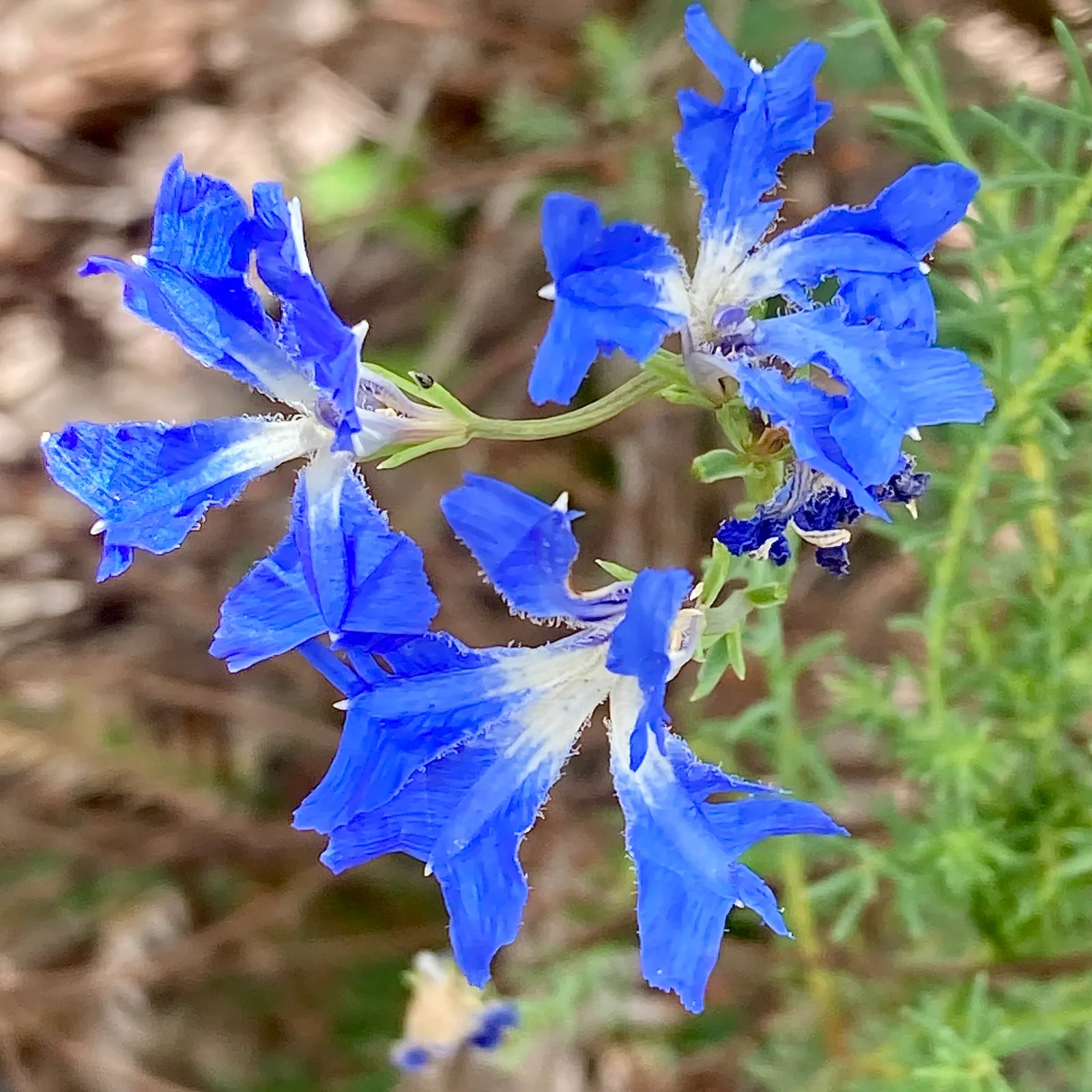
Blue lechenaultia has some of the loveliest bright-blue flowers you'll see on an Australian native. I'd grow it in a wide pot or sunny rockery, where the flowers can spread over the edges. Take a few cuttings each spring and you'll have replacements to share.
 By Elle · Published
- Grows well in
- Mediterranean, Temperate, Cool / mountains, Arid / inland
- Lifecycle
- Evergreen perennial shrub; 3–6 years in cultivation
- Light
- Full sun, Part shade
- Mature size
- Usually around 20–50 cm tall and 30–60 cm wide in cultivation; some wild forms may be taller or wider.
- Spacing
- About 30–50 cm apart for groups, with open air around the mounds.
- Growth habit
- Low, spreading to softly mounding evergreen shrub with many fine stems, narrow blue-green leaves and masses of bright blue two-lobed flowers; some forms sucker.
- Native range
- Native to south-western and central southern Western Australia, particularly the Swan Coastal Plain, Darling Range and sandplains extending toward the south coast.
- Natural habitat
- Open heath and woodland on sandy and gravelly soils, including granite- and laterite-influenced sites; often found in well-draining rocky or sandy ground.
When to plant
Temperate
September–November
Cool / mountain
September–November
Arid inland
March–May
Mediterranean
March–June
Planting
Blue lechenaultia is beautiful in a wide pot or rockery, where those intensely blue flowers can spill over the edge. Plant in autumn in a mild WA-style climate, or spring in colder areas. I'd use a sandy native potting mix and put it somewhere sunny with plenty of air around the little stems. At the Australian National Botanic Gardens, gardeners have grown it successfully in raised beds and among rocks. It's a lovely idea to copy if your own soil is heavy or wet after rain.
Position and light
Give blue lechenaultia plenty of sun. It naturally grows in open sandy and gravelly country in WA, where the flowers get bright light for much of the day. A little afternoon shade may help in very hot districts, especially for potted plants. It handles some frost, but prolonged humid weather can be difficult. In a subtropical garden, I'd grow it in a movable pot under bright light so you can give it shelter from days of heavy summer rain.
Soil
Blue lechenaultia loves sandy or gravelly soil that drains very quickly. Grow it among rocks, in a raised bed or in an open native potting mix. Ron Jackson at the Australian National Botanic Gardens even described healthy plants in beds built up with limestone chips. If your garden soil stays wet, a big pot is probably the easiest way to enjoy the flowers.
Watering
Keep young plants lightly moist while they establish, then let the upper mix dry a little before watering again. In a pot, check more often through hot or windy weather. Give it a proper drink when needed and let the excess run out. This little WA shrub doesn't like constantly wet roots, especially through cooler weather.
Feeding
Blue lechenaultia needs very little fertiliser in a good sandy bed. If yours looks pale and isn't growing much, try a small amount of slow-release fertiliser made for Australian natives. Strong feeding won't make up for a potting mix that stays wet.
Pruning
Once the main flush of blue flowers has finished, lightly trim the green tips to keep the plant compact. Cut just above leafy shoots and remove any dead twigs you find. If it's spreading prettily over rocks, you can leave most of the growth alone and trim only where it gets in your way.

Practical uses
Flowering pots and hanging baskets
Blue lechenaultia makes a gorgeous hanging basket, with fine stems and bright blue flowers spilling over the sides. Brian Walters of the Australian Native Plants Society recommends lechenaultias for hanging baskets, even along Australia's humid east coast where they're harder to grow in garden beds. Give yours a sunny position, a very free-draining mix and some shelter from prolonged rain.
Anne Rees grew blue lechenaultia and the compact 'Big Blue' in small terracotta pots under the eaves of her house. She could control how much moisture reached the roots. That's a lovely idea to try if your garden soil stays wet.
Colour for rockeries and native gardens
Try blue lechenaultia among pale gravel or granite rocks, with the little stems tumbling between stones. The Australian National Botanic Gardens has grown it successfully in raised, free-draining beds, and it's lovely along the front of a sunny native flower garden.
You can choose from pale sky blue, rich deep blue, white and two-toned forms. I'd group a few different colours where you can enjoy those unusual fan-shaped flowers up close.

Permaculture uses
Blue lechenaultia makes a lovely low flowering layer along the sunny edge of a mixed native garden. Plant it among other small wildflowers, where taller shrubs won't shade it. Its flowers are visited by insects, giving the garden another flowering plant through late winter and spring.
At Neil and Wendy Marriott's Panrock Ridge garden near Stawell in Victoria, blue lechenaultia grows in their Verticordia Garden with yellow-flowered native everlastings (Chrysocephalum apiculatum) nearby. The garden has sandy, granitic soil, and the Marriotts use gravel and other inorganic mulch around many of their dry-country plants. It's a beautiful combination to try in a sunny, free-draining bed.
Native habitat restoration
Blue lechenaultia also features in Western Australian restoration research. Siegfried Krauss and John Koch studied its genetic variation to help guide seed sourcing for revegetating jarrah forest after bauxite mining.
If you're restoring bushland within its natural range, choose plants from an appropriate local source and get advice from a local restoration group. Greg Keighery also documented blue lechenaultia spreading after being moved into a different part of Perth bushland with road gravel, so local origins matter.

Wildlife and pollinators
The City of Mandurah's native plant guide lists bees, butterflies and other insects visiting blue lechenaultia. Those bright blue flowers are easy to watch in a pot near a garden path, so you can see what's turning up when they open.
Harvest
Those brilliant blue flowers are only small, so I'd leave most of them on the plant and enjoy the colour in the garden. You can snip a few little flowering stems for a miniature posy. For propagation, healthy new shoots make much more useful cuttings than old woody pieces.
Propagation
Blue lechenaultia is excellent for taking cuttings. Ron Jackson at the Australian National Botanic Gardens recommends 6–10 cm pieces of partly firm new growth, with the best results in late spring and summer. Strip off the bottom leaves, put the cuttings into a sandy mix and keep them warm and lightly moist while they root. Seed is possible too, but cuttings are easier if you want to keep exactly the same flower colour. Gardeners at Walcott Garden have grown several blue forms and successfully taken cuttings from their favourites.
Common problems
Branches turning grey or dying: Check for mould and fungal dieback after prolonged damp weather. Remove dead twigs, give the plant more airflow and make sure its roots drain well. A plant declining quickly: Very heavy soil can be difficult for this WA shrub. ANBG found that plants in poorly drained ground could fail within one season. A raised bed or pot gives you much more control. Few flowers: Try a brighter position if the shrub has become shaded.
Worth knowing
There's a gorgeous two-tone form called 'White Flash', with white centres and deep-blue outer petals. If you see the name Leschenaultia biloba on a plant label, that's another accepted spelling of the same species.
Companion and understory planting
Blue lechenaultia looks gorgeous with other little WA wildflowers. Try native daisies or small scaevolas in a sunny raised bed with similar watering needs. Leave gaps so the blue flowers can spread without taller shrubs covering them.
For a simple arrangement, I'd put a pot of blue lechenaultia in front of a larger flowering native shrub and let the stems trail over the rim. The pot keeps its sandy mix separate from the soil needed by bigger plants.
Tradition and history
Blue lechenaultia grows naturally on Noongar Country in south-western Western Australia. For the University of Western Australia's 2023 Wildflower Season exhibition, Aunty Vivienne Hansen researched traditional plant names. The names listed for blue lechenaultia include Beljieah yootah boolyah and Worl djet, meaning sky flower. What a lovely name for those brilliant blue flowers!
The exhibition follows the Noongar seasonal calendar, including Djilba (August–September) and Kambarang (October–November), when many south-western wildflowers bloom. Blue lechenaultia is among the flowers that appear as the wetter winter weather gives way to spring.
Its European gardening history is interesting too. In the 1830s, plant collector James Drummond sent Western Australian seed to Britain. In her chapter on blue lechenaultia in The Mind of Plants, Jessica White describes how James Veitch grew plants at his Exeter nursery. One was exhibited in London in 1841 and won a Silver Knightian Medal. The blue flowers became fashionable with British gardeners, even though the plants were expensive to buy.
Growth and roots
Blue lechenaultia is a small woody shrub with fine roots that can grow quite deeply in sandy, free-draining ground. Ron Jackson at the Australian National Botanic Gardens also described forms that send up new shoots from spreading roots.
Near paths, walls and paving
I'd happily try blue lechenaultia along a sunny path or in a raised rockery beside a wall. Its small size makes damage to sound paving or foundations unlikely. Some forms sucker, so you might find shoots growing beyond the original plant. A wide pot is an easy way to contain those forms.
Near pipes and septic systems
I'd keep suckering forms away from buried services and leave room to reach drains when they need maintenance.
Don't plant it over septic tanks or absorption trenches. Lismore City Council advises keeping shrubs off these areas. A pot or rockery away from the system lets you enjoy the flowers without putting roots where they don't belong.
How far can it spread?
Most garden plants form little spreading shrubs, but some forms grow new shoots from their roots. WA botanist Greg Keighery documented blue lechenaultia occupying about 300 square metres in Shenton Bushland, Perth, after arriving in gravel used for road surfacing. It was spreading vegetatively. That's a localised example, but a good reason to watch for suckers near bushland.
References
- Lechenaultia biloba — Australian National Botanic Gardens, Growing Native Plants (Ron Jackson)
- Lechenaultia biloba — Australian Native Plants Society
- Blue-flowered natives — Gardening Australia
- Blue Leschenaultia — City of Mandurah 2024 Native Seedling Giveaway booklet
- Lechenaultia biloba — Which Plant Where
- Leschenaultia biloba — Kew Plants of the World Online current spelling
- Walcott Garden — grower experiences and blue lechenaultia cuttings
- Greg Keighery (2013) — Lechenaultia biloba in Shenton Bushland, WA
- Hang 'em High! — Brian Walters, Australian Native Plants Society
- Growing Australian Native Plants in Containers — Anne Rees, Australian Native Plants Society
- Marriott Garden, Panrock Ridge — ANPSA Garden Design Study Group
- Krauss & Koch (2004) — Rapid genetic delineation of provenance for plant community restoration
- Wildflower Season (2023) — Lawrence Wilson Art Gallery, UWA; Noongar plant names researched by Vivienne Hansen
- The Mind of Plants — Jessica White, 'Blue Leschenaultia' (chapter 7), Synergetic Press
- Lismore City Council — Septic tank and absorption trench system
Featured In
Grow Blue lechenaultia with Brancho
Add it to My Garden and Brancho works out what it needs next, timed for your climate.
How it grows around Australia
Growing this too? Share what you've noticed in your garden.
Updates appear in My Brancho. Email alerts are not available yet.
Grow a Little Wild
New plants to try, useful growing tips and a few garden jobs based on what you grow.