
Plant profile
Red Flowering Gum
Corymbia ficifolia
Also known as Red-flowering gum, Eucalyptus ficifolia, Scarlet flowering gum, Yorgum.
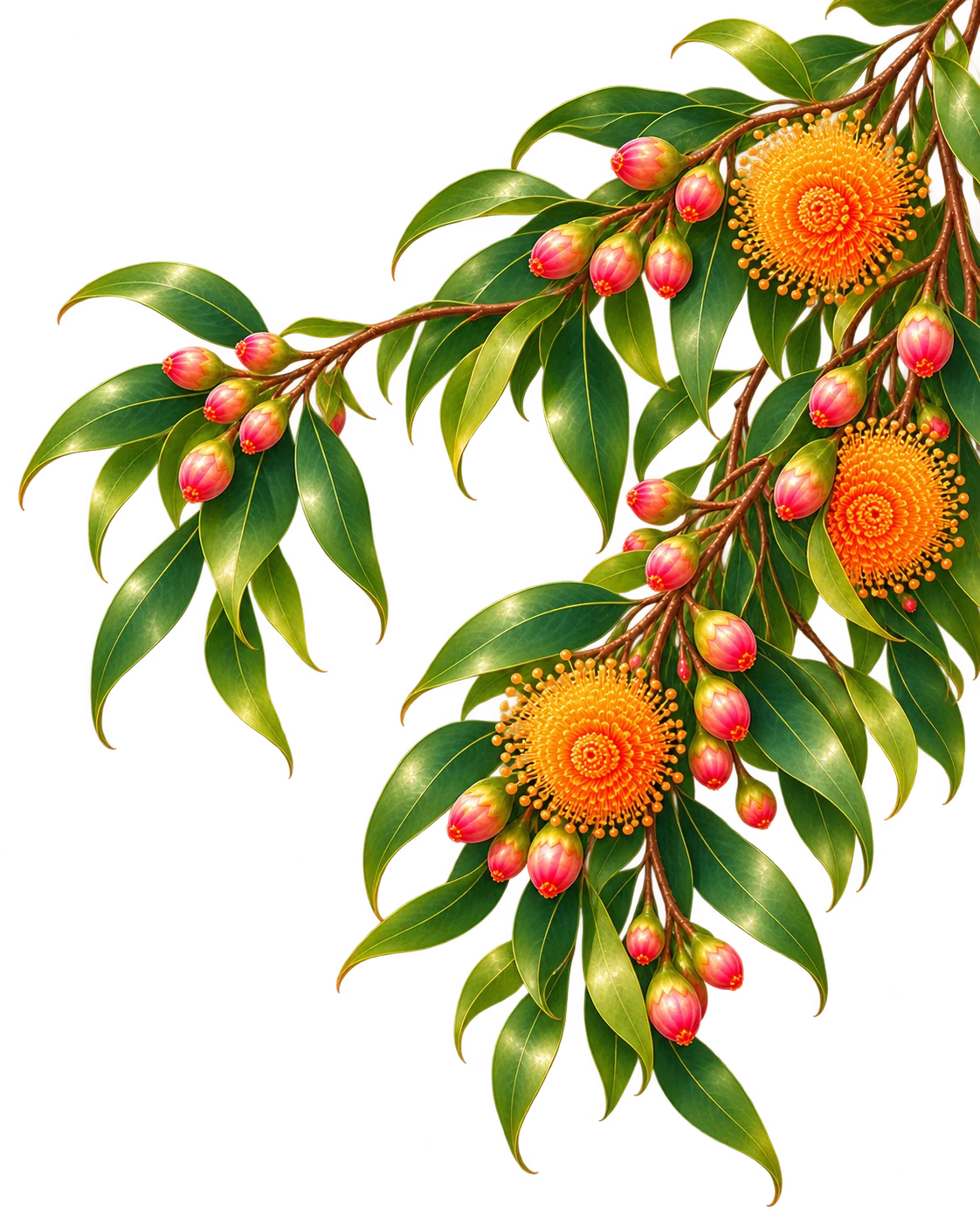
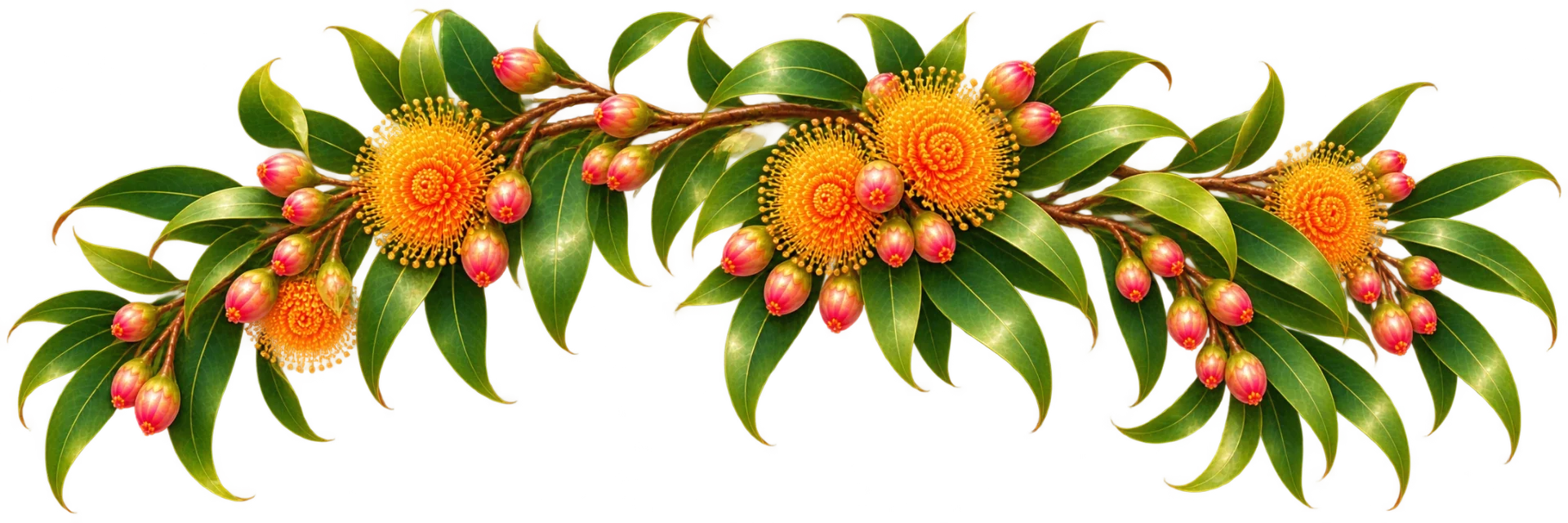
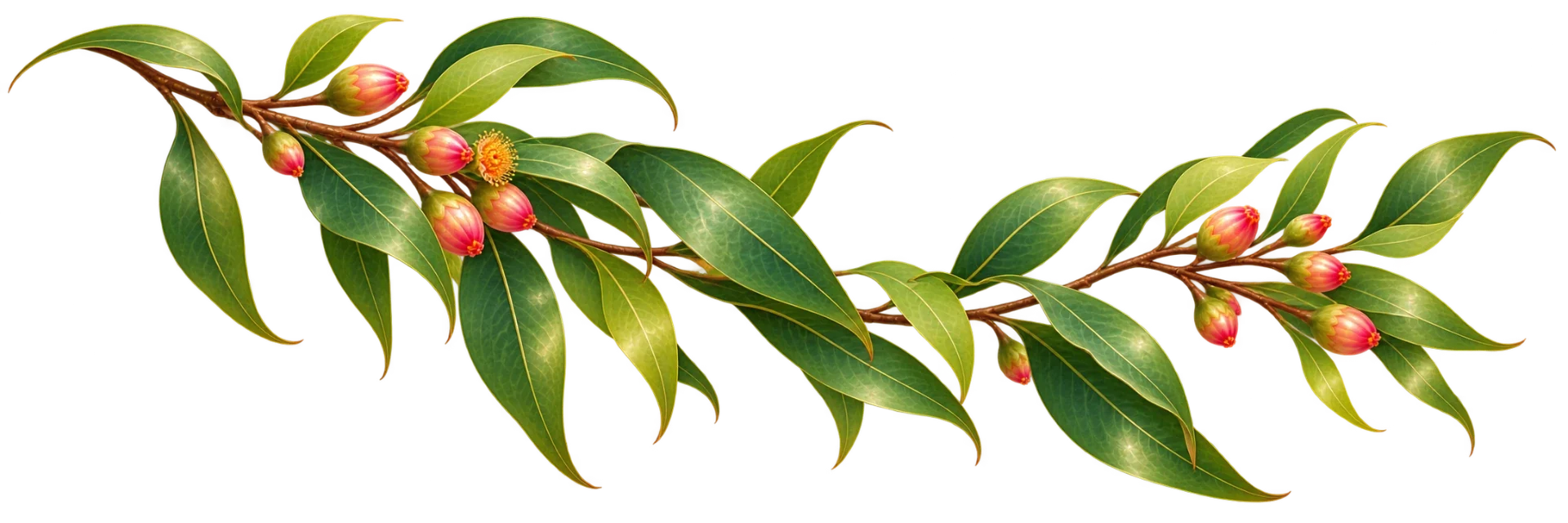
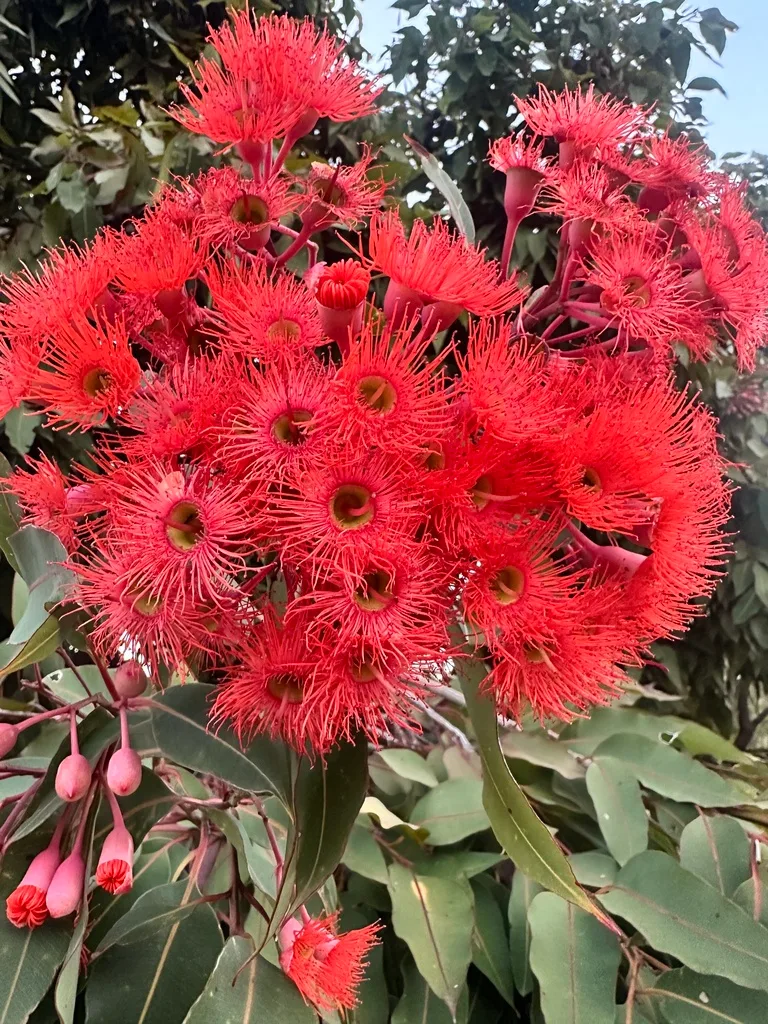
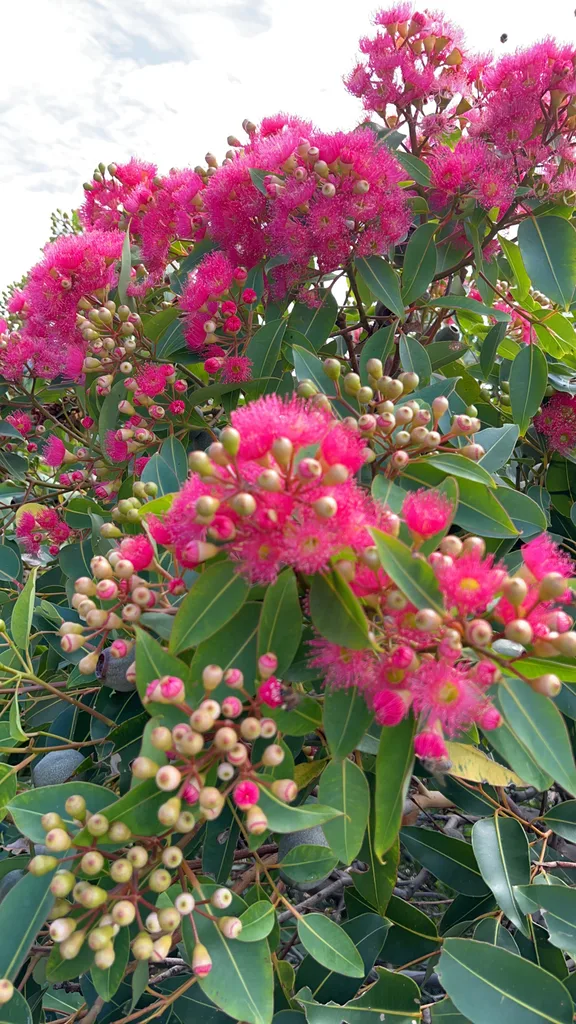
Red flowering gum is a beautiful Australian native tree, with a spreading canopy and large clusters of red, orange or pink flowers in summer. The nectar-rich flowers bring birds and bees into the garden. It grows into a small to medium tree and does best in full sun with well-drained soil.
 By Elle · Published
- Grows well in
- Mediterranean, Temperate
- Lifecycle
- Evergreen perennial tree
- Light
- Full sun
- Mature size
- Usually 6–10 m tall and about 3–5 m wide; some established trees become broader or taller. Selected grafted forms may stay around 3 m.
- Spacing
- Allow at least 4–6 m of open growing space, more for an unselected full-sized tree; keep well clear of buildings and underground services.
- Growth habit
- Evergreen, spreading small to medium tree with rough bark, a broad crown and a basal lignotuber.
- Native range
- Small natural range in south-western Western Australia, especially the Walpole–Mount Frankland and Broke Inlet area along the south coast.
- Natural habitat
- Open forest and woodland on slopes, often in white or grey sand, sandy loam and gravelly ground in a Mediterranean-rainfall region.
When to plant
Temperate
September–October
Mediterranean
April–June
In Mediterranean areas, plant in autumn when the weather is mild. In cooler temperate gardens, spring is a good time once severe frosts have passed. Keep young trees watered during their first hot summer.
Planting
Choose a sunny spot with good drainage and plenty of room for the mature canopy. Autumn is a good planting time in Mediterranean climates, and spring is great for cooler places. Just make sure the worst frost has passed. Dig a hole a bit wider than the root ball and plant at the same depth it grew in its pot. Water it in well and spread mulch over the soil, leaving a gap around the trunk. If you've bought a grafted tree, keep the graft union above the soil and mulch. Young plants often settle in better than large, pot-bound plants.
Position and light
Give red flowering gum full sun for the best flowers and a healthy canopy. It grows beautifully in Mediterranean and warm-temperate parts of Australia, especially where the summers are dry and the soil drains well. The original Western Australian species can have a hard time in humid summers and constantly wet soil (like in coastal eastern Australia and the tropics). If you garden in those areas, ask about a locally proven grafted flowering gum or a C. ficifolia × C. ptychocarpa hybrid. Some of those hybrids have been bred for humid climates. Protect your young trees from hard frost.
Soil
Red flowering gum grows naturally in sandy and gravelly soils in south-western Western Australia. In the garden, sandy loam and other well-drained types of soil work well. A slightly acidic to neutral soil is a good starting point. If you have clay soil, improve the drainage before planting or build a generous raised mound with soil that drains easily. Check that water can move away from the planting area after heavy rain. Avoid salty and strongly alkaline soils where possible, as the tree can struggle in them.
Watering
Water young trees deeply while their roots grow into the surrounding soil. Check underneath the mulch, and water again if the soil is drying out. During hot, dry weather, a newly planted tree may need more frequent checking. Once established, red flowering gum handles dry periods quite well. Give it a deep watering during long dry weather, especially if you want to support flowering.
Feeding
A little bit of native plant fertiliser in spring can help a young tree grow well, especially in poor or sandy soil. Follow the label rate and water it in after applying. You can also add a thin layer of compost around the outer root area and refresh the mulch when needed. Keep both clear of the trunk. An established tree growing well in garden soil may need very little extra feeding. I have a gorgeous flowering gum in the middle of a dry, rocky paddock and I never fertilise it. Granted, maybe I'd get more flowers if I did, but we're got to be realistic also. It's looking great, growing well, and flowered in its second year. Couldn't ask for more!
Pruning
You usually won't need much pruning. Remove dead or damaged branches and trim young growth if you'd like a tidier shape. Pruning after flowering also gives you a chance to take a few flowering branches for a vase. Start shaping while the tree is young, because older branches are much harder to manage. If you have a grafted variety, remove any shoots that grow from below the graft as soon as you notice them. The only pruning I do on mine is the lower branches. I love the view it creates where I can still see everything but it gives you shade and beautiful flowers on top. The lower branches act as chop and drop - I just chuck them underneath the tree and that's where they stay.

Practical uses
Wood for carving and turning
Red flowering gum wood can be used for woodturning and carving. Australian woodworker Henry Pamula has made a lovely sculptural bowl from a salvaged piece of Corymbia ficifolia, which he turned, carved and finished by hand.
If you ever have to remove an established tree, the trunk and larger branches might be worth offering to a local woodturner. It's a good way to make something useful from a tree that would otherwise be chipped or cut up for disposal.
Honey and beekeeping
Red flowering gum produces plenty of nectar and pollen, making it a useful summer food source for honeybees. Australian beekeepers have recorded bees collecting both from flowering trees, with nectar being stored in their hives.
If you keep bees, it's a good tree to include among plants that flower at different times of year. Flowering and nectar production vary with the weather, but a mature tree can provide a substantial amount of forage when it's in full bloom.
Gumnuts, flowers and foliage
Those big, woody gumnuts are useful for craft projects. Collect them once they're mature and use them in wreaths, Christmas decorations, dried arrangements or other nature crafts. You can also save the seeds to grow more trees.
The flowering branches make beautiful cut flowers, and the glossy foliage works well in native flower arrangements throughout the year. You can take a few stems when pruning an established tree and enjoy them indoors.

Permaculture uses
A mixed windbreak with flowers for wildlife
Red flowering gum can be one of the taller trees in a mixed windbreak. On his family's farm near Hobart, Gardening Australia's Tino Carnevale planted one alongside woolly tea-tree and other natives in staggered rows to help protect the orchard and olive trees from strong winds. He chose the flowering gum for its flowers and the birds it attracts.
If you're planting a shelter belt, combine it with shrubs and smaller trees to fill the gaps lower down. Leave enough space for its spreading canopy and roots. A mixed planting will give you much better shelter than a single row of gums.
Nectar in a productive garden
Red flowering gum is a useful tree to include when you're planning food for pollinators through the year. The Australian Bee Friendly planting guide names it as a strong source of nectar and pollen. It generally flowers in summer, when some other plants have finished flowering, so combine it with locally suited plants that flower in other seasons.
There's a lovely real-life example in Jasper and Kirsty's South Australian permaculture forest garden. They have a mature red flowering gum along the eastern boundary, with a beehive nearby. The tree was there before they started developing their food garden, and they've kept it as part of the whole planting.
Shade, leaf litter and prunings
An established tree can give you a useful patch of shade in summer. In a larger garden, the edge of a food forest or a mixed shelter belt is often a better place for it than among closely planted fruit trees. You'll still have room for sun-loving crops, and you can try hardy groundcovers around the brighter edge of the canopy.
You can leave fallen leaves under the tree to cover the soil and gradually break down. Small prunings can be chipped for mulch or mixed into compost. The leathery leaves break down slowly, so combine them with softer green material if you're composting them. In bushfire-prone areas, manage dry leaf litter around buildings according to local fire advice.
A place in the wider landscape
Permaculture co-founder David Holmgren has pointed out that the many red flowering gums planted in gardens could have some conservation value because the species has such a small natural range in Western Australia. That's an interesting reason to appreciate an established tree.
For bushland restoration, though, use plants appropriate to the local vegetation and provenance. Red flowering gum has become naturalised in parts of South Australia outside its original range.

Wildlife and pollinators
Lorikeets and honeyeaters
Red flowering gum can be a very busy tree when the flowers open. A bird survey in Ryde, Sydney, recorded rainbow lorikeets (Trichoglossus moluccanus) and noisy miners (Manorina melanocephala) feeding on the nectar. In Adelaide, horticulturist Stephen Forbes watched musk lorikeets (Glossopsitta concinna), rainbow lorikeets and New Holland honeyeaters (Phylidonyris novaehollandiae) visiting an old flowering gum.
A little wattlebird (Anthochaera chrysoptera) has also been photographed feeding on the flowers in Tasmania. There's research behind the bird connection, too: a scientific review of pollination in south-western Australia identifies New Holland honeyeaters as pollinators of Corymbia ficifolia. As the birds feed, they can carry pollen between flowers.
Flying-foxes after dark
The flowers aren't just for daytime visitors. Grey-headed flying-foxes (Pteropus poliocephalus) have been reported feeding on red flowering gum blossoms, and the Australasian Bat Society includes the tree in its list of flying-fox food plants. They can carry pollen as they move between flowers looking for nectar.
If you're lucky enough to have flying-foxes in your area, a flowering tree can be just as interesting to watch after sunset.
Western ringtail possums
There's a lovely connection for possums in south-western Western Australia. South Coast Natural Resource Management lists red flowering gum as a high-priority tree for possum-friendly gardens around Albany, where the critically endangered western ringtail possum (Pseudocheirus occidentalis) lives.
Western ringtails rely on trees and connected vegetation for shelter and safe movement. Red flowering gum is included in the Planting for Possums guide as a recommended habitat tree.
If you're planting for possums, combine it with locally native trees and shrubs that are known food and shelter plants, and aim for connected canopies as they grow.
Bees and other small flower visitors
Honeybees and other bees visit red flowering gum for nectar and pollen. In Albury, tiny Hylaeus bees were seen gathering pollen from unopened buds on red and pink flowering gums, including trees that may have been hybrids.
Ants have been photographed gathering nectar from red flowering gum flowers, too. There's quite a range of insect life around a flowering tree when you look closely.
Caterpillars feeding on the leaves
Red flowering gum is a recorded food plant for caterpillars of the moth Anaxidia lozogramma. They eat the leaves, giving the tree another role in the garden beyond its flowers. These caterpillars have stinging hairs, so enjoy watching them without handling them.
Harvest
The flowers are beautiful on the tree, and you can pick a few flowering branches for a vase once your tree is established. Use clean secateurs and cut smaller branches so the tree keeps a nice shape. After flowering, watch for the large, woody gumnuts. If you'd like to grow another tree from seed, collect mature, dry capsules and put them in a paper bag somewhere warm and dry until they open. The seeds are tiny, and you might not be able to tell what flower colour the seedlings will eventually produce!
Propagation
You can grow red flowering gum from seed. Collect mature woody gumnuts and let them dry in a paper bag to release the seeds. Sow them on the surface of a fine, free-draining seed-raising mix and cover them very lightly. Keep the mix gently moist and in a bright, warm position while they germinate. Seed-grown plants vary in flower colour, so you could end up with red, pink, orange or white flowers. If you want a particular colour or compact size, buy a named grafted selection. Cuttings are difficult to strike, and grafting is usually done by specialist growers.
Common problems
Poor drainage is one of the biggest problems, especially in humid climates. Leaves can develop fungal spots in wet weather, and roots may rot if the soil stays wet for long periods. Give the tree sun, moving air and a place where the soil drains well. Lerps and other sap-feeding insects sometimes feed on the leaves. A few usually aren't a problem, but large numbers can cause yellowing leaves and leaf drop. If you find a lot of them, try washing them off with a firm spray of water. Ladybirds, lacewings and other beneficial insects can also help control them. If you've got a grafted tree, remove any shoots growing from below the graft while they're small. These shoots come from the rootstock and can grow quite quickly.
Safety notes
Red flowering gum produces large, hard gumnuts that can be slippery underfoot, especially on paved paths. Pick them up regularly if your tree grows near a walkway. Check for dead or damaged branches after storms, and get a qualified arborist to handle any large branches that need removing. Some caterpillars that feed on red flowering gum have stinging hairs, so avoid touching them. The safety of the leaves as feed for horses and other livestock isn't well established.
Worth knowing
Red flowering gum was once called Eucalyptus ficifolia. Botanists now place it in Corymbia. Its home in the wild is quite small, around Walpole and nearby forest country in south-western Western Australia, although you'll see flowering gums planted across Australia. The original species and the named nursery hybrids aren't all the same. Some popular 'Summer' varieties have Corymbia ptychocarpa in their parentage, which can help them grow in humid conditions. If you're buying a tree for a particular climate or garden size, check the cultivar name and mature dimensions on the label.
Companion and understory planting
Planting around a young tree
Red flowering gum grows well with other Australian natives that like full sun and good drainage. Try kangaroo paws, everlasting daisies and native grasses. The daisies add plenty of flowers close to the ground, while the grasses help fill the spaces between plants.
Leave some room around the trunk and give the gum space to develop its canopy. You can fill the sunny gaps with smaller flowering plants while the tree is young, then adjust the planting as it grows.
Under an established canopy
As the tree gets bigger, the spreading canopy creates more shade underneath. Dianellas and lomandras are good choices around the brighter edges, especially varieties suited to your local climate. They have tough roots, don't need much maintenance once established and can cope with some competition from the tree.
The soil underneath an established gum can get quite dry, so add compost and mulch before planting. Water new understory plants while they establish, especially through their first summer. Avoid digging into large tree roots.
You don't have to plant right up to the trunk, either. Leaving the deepest shade mulched gives you a nice open area beneath the tree, with smaller plants growing around the edges.
I love getting small tubestock plants to tuck in between the roots. You only need a tiny hole to plant them (which really helps in between big roots) and they tend to do really well. Offsets from hardy plants like spider plants, betel leaf, or mondo grass also go really well. Sometimes, I even tuck a piece of ginger root in there and a few have established nicely!
Combining with a productive garden
In a larger garden or food forest, red flowering gum can grow along the outer edge, with smaller shrubs, grasses and flowering natives underneath. You'll get a mixture of plant heights without crowding your fruit trees.
Allow for the mature canopy when choosing its position. That way your vegetables and sun-loving fruit trees will still get the light they need as the gum grows.
Livestock and safety
Red flowering gum isn't established as safe fodder for horses, cattle, sheep, goats or poultry. Protect young trees from browsing animals while they establish, and keep prunings out of paddocks.
Tradition and history
Gum and leaves in traditional medicine
Red flowering gum has a history in Noongar bush medicine in south-western Western Australia, where it's known as yorgum. Yorgum Healing Services, an Aboriginal community-controlled organisation, records the gum being used to treat various ailments, including problems with the eyes. Kew's medicinal plant database also lists the leaves and gum as parts recorded in Noongar Bush Medicine by Vivienne Hansen and John Horsfall.
A sign of the changing seasons
The flowering of red flowering gum is one of the seasonal signs recognised on Noongar Country. Its red blooms are associated with Djeran, the autumn season when nights begin to cool and the winds change. People have long used changes in plants, animals and weather to recognise the seasons, and flowering trees are part of that knowledge.
Early garden and beekeeping uses
Red flowering gum has been grown well beyond its home in Western Australia for more than a century. Its flowers caught the attention of gardeners and beekeepers overseas, too. In an account from California in 1918, a beekeeper described Eucalyptus ficifolia (the tree's former name) as a very good honey plant, with abundant nectar and pale honey. It's a lovely historical record of a practical use that continues today.
Growth and roots
How big does it get?
A typical red flowering gum reaches about 6–10 m tall and can develop a broad, spreading canopy. Some trees get bigger, especially in cultivation. The trunk has rough, persistent bark, and older trees can have more than one main stem. It also forms a lignotuber, a woody swelling around the base that can produce new shoots after damage.
Some grafted varieties stay much smaller, but check their mature height and width before choosing a spot. A young tree in a nursery pot can grow into a substantial feature tree.
Near paths, buildings and pipes
Give this tree plenty of room away from buildings, paving, fences and underground services. Its roots spread as the tree grows, and older roots become thicker. The Australian Native Plants Society recommends keeping trees at least 4 m from underground sewer pipes, with greater distances for big, vigorous gums. Keep it well clear of septic soakage areas and check where your pipes run before planting.
Allow enough width for the branches too. Those big gumnuts and fallen leaves are easier to manage in an open garden than over a busy path or driveway.
Grafted trees and suckers
If you buy a grafted flowering gum, check the base for shoots growing below the graft. Remove those shoots while they're small so the selected flowering branches keep growing well. Grafted trees can also have different rootstocks, so ask the nursery about the mature size and growing conditions of the particular plant.
References
- Corymbia ficifolia — Plants of the World Online, Royal Botanic Gardens, Kew
- Corymbia ficifolia — FloraBase, WA Department of Biodiversity, Conservation and Attractions
- Plant Profile: Corymbia ficifolia — ABC Gardening Australia
- Corymbia ficifolia — Botanic Gardens of South Australia Plant Selector
- Corymbia ficifolia — Australian Native Plants Society
- Corymbia Cultivars — Australian Native Plants Society
- Eucalypts: Propagation and Grafting — Australian Native Plants Society
- Australian Native Plants Available as Cut Flowers or Foliage — Australian Native Plants Society
- A New Tree: Planting dwarf red flowering gums — ABC Gardening Australia
- Frequently Asked Questions: Tree roots and underground pipes — Australian Native Plants Society
- Bees visiting unopened flowers: bumbling burglars or sneaky pollinators? — Saunders (2017), Ecology
- Avifaunal Communities of the River to River Corridors Project, Autumn 2011 — InSight Ecology / City of Ryde
- Anaxidia lozogramma — Australian Caterpillars and their Butterflies and Moths
- Corymbia ficifolia: nectar and visiting bees — White House Nursery
- Walpole Wilderness BioBlitz 2023: Discover the Diversity Report (published 2024), Yorgum section
- Corymbia ficifolia and Noongar Bush Medicine names — Kew Medicinal Plant Names Services
- Regional Landscape Surveillance for New Weed Threats, 2020–21 — State Herbarium of South Australia
- Biosecurity Regulation 2016 — Queensland legislation, invasive plants schedules
- Identify declared weeds in South Australia — PIRSA
- Rainbow Lorikeet — BirdLife Australia
- Noisy Miner — BirdLife Australia
- Grafted Red Flowering Gum: guaranteed colour and early flowering — Kuranga Native Nursery
- Important Poisonous Plants of Australia — Merck Veterinary Manual
Featured In
Grow Red Flowering Gum with Brancho
Add it to My Garden and Brancho works out what it needs next, timed for your climate.
How it grows around Australia
Growing this too? Share what you've noticed in your garden.
Updates appear in My Brancho. Email alerts are not available yet.
Grow a Little Wild
New plants to try, useful growing tips and a few garden jobs based on what you grow.