
Plant profile
Cut-leaf banksia
Banksia praemorsa Andrews
Also known as Banksia praemorsa, Cut leaf banksia, Wine-red banksia, Banksia praemorsa yellow form, Banksia praemorsa High Noon.
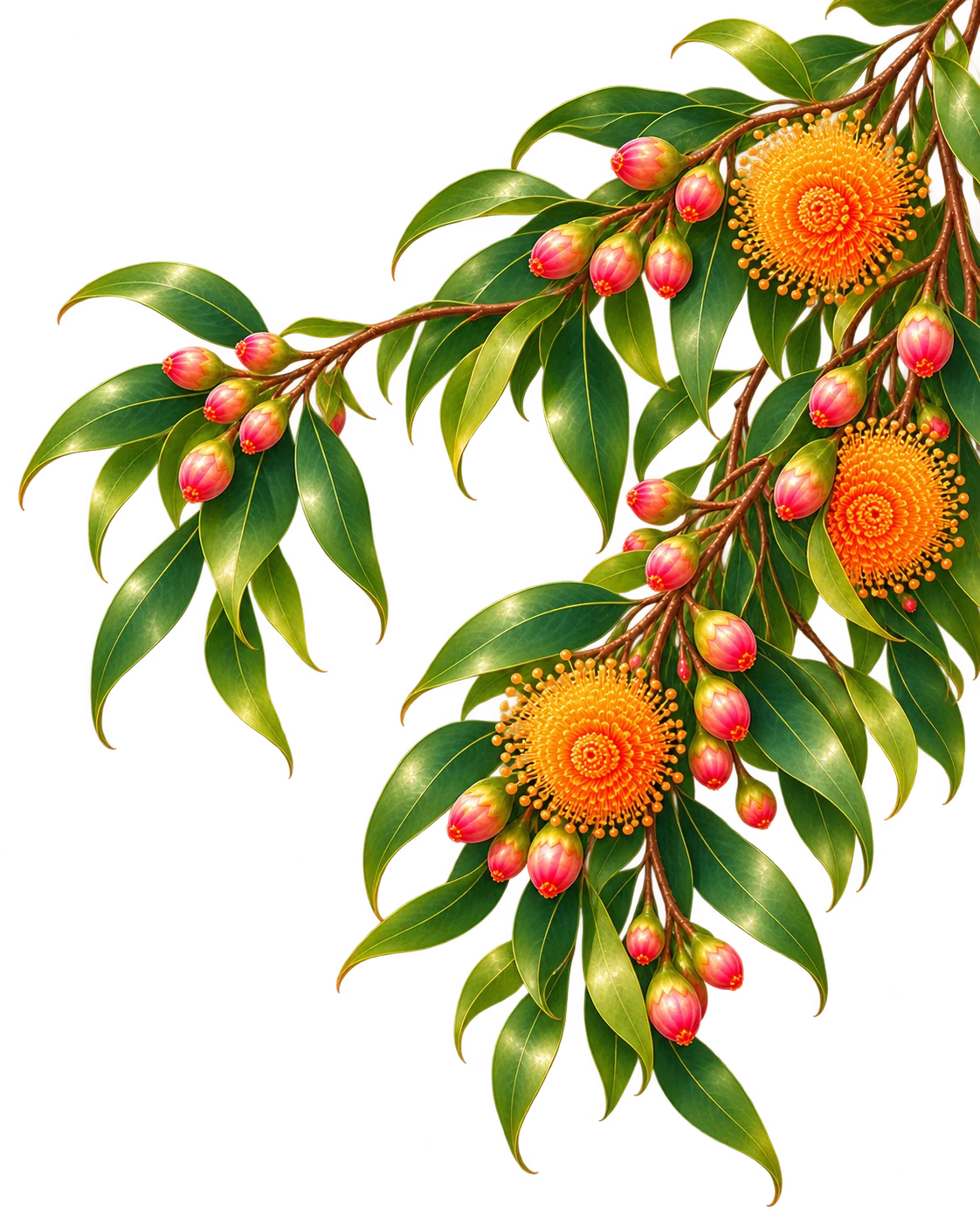
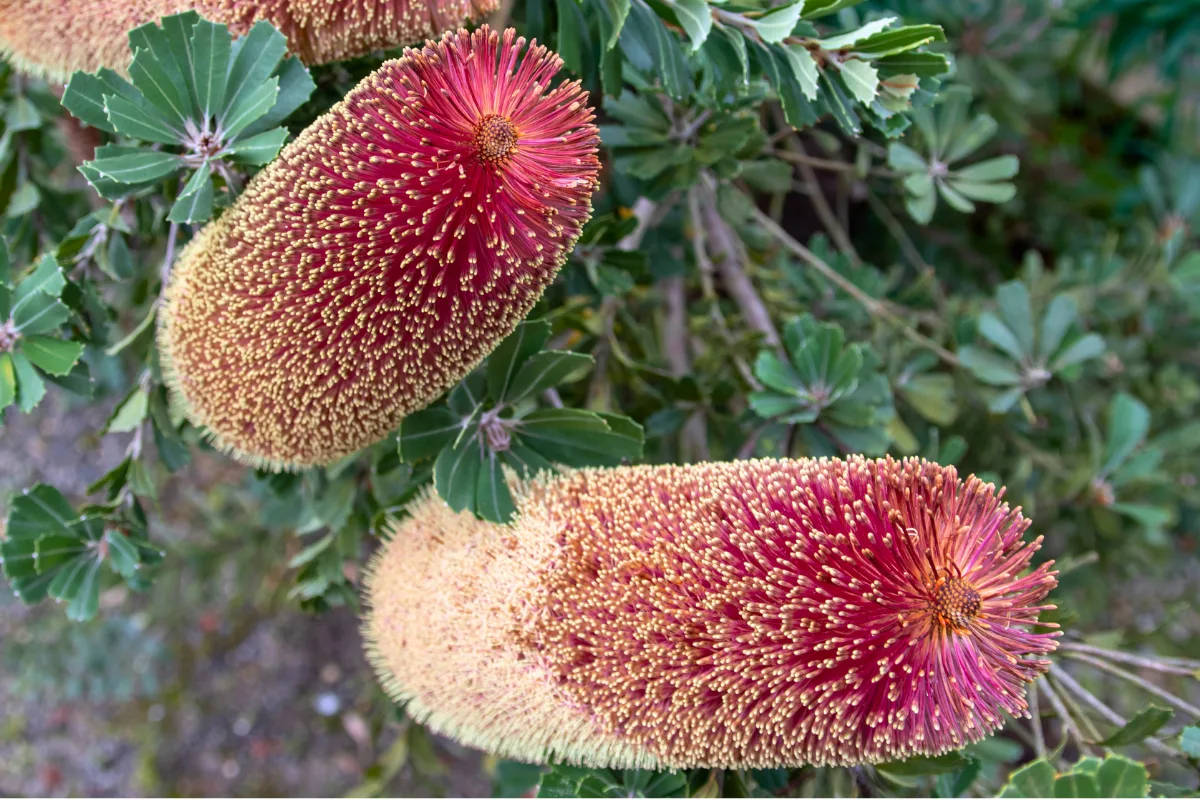
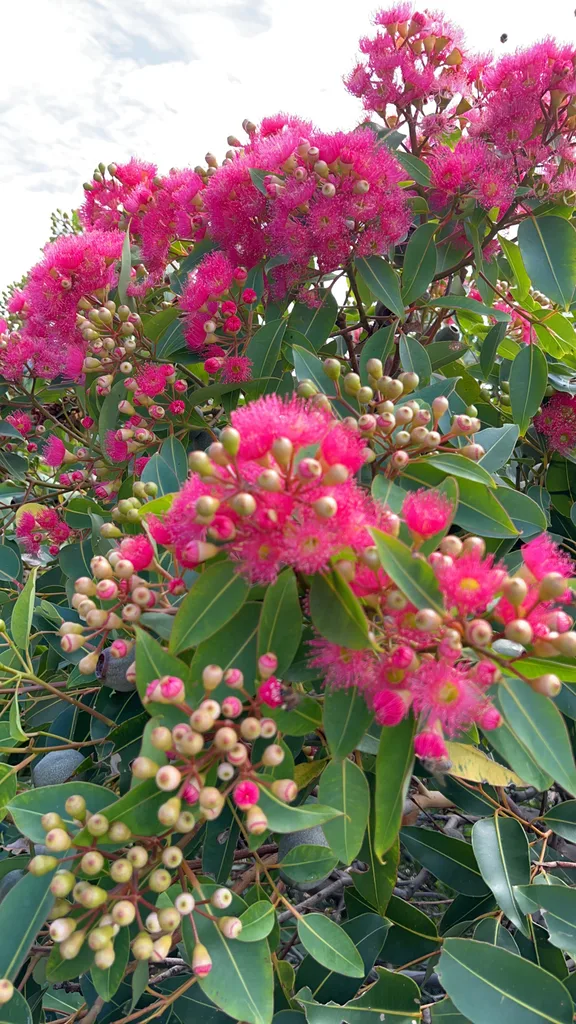
Cut-leaf banksia has enormous wine-red, yellow or even pink-gold flower spikes, with leaves that look snipped off at the tips. It makes a beautiful flowering screen, and the nectar draws honeyeaters. At Banksia Farm in WA, some plants flower for up to six months.
 By Elle · Published
- Grows well in
- Mediterranean, Temperate, Cool / mountains, Subtropical
- Lifecycle
- Evergreen woody shrub or small tree
- Light
- Full sun, Part shade
- Mature size
- Usually about 3–5 m tall and 2–4 m wide in gardens; Kevin Collins recorded mature forms 4–7 m tall and up to 6.5 m wide at Banksia Farm.
- Spacing
- Allow about 3–5 m between full-sized shrubs. A closer flowering hedge will need regular light shaping.
- Growth habit
- Large, evergreen woody shrub, often branched to ground level; blunt-ended toothed leaves, big cylindrical flower spikes and woody seed cones.
- Native range
- Native to Western Australia's southern coastline around Albany, extending east for roughly 100 km.
- Natural habitat
- Open coastal heath and shrubland on exposed dunes and slopes, especially in sandy ground around Albany. Winters are generally wetter than summers.
When to plant
Subtropical
April–June
Temperate
March–May, September–November
Cool / mountain
September–November
Mediterranean
March–June
Planting
Give cut-leaf banksia a sunny spot with plenty of room for a large shrub. Plant in autumn in mild coastal or Mediterranean districts so the roots can settle before summer. In colder areas, spring is a good time once the hardest frosts have passed. Water the pot first, plant at the same depth and give it a good drink. I'd choose an open, sandy bed or a gentle slope. If you have heavy clay, try a broad raised mound where rain can drain away. Leave room to get around the shrub for pruning and picking flowers.
Position and light
Full sun gives you the biggest flower display. Cut-leaf banksia comes from exposed coastal heath in southern Western Australia, so give it an open spot with plenty of light. It handles salty winds and moderate frost too. There's a terrific example from Tasmania. In a Banksia Study Group report, Don Ablitt described a ten-year-old, flowering cut-leaf banksia on his exposed farm near Marrawah. His garden has a much wetter, cooler climate than Albany, which shows it's worth trying the plant beyond the south-west WA coast.
Soil
Cut-leaf banksia loves sand and sandy gravel, but it has done well in heavier ground too. At Banksia Farm near Mount Barker, Kevin Collins grew it in deep acid sand, gravel and loamy clay. Here's a lovely example from the east coast. At Jim Fogarty's garden in Flinders, Victoria, cut-leaf banksia grows beautifully in heavy, basalt-derived soil that gets wet through winter. Jim says it can handle months of wet soil, although continuous waterlogging is another matter. If your clay holds water for a long time, I'd still start with a raised bed or mound.
Watering
Water a newly planted banksia regularly while its roots are growing into the surrounding soil. Check beneath the mulch and give the root ball a deep drink when it's drying out. Once established, it handles dry summer weather well. Give it a deep watering in prolonged hot, rainless weather, especially while it's making new growth. A plant in a large pot will need more frequent checks; water thoroughly and let the excess drain away.
Feeding
You probably won't need to feed a healthy cut-leaf banksia. Its special cluster roots are very good at collecting nutrients from poor soil. If growth is weak and the leaves look pale, try a little slow-release fertiliser made for phosphorus-sensitive Australian natives. Avoid poultry manure and ordinary high-phosphorus fertilisers.
Pruning
Start tip-pruning young plants while the shoots are leafy if you'd like a thick screen. Once the main flowering finishes, shorten any long branches and take out dead growth. Always leave green leaves below your cuts: Australian Plants Society notes that bare old stems might not reshoot. You can also shape the bush as you pick flowers. I'd give it a light trim each year instead of waiting until it needs a big cut-back.

Practical uses
A flowering hedge or screen: Cut-leaf banksia can make a gorgeous loose hedge, with leaves right down the shrub and huge flowers poking through. In a 2002 Australian Plants article, banksia grower Kevin Collins remembered the impressive hedge that Ken Stuckey grew on his South Australian property. Give yours room for its broad mature shape, and tip-prune while it's young if you'd like a thicker screen.
Flowers for the house: Pick a few big spikes for a vase. Collins mentions their use by florists, and the long stems make striking arrangements without much fuss.
Three beautiful flower colours: Along with the deep wine-red and bright yellow forms, Collins grew a taller lemon-pink-gold form at Banksia Farm near Mount Barker. The yellow form started flowering four to six weeks earlier than the others in his garden. It's well worth asking a specialist nursery which form you're buying.

Permaculture uses
I'd grow cut-leaf banksia along the sunny edge of a wildlife garden, where you can enjoy the flowers and give visiting birds plenty of nectar. Its dense evergreen branches also make a good wind filter for smaller plants in an exposed coastal garden.
At Banksia Farm in Mount Barker, Kevin Collins found that B. praemorsa could flower from July into February. He suggested combining it with B. media and B. epica to stretch the nectar season across the year. That's a lovely planting idea if you've got space for several large shrubs.
You can chip healthy prunings for garden mulch. Keep most of the flowering branches for the birds, and take just the shoots you need to shape the plant.

Wildlife and pollinators
Cut-leaf banksia is a brilliant one for watching wildlife. In her University of Adelaide research, Mary Alice Rieger watched little wattlebirds and New Holland honeyeaters feeding from the flower spikes and flying between plants. Their heads brushed against pollen as they reached into the flowers, so they were likely helping to pollinate the banksias. A published summary of the research also names honeybees among the pollen visitors.
And the visitors aren't all birds! In photographs from Alice Springs, Koh Lin captured an Australian sheep blowfly (Lucilia cuprina) on a flower and both a young and an adult bush cockroach (Ellipsidion humerale) on the plant. Koh even photographed the blowfly blowing a little nectar bubble.
There's a lovely garden story too. Ros Walcott remembers the tall red- and gold-flowering cut-leaf banksias at the former Stokes Bay Bush Gardens on Kangaroo Island, with birds jostling over the nectar. Leave some flowering spikes on your shrub and see who turns up.
Harvest
Cut-leaf banksia produces huge flower spikes, sometimes 30–35 cm long. The wine-red form is wonderful in a tall vase, and the bright yellow and pink-gold forms are beautiful too. Pick stems when some of the small flowers on the spike have begun opening, then put them straight into water. If you're saving seed, choose older, fully woody cones. Banksias can hold seed in their cones long after the flowers finish, so there's no rush to cut fresh ones. See the propagation notes for getting the seeds out.
Propagation
Seed is a good way to grow more cut-leaf banksias. Collect a woody cone that's at least a year old from your own plant. The follicles may stay shut until they're heated or thoroughly dried. Australian Plants Society's seed guide explains how to warm mature banksia cones to release the dark, winged seeds. Sow them in a free-draining seed mix and keep it lightly moist while they germinate. If you want the exact flower colour of a favourite yellow or burgundy plant, cuttings or a named nursery selection are better choices. Grafting is another option. In the Banksia Study Group newsletter, NSW horticulturist Jonathan Lidbetter reported a B. praemorsa grafted onto B. integrifolia that reached 2.5 m and flowered three years after grafting.
Common problems
Not many flowers: If your shrub is leafy but doesn't produce many flower spikes, check whether nearby trees or hedges are shading it. Leaves declining after wet weather: Check how well the bed drains. Phytophthora root disease can affect cut-leaf banksia, especially where the roots stay wet.
Companion and understory planting
At Jim Fogarty's coastal garden in Flinders, Victoria, cut-leaf banksia shares the garden with fan flowers (Scaevola albida 'Super Clusters'), clustered everlastings (Chrysocephalum semipapposum), bottlebrushes and other flowering natives. It's a wonderful example of mixing bold flowering shrubs with smaller plants that fill the gaps.
For your own garden, I'd put native daisies or fan flowers near the front, with the banksia behind them where its huge flower spikes can stand clear. If you have room, try a taller coastal woollybush (Adenanthos sericeus) farther back. Give each shrub space for its mature width, and leave a path where you can reach the banksia flowers for cutting.
Tradition and history
Cut-leaf banksia grows on Menang Noongar Country around Albany. Banksia flowers are part of a long Noongar tradition of collecting sweet nectar. In a statement about her Honey from Banksia artwork, Noongar artist Melissa Riley describes people drinking nectar from the flowers or soaking the flower spikes in water to make a sweet drink. She explains that this knowledge is still passed down today.
Banksia cones had another fascinating use. Drawing on historical accounts and conversations with Noongar Elders, Ken Macintyre and Barb Dobson describe how people carried slow-burning dried cones between camps to start their next fire. Some were even kept under kangaroo-skin cloaks for warmth. Their research on banksias in Noongar culture also records mangite and mungyt as words associated with banksia nectar and the season for gathering it.
Growth and roots
Cut-leaf banksia has a substantial woody trunk and branches, so give it room to get wide as well as tall. It has fine, specialised cluster roots that help gather nutrients from poor soils. I'd leave a few metres between a full-grown shrub and a narrow path so you can walk past it comfortably.
Unlike banksias that reshoot from a woody underground base, B. praemorsa has no lignotuber. After bushfire it grows back through seedlings from the seeds held in its old woody cones. Australian Plants Society describes this seed-based regeneration.
If you're planting near underground services, South Australia's Plant Selector recommends keeping cut-leaf banksia at least 2 m from sewer mains and connections.
References
- Banksia praemorsa — Australian Native Plants Society
- Banksia praemorsa — Plants of the World Online, Kew
- Banksia praemorsa — Atlas of Living Australia taxonomy and sightings
- Gardening Australia — Banksias and cut-leaf banksia flower colours
- Kevin Collins (2002) — Banksia in Horticulture, Australian Plants Vol. 21
- Jim Fogarty's Flinders garden — ABC Gardening Australia, Paddock to Pretty
- Mary A. Rieger (1996) — Horticultural management and population biology of several Banksia species, University of Adelaide
- Mary Rieger and Margaret Sedgley — Banksia research, Australian Plants Vol. 18
- Koh Lin — Life on the Banksia praemorsa, Ausemade
- Koh Lin — Some of my favourite photos, Ausemade (blowfly observation)
- Ros Walcott — Banksias at Walcott Garden and Stokes Bay Bush Gardens
- Banksia Study Group — Issue 13: grafting and Tasmanian grower records
- Australian Plants Society — The Propagation of Banksia
- South Australian Botanic Gardens — Plant Selector: Banksia praemorsa
- Melissa Riley — Honey from Banksia (Noongar artist statement), Public Transport Authority WA
- Ken Macintyre and Barb Dobson — Some notes on Banksia usage in traditional Noongar culture
- City of Albany — Aboriginal Cultural Heritage and Menang Traditional Custodians
Featured In
Grow Cut-leaf banksia with Brancho
Add it to My Garden and Brancho works out what it needs next, timed for your climate.
How it grows around Australia
Growing this too? Share what you've noticed in your garden.
Updates appear in My Brancho. Email alerts are not available yet.
Grow a Little Wild
New plants to try, useful growing tips and a few garden jobs based on what you grow.