
Plant profile
Finger lime
Citrus australasica
Also known as Australian finger lime.
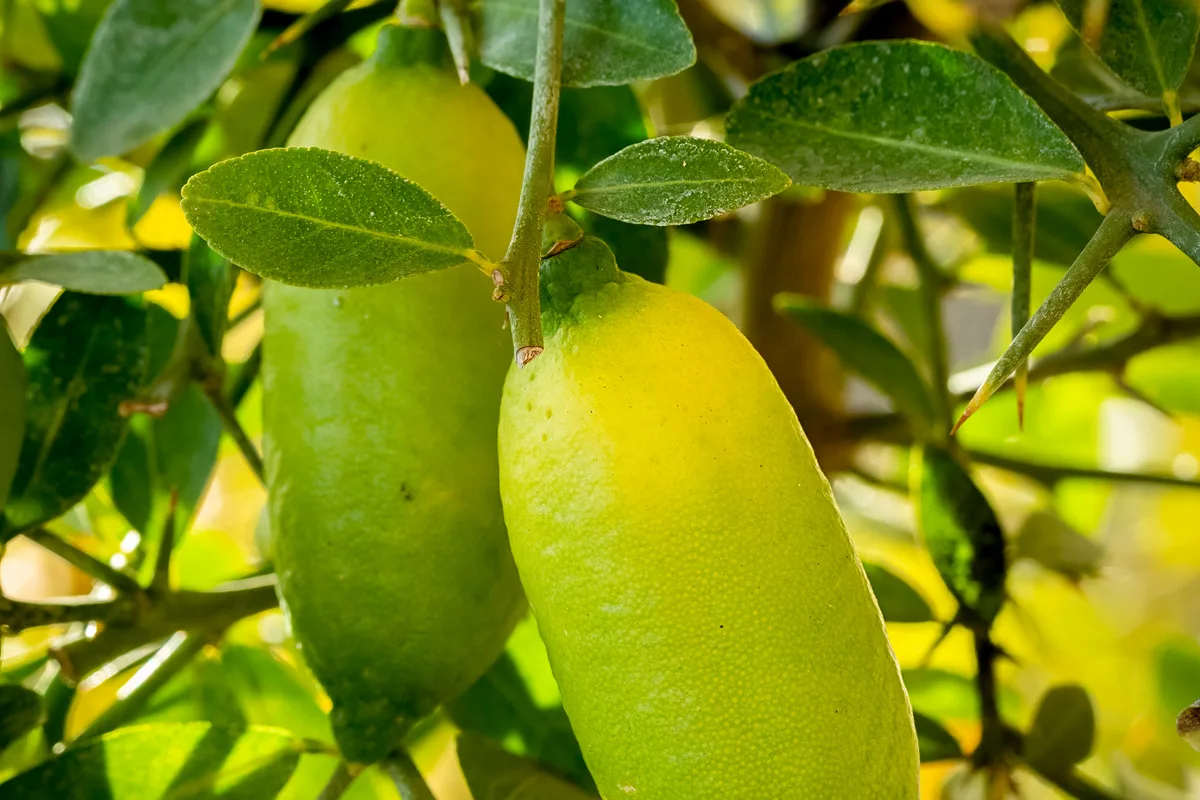
Finger limes are Australian rainforest citrus grown for the tangy little juice pearls inside their narrow fruit. They grow well in suitable warm and mild gardens, with good drainage and some shelter while young. Fruit colour, plant size and thorniness vary between cultivars, so a named grafted plant is a good way to choose what you want.
- Grows well in
- Tropical, Subtropical, Temperate
- Lifecycle
- Evergreen perennial native citrus shrub
- Light
- Full sun, Part shade
- Mature size
- Usually 2–6 m tall and 2–4 m wide, smaller when pruned
- Spacing
- About 2.5–4 m apart
- Growth habit
- Dense thorny evergreen shrub or small tree with small aromatic leaves
- Native range
- South-eastern Queensland to north-eastern New South Wales
- Natural habitat
- Subtropical rainforest and rainforest margins.
When to plant
Tropical
April–October
Subtropical
August–November
Temperate
September–November
Tropical and subtropical: plant in warm weather when water is reliable, avoiding badly waterlogged wet-season sites. Warm temperate: spring after frost risk. Protect young trees from frost and drying wind.
Full growing guide
How to Grow Finger Lime Plants in Australia
How to grow finger lime plants in Australia, including cultivars, climate, soil, watering, pruning, fruiting, harvest, pots and common problems.
Read the full growing guidePlanting
Plant a grafted tree into free-draining soil with the graft above ground level. Protect young plants from hot drying wind and give them enough room to work around their thorns. In very hot sites, light afternoon shade can help young trees establish.
Position and light
Full sun to part shade. More sun generally improves flowering and fruiting once the tree is established, while young plants handle some filtered light.
Soil
Free-draining, slightly acidic to neutral soil rich in organic matter. Improve drainage before planting in heavy clay and keep mulch clear of the trunk.
Watering
Water regularly while establishing and during flowering and fruit fill. Let excess water drain away; finger limes dislike both prolonged drought and saturated roots.
Feeding
Feed lightly with a complete citrus fertiliser during active growth, using smaller doses on young trees. Water fertiliser in well and avoid piling it against the trunk.
Pruning
Prune lightly after harvest to remove dead, crossing or inward growth and to keep thorny branches manageable. Avoid hard pruning that removes too much fruiting wood at once.
Harvest
Pick fruit when it is fully sized, colours appropriately for the cultivar and comes away with a gentle twist. Do not yank fruit from the thorny canopy.
Propagation
Named cultivars are usually grafted or budded. Seedlings vary in fruit quality and may take years to crop.
Common problems
Citrus leaf miner, scale, mites and fruit fly can occur. Root rot is a risk in poor drainage. Thorny dense growth can make harvesting awkward if the tree is not lightly shaped.
Safety notes
Fruit is edible. Thorny branches can scratch skin and eyes, so wear eye protection and gloves when pruning dense plants.
Worth knowing
Finger lime is native to rainforest and dry rainforest in south-east Queensland and northern New South Wales. Fruit can be green, yellow, pink, red or dark-skinned depending on cultivar, with pulp colours that do not always match the skin.
Featured In
Grow Finger lime with Brancho
Add it to My Garden and Brancho works out what it needs next, timed for your climate.
How it grows around Australia
Growing this too? Share what you've noticed in your garden.
Grow a Little Wild
New plants to try, useful growing tips and a few garden jobs based on what you grow.