
Plant profile
Flame grevillea
Grevillea excelsior Diels
Also known as Orange flame grevillea, Flame cone grevillea, Grevillea excelsior, Grevillea eriostachya subsp. excelsior, Wiaanyurt.
There's a tiny native bee that bites into flame grevillea flowers before they open to get at the pollen. Grow this tall WA shrub in a sunny, sandy spot and you'll enjoy glowing orange spikes through spring, with wattlebirds, honeyeaters and ringnecks visiting too.
 By Elle · Published
- Grows well in
- Mediterranean, Temperate, Arid / inland
- Lifecycle
- Evergreen woody shrub or small tree
- Light
- Full sun
- Mature size
- Usually around 3–5 m tall and 3–4 m wide in gardens; wild specimens can reach about 8 m.
- Spacing
- Give full-sized plants about 3–4 m between trunks, or more if you'd like to walk between mature shrubs.
- Growth habit
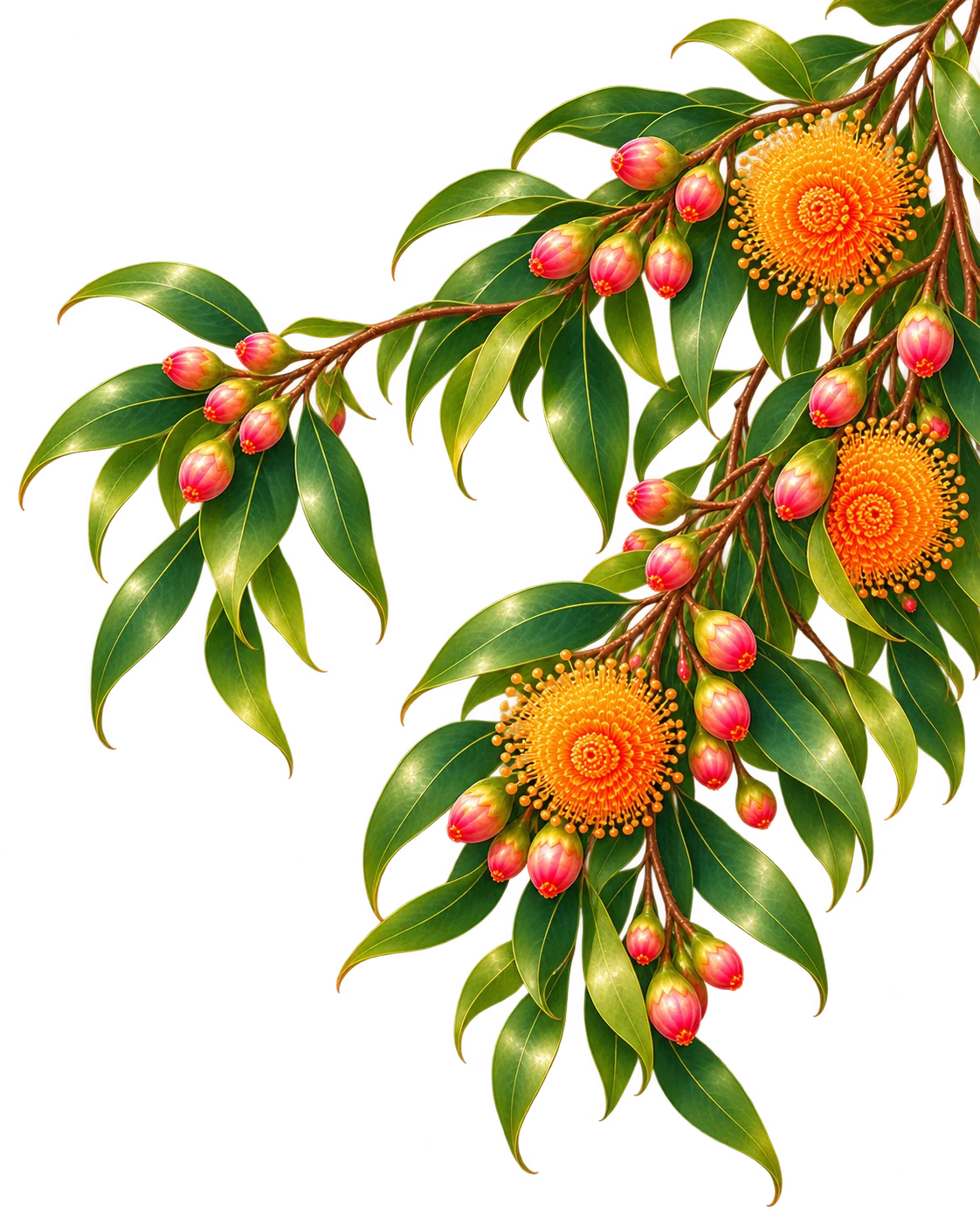
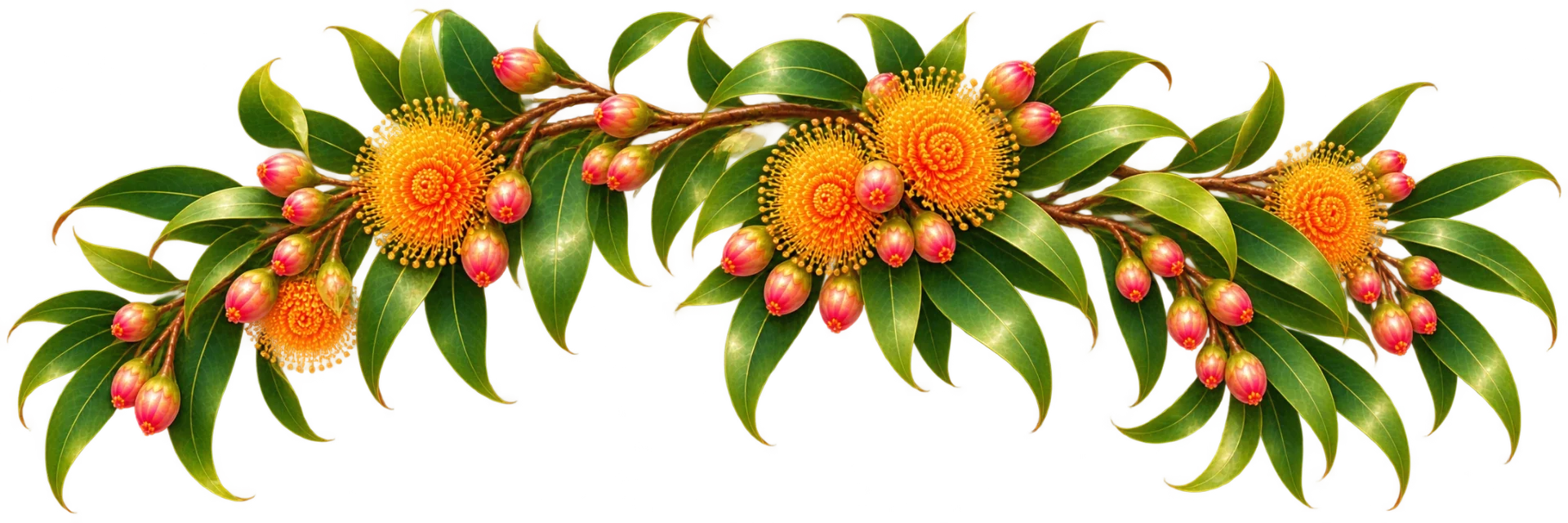
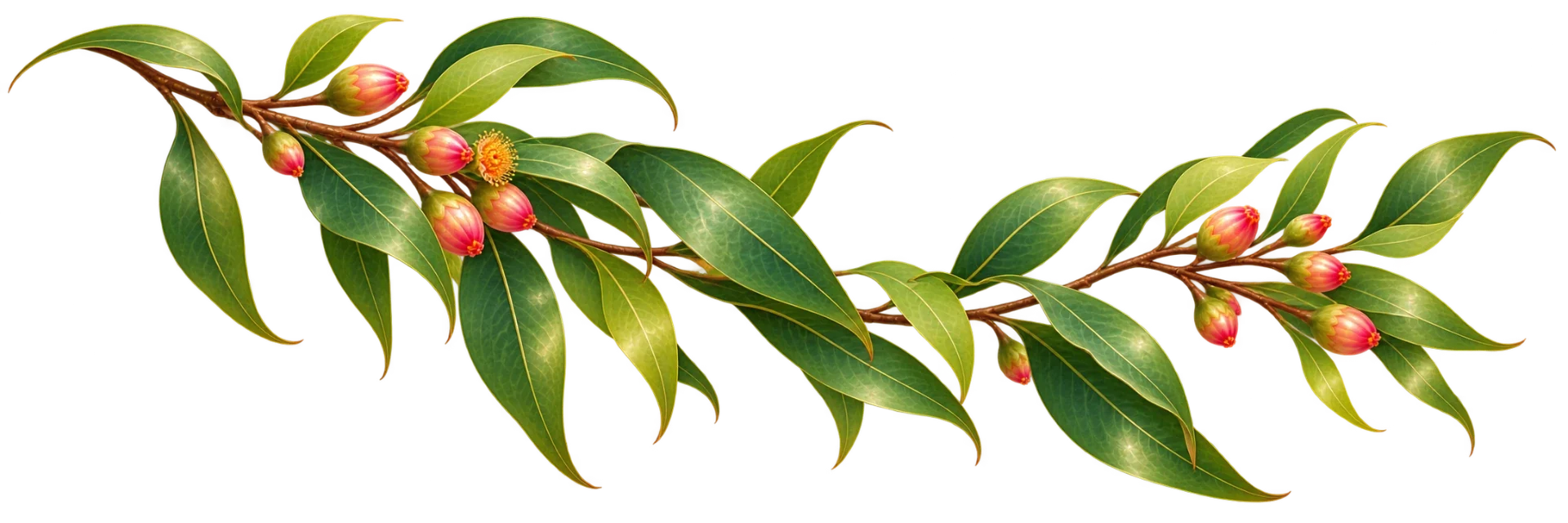
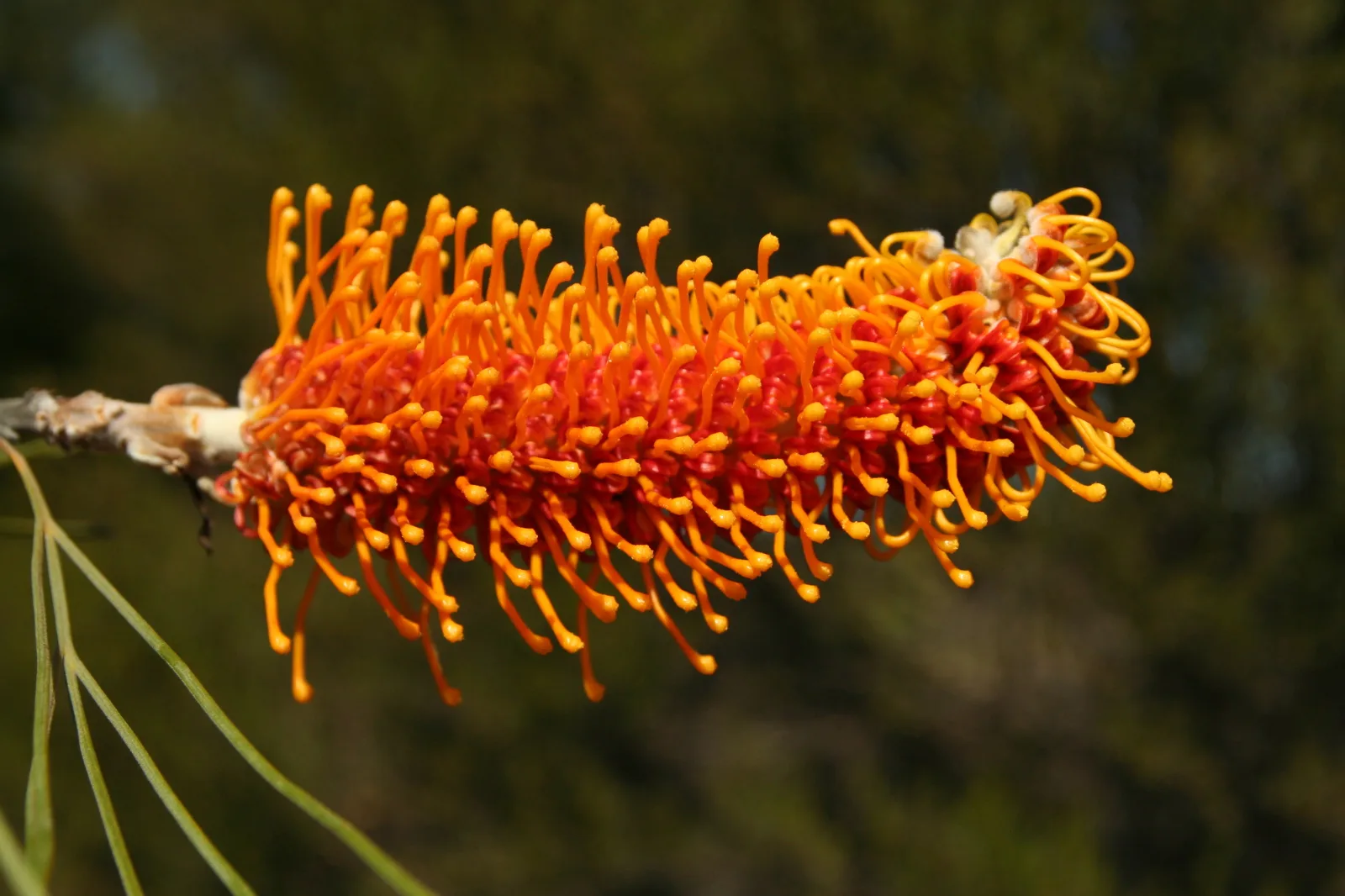
- Upright woody shrub or small tree with divided grey-green leaves and erect orange-yellow flower spikes, often standing well above the foliage.
- Native range
- Native to inland south-western Western Australia, through the wheatbelt and goldfields, extending south towards Esperance.
- Natural habitat
- Open sandplain, kwongan heath, mallee scrub and dry shrubland. It grows on yellow and white sand, gravel and sometimes shallow sandy clay loam over rock.
When to plant
Temperate
March–May, September–November
Arid inland
March–May, September–November
Mediterranean
March–June
Planting
Give flame grevillea the sunniest part of your native garden and enough room to spread. The Friends of Kings Park describe it as a 3–5 m shrub, about 3–4 m wide, so I'd put it behind smaller wildflowers where those orange spikes can rise above the planting. Autumn is a good planting time in WA's mild winter-rainfall districts. In colder gardens, wait until spring. Water the plant before taking it out of the pot, set it at the same depth and water it in well. If you've got heavy clay, make a broad raised mound with a free-draining mix before planting.
Position and light
Flame grevillea loves full sun. In the Western Australian wheatbelt it grows out in open mallee and sandplain country, where there's very little shade. Give it an airy spot and you should get plenty of flowers through late winter and spring. Friends of Kings Park lists flowering from August to November in Perth conditions. It can also be grown farther east: the Australian Plants Society Yarra Yarra group included a flowering specimen from member Rob Dunlop in its March 2020 flower table. If your summers are humid, choose an open position with fast drainage and ask a specialist nursery about grafted plants.
Soil
I'd start with sandy or gravelly ground. Flame grevillea grows naturally on yellow and white sands, but it isn't limited to pure sand. A WA vegetation survey near Mount Holland found it growing on shallow sandy clay loam over rocky ground, alongside hakeas and acacias. If your clay holds water after rain, grow it on a raised mound. Leave most of the surrounding soil fairly lean and use a low-phosphorus fertiliser only if the plant needs feeding. Its fine cluster roots are especially good at gathering nutrients from poor ground.
Watering
Water a newly planted flame grevillea as its roots grow into the surrounding soil. Check the original root ball during the first warm season and give it a good drink if it's drying out. Once established in a winter-rainfall garden, it can manage hot, dry summers quite well. I'd water deeply during a long stretch of extreme heat, particularly if it's still young. A grafted plant in a pot needs checking more often because the potting mix dries out faster than garden soil.
Feeding
You probably won't need to feed a healthy flame grevillea growing in sandy soil. Like other grevilleas, it has special cluster roots that collect nutrients efficiently even where the soil is poor. If the new leaves are pale and the plant is barely growing, try a little slow-release fertiliser formulated for phosphorus-sensitive Australian natives. Avoid poultry manure and ordinary high-phosphorus products.
Pruning
You can keep flame grevillea fuller by tip-pruning the young leafy shoots. Once the main display finishes, remove old flower stalks and shorten any branches that are growing out of shape. Friends of Kings Park recommends pruning after flowering. I'd trim a little each year while the plant is young. Keep green leaves below every cut because a bare woody stem may not send out new shoots. Leave a few flowering spikes untouched if the birds are still feeding or you want seed.

Practical uses
A wonderful feature shrub: Flame grevillea grows tall, with finely divided grey-green leaves and upright orange flowers that stand clear of the crown. I'd grow one at the back of a sunny native garden, where you can see the colour against the sky. Friends of Kings Park recommends it as an outstanding bird-attracting plant for well-draining sandy gardens.
Flowers for the house: Pick a few partly opened spikes for a tall vase. You can enjoy the unusual shape indoors while leaving most of the flowers for the wildlife outside.
An option for wetter districts: Specialist nurseries sell grafted flame grevilleas. If you live outside its usual dry-summer range, I'd ask which rootstock they use and whether they've grown it successfully in conditions like yours.

Permaculture uses
I'd grow flame grevillea on the sunny, dry edge of a wildlife garden or food forest, where the orange flowers can feed birds and native bees through late winter and spring. It grows high enough to give the planting some structure without making a dense canopy over everything underneath.
You can combine it with other dry-country shrubs that flower at different times. A mix of sizes is especially useful: the grevillea supplies tall flowering stems, while low plants fill in the gaps and give smaller animals more sheltered places to move around.
After flowering, chop healthy green prunings into shorter pieces and add them to your compost or put chipped woody stems under other shrubs as mulch. Keep the base of your grevillea clear so you can check the soil and water it while it's establishing.

Wildlife and pollinators
Flame grevillea has some fascinating visitors, and not all of them wait for the flowers to open!
A tiny bee that raids unopened flowers: On a field trip through WA's Wheatbelt and Goldfields, Bernhard Jacobi and Marc Newman photographed female Hylaeus douglasi bees biting small holes into unopened Grevillea excelsior flowers to take pollen. The bees get their food early, although that trick probably doesn't help pollinate the flowers. You can see Newman's extraordinary close-up photographs and read the original 2012 study.
Another specialist native bee: In an earlier study, Jacobi and fellow photographers watched Anthoglossa cf. callander gathering pollen and licking nectar from flame grevillea flowers beside the Mullewa–Wubin Road. They even worked during cool, windy weather with light rain. The orange-coloured males flew around the flowers looking for females. The 2009 paper is full of wonderful photographs.
Three bird visitors at Marchagee: In the WA Museum's survey of Marchagee Nature Reserve, John Dell recorded tawny-crowned honeyeaters, little wattlebirds and Australian ringnecks feeding from the flowers in September. If you grow flame grevillea, leave a good number of flowering spikes for the birds and take a closer look for native bees too.
Harvest
The orange flower spikes make spectacular cut flowers. Pick a few when the lower flowers are beginning to open and put them straight into a tall vase. Leave plenty in the garden for nectar-feeding birds and native bees. To collect seed, watch the small, hairy follicles once the flowers finish. Cut a few almost-ripe capsules from your own plant and keep them in a paper bag somewhere dry until they split. Check the bag regularly because grevillea seeds can be released quickly.
Propagation
You can grow flame grevillea from seed. Collect mature capsules from your own plant, let them open in a paper bag and sow the seed in a free-draining native seed mix. Keep it lightly moist while the seedlings emerge. Germination can be uneven, so sow a few more seeds than the number of plants you want. Cuttings are another option. Take firm, healthy shoot tips after flowering, remove the lower leaves and put them into a sandy propagation mix in bright, sheltered light. If you garden outside WA's dry-summer districts, it's also worth looking for a grafted plant. Mountain View Nursery has offered a grafted flame grevillea, and your local specialist nursery can advise which rootstock suits your conditions.
Common problems
Leaves declining after prolonged wet weather: Check whether the bed drains freely. Flame grevillea grows naturally in open, free-draining country, so I'd raise the planting area if rain regularly collects around the roots. Pale new growth: Check what fertiliser you've been using. Grevilleas can react badly to too much phosphorus, so use a product made for sensitive Australian natives. Open, leggy branches: Tip-prune young shoots to encourage branching. Once a stem becomes bare and woody, it may not reshoot after a hard cut.
Safety notes
Grevillea foliage can irritate some people's skin. Wear gloves if you're sensitive when handling branches or pruning.
Worth knowing
Early botanists sometimes treated flame grevillea as a subspecies of Grevillea eriostachya. The two are close relatives and sometimes hybridise where they grow together, but the Australian Plant Census now accepts G. excelsior as a separate species.
Companion and understory planting
In the wild around King Rocks in Western Australia, a flora survey for the proposed King Rocks wind farm found flame grevillea growing with Eucalyptus burracoppinensis, Callitris preissii, Hakea erecta and several smaller native shrubs. You could borrow some of those plant combinations for a natural-looking wheatbelt garden.
At home, I'd give the flame grevillea the taller position and try a few compact hakeas, smaller grevilleas or native daisies out in front. Keep the planting sunny and fairly open, with enough room to walk among the plants and reach the flowers. You could also try Allocasuarina campestris or Melaleuca cordata if you have the space and suitable soil.
Tradition and history
Wiaanyurt is a Noongar name for flame grevillea, recorded by the Noongar Boodjar Language Centre and listed by the Atlas of Living Australia.
For grevilleas more generally, a Noongar plant-use account published by Urbaqua describes enjoying nectar straight from some grevilleas, soaking flowers in water to make sweet drinks, and sometimes fermenting those drinks as gep.
Growth and roots
Flame grevillea can grow into a substantial woody shrub, around 3–5 m tall and 3–4 m wide. Give it a broad patch of open ground so its roots and branches have room to spread. I'd put it roughly 2 m back from a garden path so you can still walk past the mature shrub. That's a guide for branch clearance, not a measured limit to its roots.
If you're planting near sewer pipes, I'd leave at least 5 m. Bundaberg Regional Council puts grevilleas in its 5 m planting category. For septic systems, WA's Shire of Toodyay recommends keeping trees at least 4 m from the tank, and NSW's Easy Septic Guide recommends at least 5 m from absorption trenches for small trees. I'd keep this large shrub well away from the trenches and leave the area open for maintenance.
Near a house wall, give the mature canopy room and consider the ground you're building on. Root-related foundation movement is more of a concern in reactive clay, as the Victorian Building Authority explains. There isn't a measured foundation setback for flame grevillea itself, so check the site conditions if you want to plant close to a building.
References
- Grevillea excelsior — Kew Plants of the World Online
- Grevillea excelsior — Atlas of Living Australia/Australian Plant Census
- Flora of Australia vol 17A — Grevillea excelsior species entry
- A. S. George (1964) — The Flame Cone Grevillea, Australian Plants
- WA catchment native-plant guide — Grevillea excelsior and wheatbelt habitat
- Bird survey recording tawny-crowned honeyeaters and little wattlebirds on G. excelsior — WA Museum
- Grevillea — Australian Native Plants Society cultivation and propagation
- Grevillea Study Group bibliography — ANPSA
- Recovery plan — natural companion species with Grevillea excelsior
- Grevillea excelsior Flame grafted — Mountain View Nursery
- Friends of Kings Park — Grevillea excelsior size, flowering and cultivation
- Jacobi & Newman (2012) — Hylaeus douglasi pollen robbing from Grevillea excelsior, bembiX 33
- Marc Newman — It's pollen robbery! (original photographs), Ausemade
- Bernhard Jacobi (2009) — Anthoglossa cf. callander pollen and nectar on Grevillea excelsior
- Grevillea Study Group Newsletter 102 — Anthoglossa observations discussed
- Friends of APS Yarra Yarra Newsletter 2020 — Grevillea excelsior Rob Dunlop specimen
- WA biodiversity survey near Mount Holland — Grevillea excelsior natural companions
- WA EPA — King Rocks vegetation survey with Grevillea excelsior companions
- The Garden Feast — grafted Grevillea excelsior nursery listing
- Noongar Boodjar Language Centre — Wiaanyurt traditional plant-name profile
- Urbaqua — Noongar plant-species list, grevillea nectar traditions
- Eva Crane (1997) — Harvesting sweet materials from plants without honey-storing insects; disputed Elcho Island identification
- Bundaberg Regional Council — Sewer blockages from trees, generic Grevillea 5 m guidance
- Shire of Toodyay — Onsite wastewater system maintenance, septic root-distance advice
- NSW Office of Local Government — The Easy Septic Guide
- Victorian Building Authority — Minimising foundation movement and damage
Featured In
Grow Flame grevillea with Brancho
Add it to My Garden and Brancho works out what it needs next, timed for your climate.
How it grows around Australia
Growing this too? Share what you've noticed in your garden.
Updates appear in My Brancho. Email alerts are not available yet.
Grow a Little Wild
New plants to try, useful growing tips and a few garden jobs based on what you grow.