
Plant profile
Golden penda
Xanthostemon chrysanthus (F.Muell.) Benth.
Also known as Golden penda, Penda, River penda, Brown penda, Expo Gold penda.
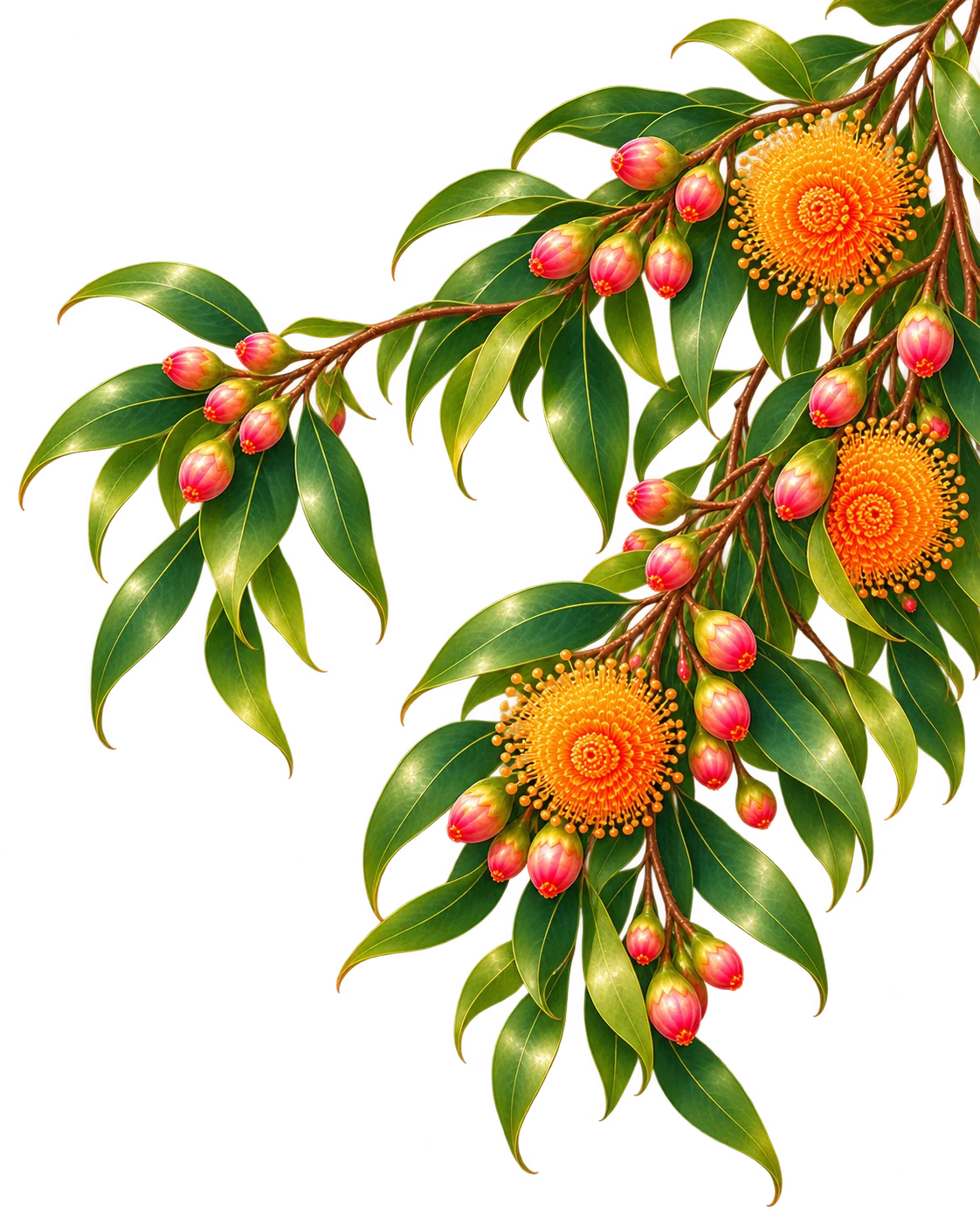
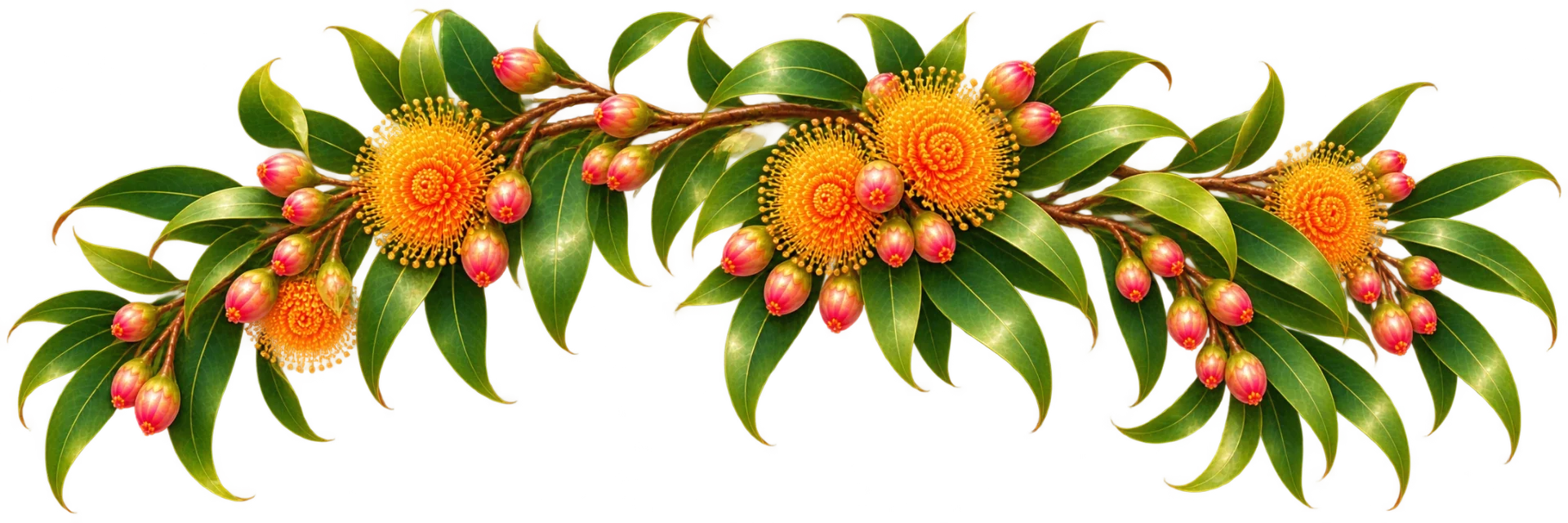
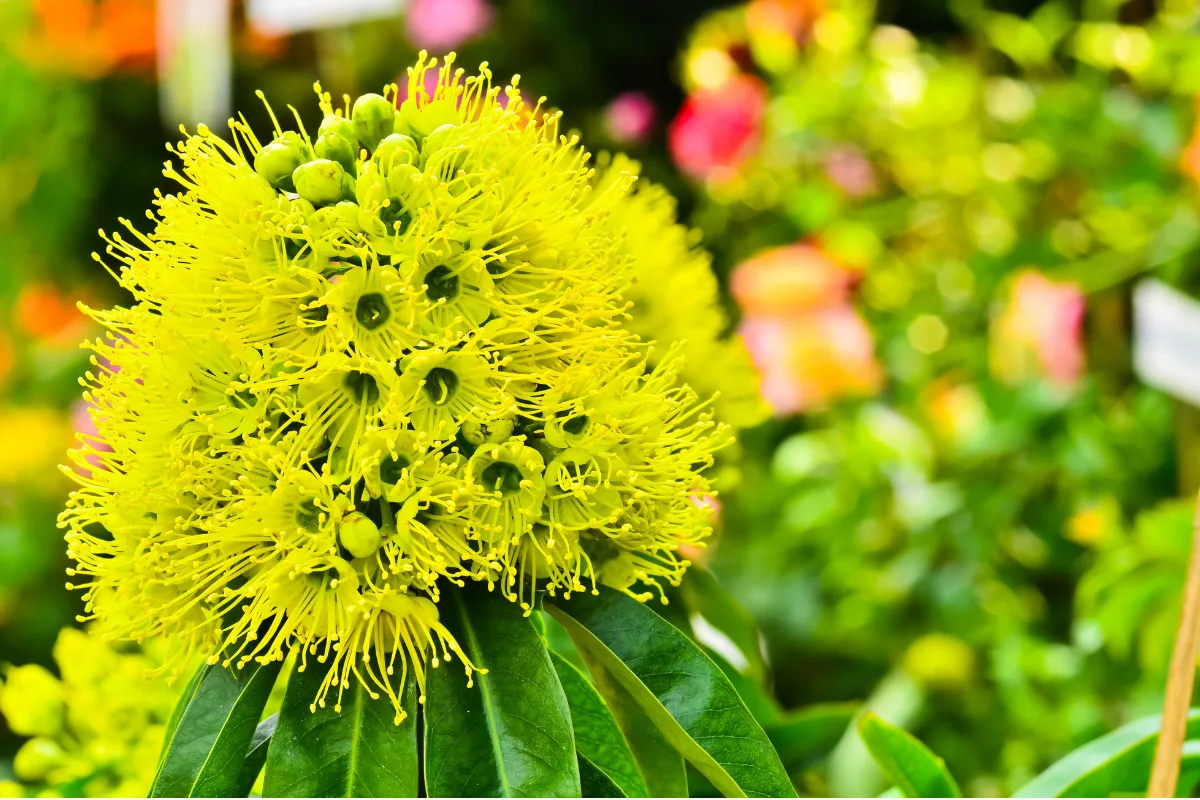
Golden penda produces enormous yellow flower clusters that lorikeets, native bees and flying-foxes visit for food. You can grow it into a shady rainforest tree or prune it as a flowering hedge. And there's a terrific Brisbane story behind the famous 'Expo Gold' selection from 1988.
 By Elle · Published
- Grows well in
- Tropical, Subtropical, Temperate
- Lifecycle
- Evergreen rainforest tree
- Light
- Full sun, Part shade
- Mature size
- Full-sized garden trees commonly reach 8–12 m tall with a broad canopy up to about 10 m wide; wild trees can reach roughly 20 m. Named dwarf cultivars may stay around 1–4 m.
- Spacing
- Allow about 6–10 m between full-sized trees where crowns can spread. For a maintained hedge, roughly 1.5–3 m; check the chosen dwarf variety's mature width.
- Growth habit
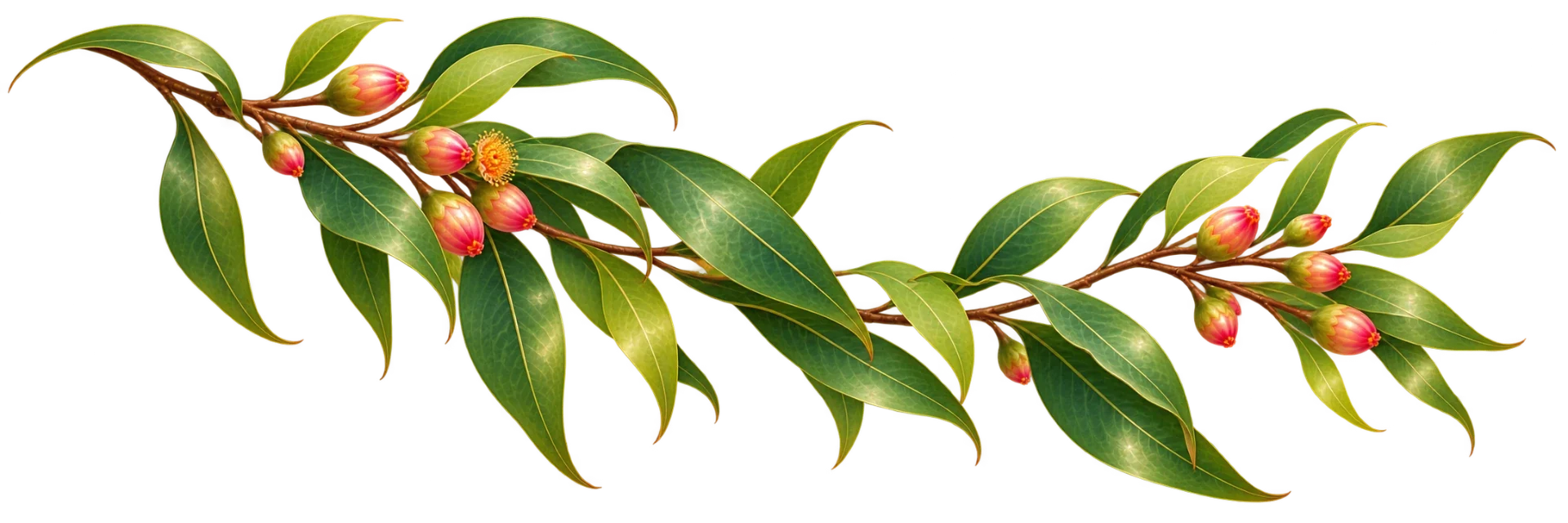
- Evergreen rainforest tree with glossy leaves, bronze-red new growth, broad crown, enormous yellow flowering clusters and woody seed capsules; can be grown as a clipped hedge.
- Native range
- Native to north and north-eastern Queensland, especially coastal Wet Tropics country from near Townsville and Ingham north towards Cape York.
- Natural habitat
- Moist tropical rainforest beside creeks, watercourses and gullies, including rainforest edges where young trees receive plenty of light.
When to plant
Tropical
November–December, January–March
Subtropical
September–December, January–March
Temperate
October–December
Planting
Decide first whether you want a full-sized tree or a hedge. Golden penda can become a big rainforest tree, so I'd give it an open spot with room for a broad crown. If you'd like a flowering screen, plant a row of young trees and start tip-pruning before they grow tall and bare underneath. Plant in warm weather, preferably around the start of the tropical wet season or in spring once the weather warms in subtropical gardens. Water the pot before planting, put the tree in at the same depth and spread plenty of mulch over the surrounding soil. Keep the mulch back from the trunk.
Position and light
Give golden penda lots of sunlight if you want it covered in those huge yellow flower clusters. It will grow in part shade, but you'll get a better display where the crown gets plenty of light. This is a north Queensland rainforest tree, but it can grow well farther south. The Australian Native Plants Society reports successful flowering at Sydney's Royal Botanic Gardens, although the display isn't always consistent there. In cooler districts, I'd choose the warmest, most sheltered spot you have and protect young plants from frost.
Soil
Golden penda grows naturally around rainforest creeks, where the soil holds moisture and has plenty of leaf litter. Give it good soil with compost and a generous mulch layer. It grows well in loam and other soils that drain after rain. If you're planting in compacted fill or heavy clay, loosen a broad area around the planting hole and improve the surrounding soil. Don't put the tree in a low spot that stays flooded.
Watering
Keep a young golden penda watered while its roots grow into the garden. Check under the mulch and give it a proper deep soak whenever the soil starts drying out, especially through its first dry season. An established tree in the wet tropics may get most of its water from the rain. In a drier garden, give it a good drink through long periods without rain. That helps the canopy put on new growth and keeps the flowering display going.
Feeding
Give golden penda compost and mulch to build good soil around the roots. If a young tree is growing slowly in poor soil, try a modest amount of slow-release fertiliser as warm weather returns. A healthy established tree usually won't need much extra feeding. I'd check the growth before reaching for fertiliser.
Pruning
Golden penda takes pruning well, so you can keep it as a big flowering hedge or let it grow into a tree. Start tip-pruning a hedge while it's young to encourage branches close to the ground. Once the main flowers finish, trim back the long shoots to keep it thick and within reach. If you're growing a tree, take out any dead or damaged branches and otherwise give the crown room to develop. The Australian Plants Society says an annual trim can keep golden penda at a large-shrub size. Leave plenty of flowering branches for wildlife whenever you can.

Practical uses
A flowering tree or hedge: Give golden penda enough room and it grows into a fine rainforest tree, with glossy foliage and great bunches of yellow flowers. Or start pruning while it's young to grow a tall, flowering screen. I'd put a hedge somewhere you can see it from the house, because the flowers are terrific up close.
A smaller option for narrow gardens: You don't have to grow a full-sized tree. In 2015, Cairns Regional Council proposed dwarf golden pendas for Shields Street, expecting shrubs about 3 m tall that could be clipped and shaped. Those were dwarf plants. Look for a properly labelled compact selection if you have a small garden.
Cut branches for flowers: Cut a few side shoots when the flowers are starting to open and put them in a vase. Leave most of the flowers for the birds, bats and bees. You can also dry some of the woody seed capsules for arrangements.

Permaculture uses
If you've got room for a rainforest tree, I'd grow golden penda along the sunny edge of a food forest. Its broad evergreen crown will eventually give filtered shade to plants underneath and the flowers provide nectar for visiting wildlife. Keep it away from your sun-loving fruit trees, or that beautiful canopy will shade their branches too.
It has an even more interesting rainforest role. A study published in the Australian Journal of Botany names golden penda as a host tree for two tiny native orchids, Cadetia maideniana and Cadetia taylorii. They attach to tree trunks and branches for support; they aren't taking food from the tree. In a humid rainforest garden, you can leave established tree bark and branches undisturbed so orchids and other epiphytes have somewhere to grow naturally.
If you're pruning a hedge, chip the healthy branches for mulch. I'd leave fallen leaves around a mature tree too, where they'll break down under the canopy.

Wildlife and pollinators
Flying-foxes: Golden penda feeds more than birds. Wildlife photographer Jürgen Freund photographed a spectacled flying-fox feeding on its flowers on the Atherton Tablelands. These bats also use the trees as shelter: a federal environmental assessment identifies golden penda among the trees in the spectacled flying-fox roost at Cairns City Library. Queensland's Transport and Main Roads wildlife manual lists golden penda as a food plant for little red flying-foxes, while an ACT conservation plan includes it among food plants for grey-headed flying-foxes.
Lorikeets and bees: At Mount Gravatt in Brisbane, Michael Fox watched rainbow lorikeets, tiny native stingless bees (Tetragonula) and European honeybees visiting the flowers. The little native bees squeezed into the blossoms and carried pollen on their back legs. A Sunshine Coast hinterland account also photographed a scaly-breasted lorikeet feeding on golden penda.
Other visitors: Dr YC Wee and the Bird Ecology Study Group followed nectar-feeding birds and insect-hunting birds on planted golden pendas in Singapore. Their close-up observations also show stingless bees collecting pollen and tiny fruit flies visiting the flowers. These are Singapore observations, not Australian wildlife records.
Harvest
Those huge yellow flower clusters look gorgeous in a vase. Pick a few short side branches as the flowers start opening, put them straight into water and leave the rest for the birds, bees and flying-foxes. For seed, wait until the little woody capsules turn brown. Collect a few from your own tree as they're about to open and shake the small seeds onto paper. The capsules split to release seed when they're ripe.
Propagation
You can raise golden penda from fresh seed. Collect ripe capsules from your own tree, shake the small seeds out and sow them on a moist seed-raising mix. Cover them very lightly and keep them warm. The Australian Native Plants Society says germination can be slow, but the seeds don't need special treatment. Cuttings are another good option, especially if you want a particular named selection. There's a fantastic example from Brisbane: Australian Plants Online explains that the thousands of flowering 'Expo Gold' plants at World Expo 88 were propagated from cuttings taken from an especially beautiful golden penda in a Brisbane garden.
Common problems
Myrtle rust: Look at the new leaves and soft shoots for yellow-orange powdery spots, distortion or dieback. Golden penda is a known host, but Australian myrtle-rust research places it in the relatively tolerant to moderately susceptible range. It's worth checking new growth, especially in humid weather. Few flowers: Check how much sun reaches the tree and whether you're trimming the branches before their flower buds open. Displays can be less reliable in cooler gardens.
Worth knowing
In 1999, the Wet Tropics' Tropical Topics newsletter noted spectacular golden penda flowering around Cairns about five weeks after Cyclone Rona. The writer remembered a similar interval after Cyclone Justin in 1997.
Companion and understory planting
Golden penda is a natural fit for a tropical rainforest-style garden. Try native ginger or bird's-nest ferns around the outside of the canopy, where they'll get filtered light and plenty of mulch. Lilly pillies or native tamarind could grow farther away as taller neighbours, as long as you leave space for every tree to reach its mature size.
If you're planting a flowering hedge, I'd give it its own sunny strip with a path along one side. Put lower flowers or groundcovers in front, where they won't be swallowed by the hedge as it grows. You can then reach the branches for trimming and watch the lorikeets visiting the flowers.
Tradition and history
Golden penda has a fascinating place in North Queensland's traditional plant knowledge. The Ngadjonji people call it junjum, and their recorded plant-use knowledge describes its very hard wood being made into swords, spear points and digging sticks.
Its wood was valuable for cooking too. In a 2019 archaeological study, Fleur King and Emilie Dotte-Sarout discuss research carried out with Jirrbal Elders, who preferred golden penda wood for earth ovens used to process rainforest nuts. It burned slowly and evenly, which helped with the long cooking process.
Growth and roots
A full-sized golden penda is a substantial rainforest tree. Its roots support a wide, heavy canopy, and Botany Brisbane even shows a mature tree with buttress roots. I'd give a full-sized tree plenty of room away from the house, paving and underground services.
For smaller gardens, choose a named dwarf variety and start pruning early. Cairns Regional Council's Shields Street plan proposed dwarf pendas around 3 m tall to replace other street trees whose roots were damaging paving. For a normal full-sized tree, allow much more space for the trunk and roots.
Give the tree space beneath its canopy for mulch and smaller shade-loving plants. As the crown spreads, you can gradually move plants that need full sun farther out.
References
- Xanthostemon chrysanthus — Kew Plants of the World Online
- Xanthostemon chrysanthus — Australian Native Plants Society
- Short Cuts — Golden Penda Expo Gold, Australian Plants Online 2003
- Birds and Bees Love Golden Penda — Pollinator Link/Mt Gravatt Environment Group
- Golden Penda and Nectar Feeders — Bird Ecology Study Group (Singapore)
- Cairns Esplanade golden penda and rainbow lorikeet — Steve Fitzgerald image observation
- Range and Hinterland April 2025 — scaly-breasted lorikeet on golden penda
- Central Highlands Regional Council Residential Tree Guide — golden penda
- Paten Park Native Nursery — Xanthostemon chrysanthus
- Golden Penda Growing Guide — Bunnings
- Ngadjonji Traditional Plant Use — Junjum (Golden Penda)
- King and Dotte-Sarout (2019) — Wood charcoal and Jirrbal rainforest food processing
- Jürgen Freund — Fruit Bats! Spectacled flying-fox feeding on Golden Penda
- Australian Government — Spectacled flying-fox roosting at Cairns City Library
- Queensland Transport and Main Roads — Flying-fox dietary resources
- ACT Government — Grey-headed flying-fox conservation plan
- Australian Journal of Botany — Collateral damage: epiphytic orchids at risk from myrtle rust
- Cairns Regional Council — 2015 Shields Street dwarf golden penda proposal
- Botany Brisbane — Golden Penda botanical photographs, including buttress roots
- Dr YC Wee — Pollination of Golden Penda flowers by insects
- Bird Ecology Study Group — Birds and the Golden Penda trees, Singapore
- Australian Plants Society NSW — Xanthostemon chrysanthus growing notes
- Wet Tropics Management Authority — Tropical Topics 54, 1999 golden penda flowering
- Singapore NParks — Xanthostemon chrysanthus botanical entry
Featured In
Grow Golden penda with Brancho
Add it to My Garden and Brancho works out what it needs next, timed for your climate.
How it grows around Australia
Growing this too? Share what you've noticed in your garden.
Updates appear in My Brancho. Email alerts are not available yet.
Grow a Little Wild
New plants to try, useful growing tips and a few garden jobs based on what you grow.