
Plant profile
Native pigface
Carpobrotus rossii
Also known as pigface, karkalla, sea fig, Carpobrotus rossii, native pigface.
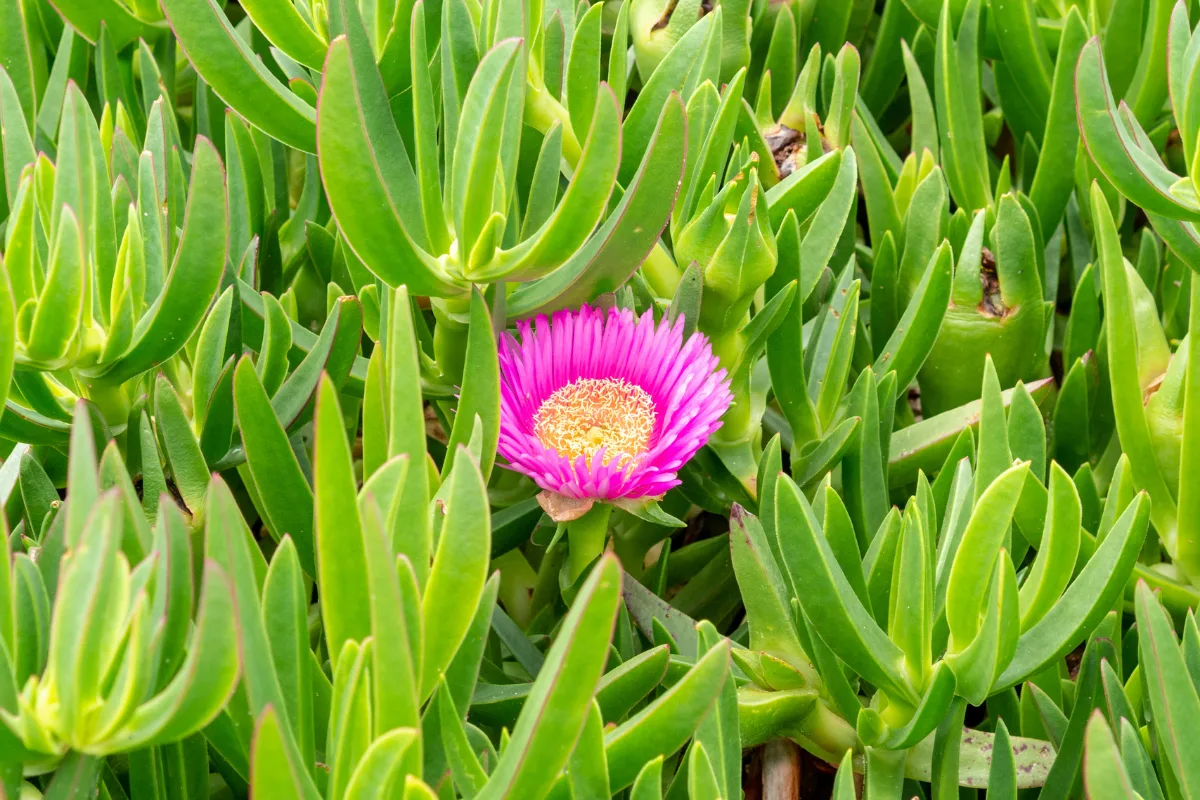
Native pigface makes a low carpet of fleshy leaves and bright pink-purple flowers in hot, exposed sites. It handles salt, wind and dry soil, and the true native species also has edible fruit and leaves.
- Grows well in
- Subtropical, Temperate, Cool / mountains, Arid / inland, Mediterranean
- Lifecycle
- Evergreen creeping native succulent perennial
- Light
- Full sun, Part shade
- Mature size
- Usually 10–20 cm high, spreading 1–2 m or more as runners root.
- Spacing
- About 50–80 cm apart for groundcover, closer if you want faster cover.
- Growth habit
- Prostrate succulent groundcover with thick triangular leaves, rooting runners, large pink-purple flowers and fleshy fruit.
- Native range
- Southern and south-eastern Australia, including Tasmania
- Natural habitat
- Coastal dunes, cliffs, saltmarsh edges and other exposed sandy or saline sites.
When to plant
Subtropical
March–October
Temperate
March–May, August–November
Cool / mountain
September–November
Arid inland
March–May, August–October
Mediterranean
March–May, August–October
Plant through mild weather or whenever you can water new cuttings until rooted. It establishes quickly in warm conditions.
Planting
Plant into free-draining soil or potting mix and water until runners root. It suits exposed coastal positions, banks, pots and hanging baskets.
Position and light
Full sun gives the densest carpet and strongest flowering. Part sun works, but growth becomes looser.
Soil
Sandy or gritty free-draining soil suits it. It tolerates poor soils and coastal conditions better than wet heavy ground.
Watering
Water regularly while new cuttings or plants establish. Once rooted, water only during long dry periods or prolonged heat.
Feeding
Feed very lightly if needed. Native pigface grows in lean coastal soils and does not need heavy fertiliser.
Pruning
Trim old collapsed or woody runners back to healthy green growth. Re-root fresh tips into gaps if an old patch opens in the centre.
Harvest
Correctly identified Carpobrotus rossii has edible fruit and fleshy leaves. Only harvest plants you can identify confidently, because introduced pigface species and hybrids can look very similar.
Propagation
Take stem cuttings or pin runners onto soil until they root, then separate them. Seed can also be used.
Common problems
Rot in poorly drained soil, scale or mealybugs and centre dieback in old mats can occur. The biggest identification issue is confusing native C. rossii with introduced Carpobrotus species or hybrids.
Safety notes
Only eat pigface after confident species identification. Buy from a native plant specialist rather than collecting from coastal vegetation.
Worth knowing
Native pigface is Carpobrotus rossii. South African Carpobrotus edulis looks similar and can hybridise with it, so a nursery label is useful if you want the Australian species.
Grow Native pigface with Brancho
Add it to My Garden and Brancho works out what it needs next, timed for your climate.
How it grows around Australia
Growing this too? Share what you've noticed in your garden.
Grow a Little Wild
New plants to try, useful growing tips and a few garden jobs based on what you grow.