
Plant profile
Paper daisy
Rhodanthe chlorocephala (Turcz.) Paul G.Wilson
Also known as Rhodanthe chlorocephala, Pink paper daisy, Pink everlasting, Paper everlasting, Rhodanthe chlorocephala subsp. rosea, Helipterum roseum, Everlasting daisy.
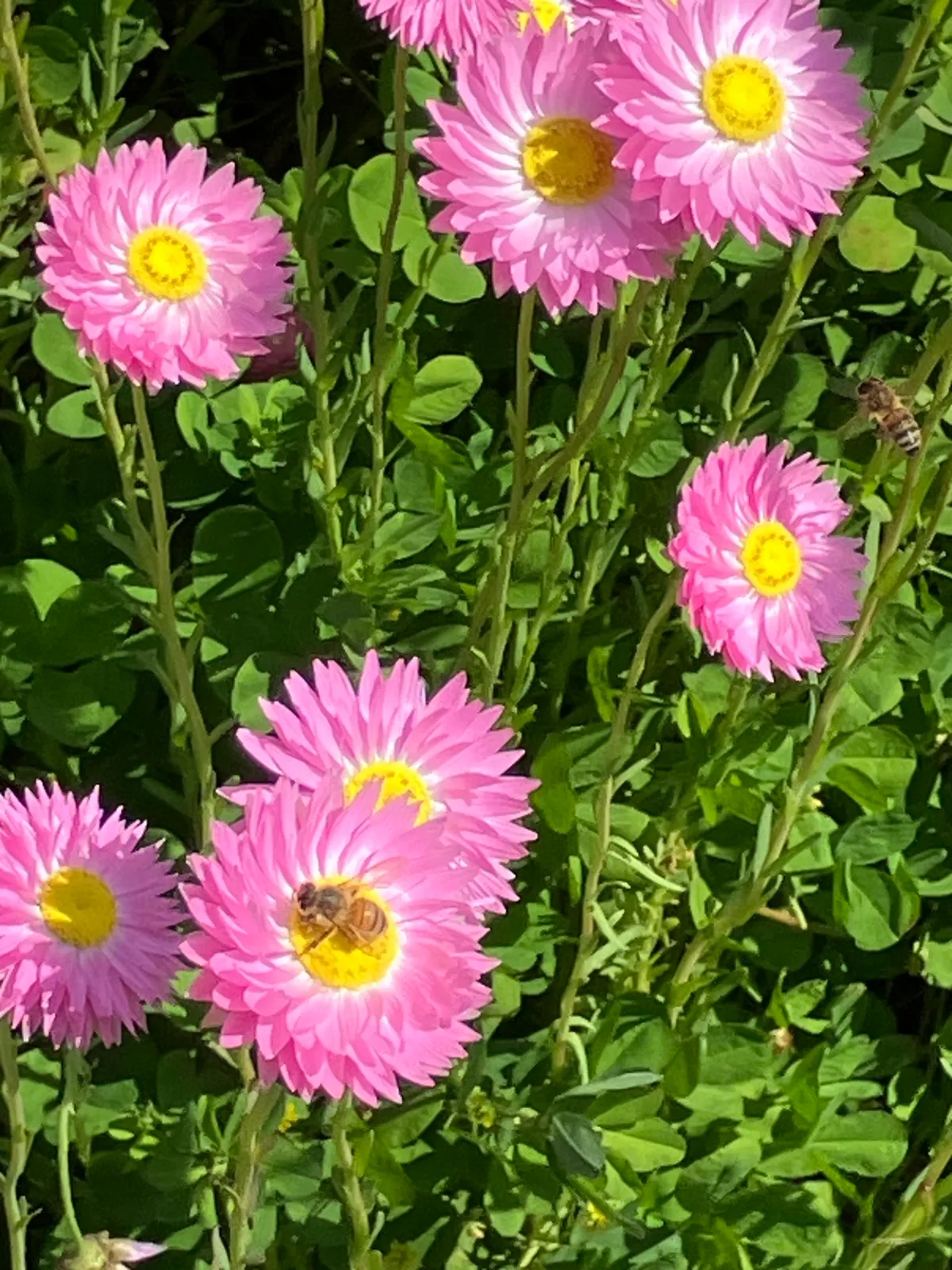
Pink paper daisies can fill a sunny patch with beautiful spring flowers! Grow the pink and white everlastings from seed, pick bunches for drying and save some seed for next year. They're gorgeous in mass plantings, and you don't need a huge garden to enjoy them.
 By Elle · Published
- Grows well in
- Mediterranean, Temperate, Cool / mountains, Arid / inland
- Lifecycle
- Annual wildflower
- Light
- Full sun
- Mature size
- Commonly about 15–50 cm tall, depending on subspecies, conditions and seed selection; low spreading patches in mass sowings.
- Spacing
- Thin young seedlings to roughly 10–20 cm apart for an airy meadow-style display.
- Growth habit
- Short-lived annual herb with fine stems, narrow leaves and many upright flowerheads surrounded by white, pink to rose-crimson papery bracts.
- Native range
- Western Australia and South Australia. The familiar pink-flowering subspecies *rosea* is native to Western Australia.
- Natural habitat
- Open sandy plains, grassland and woodland. The pink-and-white subspecies *rosea* grows across Western Australia's sandplains, from near Perth towards Shark Bay and inland, where winter rain brings spring wildflower displays.
When to plant
Temperate
August–October
Cool / mountain
September–November
Arid inland
March–June
Mediterranean
April–June
Planting
Sow paper daisies directly into a sunny garden bed in autumn. In Western Australia, May is a great time to start. Prepare a fine seedbed, scatter the seed and cover it very lightly with soil. On Gardening Australia, Josh Byrne sowed pink paper daisies along his sunny Perth verge. He mixed the fluffy seed with vermiculite to spread it more evenly, using around 1 g of seed per square metre. You can try the same method in a garden bed or a wide pot. In areas with hard frosts, wait until spring to sow.
Position and light
Give paper daisies plenty of sunshine. You'll get the best flowers in full sun, although they can also grow in light shade. The flowers have a lovely habit of opening in sunshine and closing at night or during cloudy, rainy weather. Their colourful papery bracts fold around the little flowers in the centre. In warm, humid parts of Australia, I'd try growing them through the cooler months. They're particularly beautiful in temperate and Mediterranean gardens, where the plants grow through winter and flower in spring.
Soil
Paper daisies love sandy or light loamy soil with good drainage. Rake away thick mulch before sowing so the little seeds can make contact with the soil. If you've got heavy clay, try a raised bed or a wide pot filled with a good-quality native potting mix. You want the seeds to germinate easily and the young roots to grow through the soil without sitting in water.
Watering
Keep the soil lightly moist while your seeds germinate. Use a gentle spray so you don't wash them away. Once the seedlings are growing, winter rain may provide much of their water. Give them a good drink when the soil starts drying out, especially while they're developing new stems. At the University of Western Australia, Julie Plummer and her colleagues found that well-watered pink paper daisies grew more flowering stems and produced more seed. It's a good reason to keep an eye on watering while your plants are young.
Feeding
At Kings Park in Perth, the gardeners use a three- to four-month slow-release native fertiliser when they sow paper daisies. They also give the plants liquid fertiliser until flowering begins. For a small home garden, I'd start with a light application of native fertiliser at sowing. You can give the growing plants another feed if they're looking pale or growing slowly.
Pruning
You can pinch out the growing tips of young plants to encourage more branches and flowers. This is especially useful if you're growing a small patch and want plenty of stems for picking. Snip off finished flowers to encourage another flush. Leave some of the best flowerheads to produce seed for next season.

Practical uses
Dried flower arrangements: Grow a few extra plants for bouquets, wreaths and floral crafts. Pick the flowers early enough for drying and keep your finished bunches away from strong sunlight.
Fresh cut flowers: You can pick paper daisies for fresh arrangements too. Cut the stems while the heads are still fresh and opening, and put them into water straight away.
Flowering displays: Sow a broad sweep in a sunny border, along a garden path or in a large pot. Pink, crimson and white flowers look beautiful together, and a mass planting gives you plenty to pick while leaving flowers for visiting insects.

Permaculture uses
Paper daisies are a lovely seasonal groundcover for open, sunny areas. You can sow them between young native shrubs while the permanent plants are still small. As the seedlings fill in, they cover some of the bare soil and give you a beautiful spring display.
Try a patch near your veggie beds or along a sunny orchard edge. The flowers give visiting insects somewhere to forage, and you can enjoy cut flowers from the same planting.
Save some seed to sow the following season. Once the display finishes, add the healthy stems to your compost and use that garden space for your next seasonal planting.

Wildlife and pollinators
At Kings Park in Perth, bees and other pollinating insects visit the pink paper-daisy meadows. Look closely at the yellow or dark centres: each one is made up of many tiny flowers. Visit Perenjori's wildflower notes describe native bees, hoverflies and small beetles visiting the flowerheads. Grasshoppers visit them too.
There's a fascinating twist. In Western Australia, Beng Tan and Jonathan Lester described tiny thrips foraging for pollen on pink paper daisies. They also caught paper-daisy pollen drifting on the breeze, suggesting that wind can help pollen travel between flowers. If you're saving seed, grow a generous patch with plenty of flowers together.
Harvest
Paper daisies make gorgeous dried flowers! For neat, compact dried heads, pick the stems when the papery bracts are just starting to open, before the little flowers in the centre are fully open. Tie the stems in small bunches and hang them upside down somewhere dry, shady and airy. Commercial grower Lucinda's Everlastings recommends allowing one to three weeks for drying. Keep your finished arrangements out of direct sunlight to help preserve their colour.
Propagation
Paper daisies grow readily from seed. You can sow directly into the garden or start them in trays and transplant the seedlings when they're about 2–3 cm tall. Seeds generally germinate within 7–21 days in suitable conditions. If you want a longer flowering display, try sowing small patches a few weeks apart. To save seed, leave some flowers on the plants until the centres have dried. Rub the mature seedheads into a paper bag and store the seed somewhere cool and dry. Collect them before the fluffy seeds blow away.
Common problems
Snails and slugs: Check young seedlings, especially after rain. They can eat a lot of little plants before your flower patch gets established. Stem rot in humid conditions: Queensland's wildflower-growing guide identifies Sclerotium rolfsii as a particular problem for pink paper daisies in wet coastal districts. Try growing them during the cooler season in a sunny, well-draining bed or pot, with room for air to move between the stems. Browsing animals: Kangaroos and rabbits can damage paper daisies. If either visits your garden, protect the young plants while they establish.
Companion and understory planting
Paper daisies look beautiful with other native annual flowers. At the Australian National Botanic Gardens in Canberra, gardeners created a spring display of 12,000 daisies, mixing pink paper daisies with yellow Rhodanthe humboldtiana, Schoenia filifolia subsp. subulifolia and purple Swan River daisies (Brachyscome iberidifolia).
That's a gorgeous combination to try in a sunny wildflower bed. I'd sow the colours in little drifts so they grow through each other.
You can also scatter paper daisies in open spaces between kangaroo paws, native grasses and small shrubs. Keep some bare soil available for germination and make sure taller plants won't shade the seedlings.
Tradition and history
Pink and white paper daisies have quite a history! They were first grown in England in 1838. Plant collector James Drummond gathered more seed in Western Australia in 1853, and it was grown at London's Royal Botanic Gardens, Kew, the following year.
By 1864, the pink everlasting appeared in Australian seed catalogues under its old botanical name, Acroclinium roseum. The Australian Daisy Study Group traces this history in Everlasting Daisies of Australia. By the late nineteenth century, gardeners were growing everlastings for dried bouquets and other floral decorations.
In Perth, the Kings Park everlasting meadows have become a much-loved spring display of pink and white flowers.
Growth and roots
Pink paper daisies generally grow around 15–50 cm tall, with narrow leaves and lots of slender flowering stems. They're annuals, growing from seed, flowering and setting new seed in one growing season.
These are small, soft-stemmed plants with a non-woody root system. I'd happily grow them along paths, beside sound retaining walls or near a fence. Their roots are unlikely to lift paving or damage sound foundations. They can also grow near a pool if there's enough sun and a suitable patch of soil. Give them space above ground so you can reach the flowers for picking.
Near septic systems: I'd grow them around the edges of a septic area, keeping tank lids and inspection points clear. For planting directly over pipes or absorption trenches, follow your system's approved planting instructions. They have much smaller roots than trees or large shrubs, but septic layouts and planting rules vary.
Paper daisies can also self-sow into neighbouring beds and gaps around paving. Collect the seedheads before the fluffy seeds scatter if you want to keep the flowers in one area.
References
- Rhodanthe chlorocephala subsp. rosea — Kings Park WA, pink paper daisy
- Rhodanthe chlorocephala — Kew Plants of the World Online
- Rhodanthe chlorocephala subsp. rosea — Kew taxonomy
- Rhodanthe chlorocephala subsp. chlorocephala — Kew taxonomy
- Lucinda's Everlastings — Rhodanthe chlorocephala cultivation and dried flowers
- Josh Byrne, Gardening Australia (2026) — Flowering Natives, paper-daisy direct sowing
- Greg Keighery (2013) — Rhodanthe chlorocephala subsp. rosea, tentative naturalisation records
- Diana Richards — Rhodanthe chlorocephala, Australian National Botanic Gardens
- Visit Perenjori — Everlastings, ecology and insect visitors
- Beng Tan and Jonathan Lester (2004) — Pink Everlasting Daisy: Is pollination wind-assisted?
- Australian National Botanic Gardens — Spring daisy display in Canberra
- Australian Daisy Study Group (2002) — Everlasting Daisies of Australia
- Australian Flora Foundation — Julie Plummer, David Turner and D. Cheongsaat, paper daisy seed research
- Queensland wildflower-growing guide — Rhodanthe disease risk in wet coastal districts
- Lucinda's Everlastings — Rhodanthe chlorocephala in the cut flower industry
Featured In
Grow Paper daisy with Brancho
Add it to My Garden and Brancho works out what it needs next, timed for your climate.
How it grows around Australia
Growing this too? Share what you've noticed in your garden.
Updates appear in My Brancho. Email alerts are not available yet.
Grow a Little Wild
New plants to try, useful growing tips and a few garden jobs based on what you grow.