
Plant profile
Pincushion hakea
Hakea laurina R.Br.
Also known as Pin-cushion hakea, Pincushion hakea, Hakea laurina, Pincushion tree.
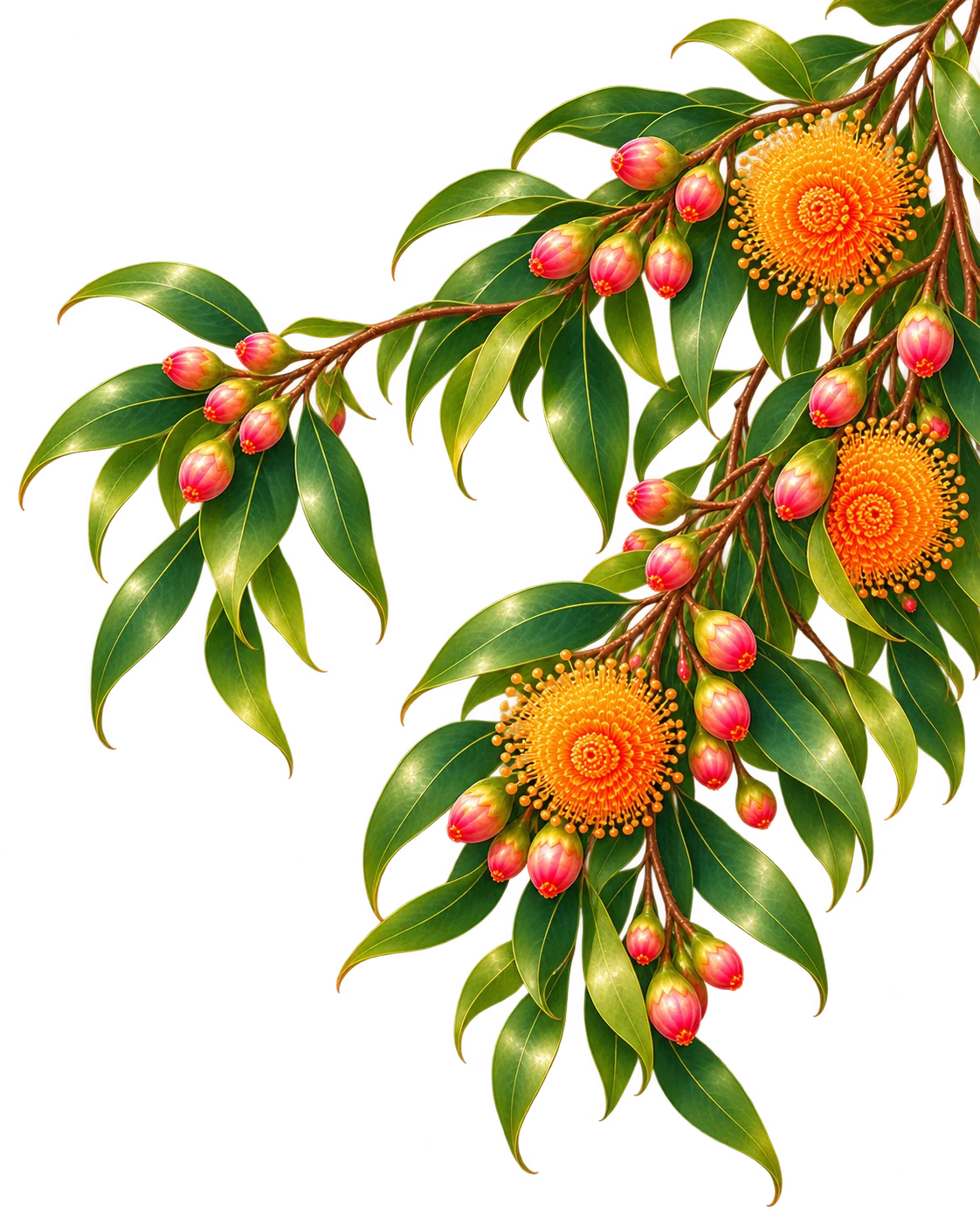
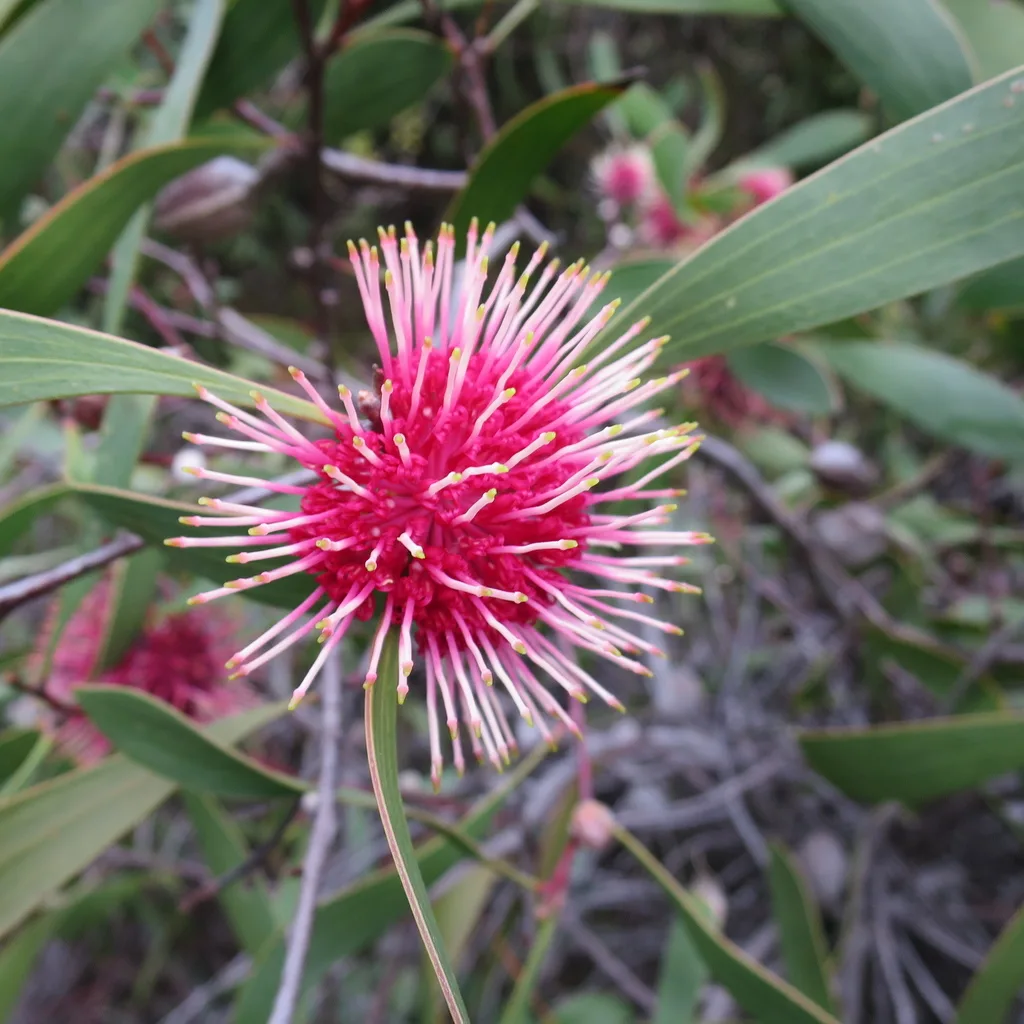
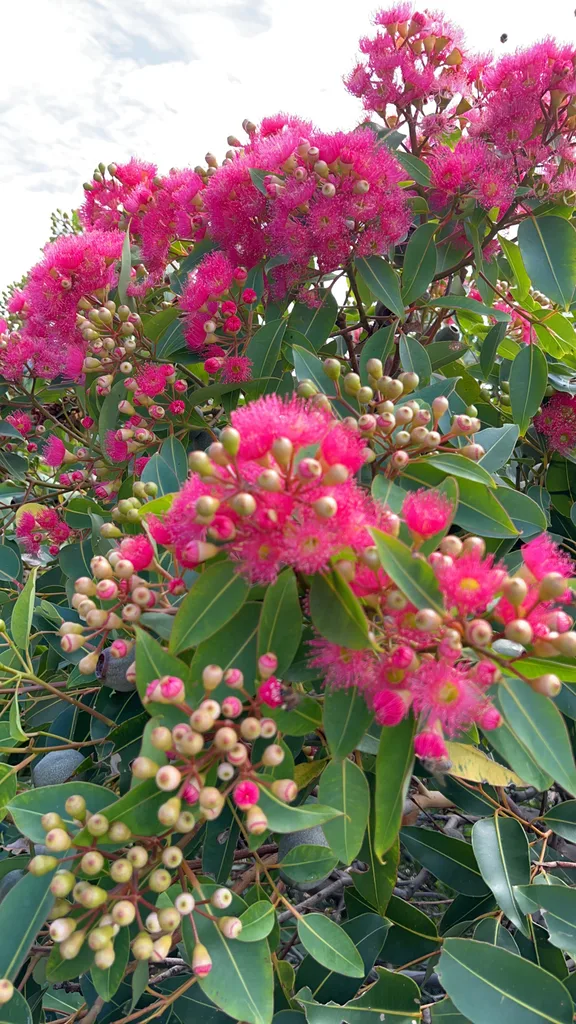
Pincushion hakea puts on a beautiful show of red and cream flowers through autumn and winter. Grow it in full sun and you can pick flowering branches for the vase while honeyeaters visit the blooms. In south-western WA, Carnaby's black-cockatoos also feed on its flowers and seeds.
 By Elle · Updated
- Grows well in
- Mediterranean, Temperate, Cool / mountains
- Lifecycle
- Evergreen woody shrub or small tree
- Light
- Full sun, Part shade
- Mature size
- Usually 3–6 m tall and 2–4 m wide; some plants grow larger.
- Spacing
- Allow about 3–4 m between free-growing shrubs, adjusting for their mature width.
- Growth habit
- Rounded evergreen shrub or small tree with leathery leaves, flowers on older branches and woody seed pods.
- Native range
- Native to south-western and southern Western Australia, from around Wagin and Denmark east towards Esperance and Israelite Bay.
- Natural habitat
- You'll find pincushion hakea growing in mallee heath and shrubland in southern Western Australia, often in sand or sandy clay. Much of its natural range has cool, wetter winters and dry summers.
When to plant
Temperate
March–May
Cool / mountain
September–November
Mediterranean
March–June
Planting
Give pincushion hakea a sunny position with room to grow into a broad shrub or small tree. In areas with mild, wet winters, autumn is a good time to plant. Where winters are frosty, choose spring so the roots can establish before the cold returns. Set the plant at the same depth it was in its nursery pot, water well and add mulch around the base, keeping it clear of the trunk. Some well-grown plants start leaning when they reach around 1.5 m. If yours rocks in the wind, support it with a loose stake and check the ties as it grows. An exposed site isn't the best place for it.
Position and light
Grow pincushion hakea in full sun for the best flowers and a strong, rounded shape. At the Australian National Botanic Gardens in Canberra, plants in full sun flowered every year, while some grown in light shade were still thin and flowering poorly after 20 years. It grows well in Mediterranean and temperate gardens and can handle moderate frost once established. Protect small plants and fresh autumn growth from hard frosts. If you're in a hot or humid climate, grow it in an airy position in well-draining soil.
Soil
Pincushion hakea loves sandy loam, but you can also grow it in clay loam if the water drains away well. If your clay stays wet for days after rain, plant on a broad raised mound. Add a layer of leaf mulch to help the soil hold moisture while the young shrub gets established.
Watering
Water a new pincushion hakea regularly through its first warm season. Check beneath the mulch, and give it a thorough drink when the soil around the roots begins to dry. Established plants handle dry weather well and usually need only occasional extra water during prolonged heat. On clay soils, let the ground drain between waterings.
Feeding
You can usually grow pincushion hakea without much fertiliser. If yours needs a boost, use a small amount of slow-release food made for phosphorus-sensitive Australian natives and follow the packet directions. Like many members of the Proteaceae family, hakeas can be damaged by too much phosphorus. Skip heavy manure and ordinary high-phosphorus fertilisers.
Pruning
You can leave pincushion hakea to grow into its natural rounded shape or lightly trim young leafy tips to encourage more branches. After flowering, remove dead wood and shorten shoots that are getting in the way. Make your cuts above healthy leafy growth so fresh shoots can develop. The flowerheads form along older branches, so keep plenty of healthy flowering wood for next season.

Practical uses
Winter flowers for the house: Those red and cream pincushions look beautiful beside the hakea's long grey-green leaves. A mature shrub can provide short stems for a small vase or longer sprays for a big arrangement.
A flowering screen: Plant several along a sunny boundary for a loose evergreen screen, or grow one as a feature tree where the branches have room to spread. Lightly trimming the leafy tips of young plants encourages a fuller shape, and the canopy gives some shade as it matures.

Permaculture uses
Cool-season flowers for wildlife: Pincushion hakea flowers through autumn and winter, bringing honeyeaters and visiting bees into the garden. Grow it with other locally suitable natives that flower at different times of year, so nectar-feeding birds have flowers to visit across the seasons.
Shelter in a mixed planting: Pincushion hakea can add an evergreen layer to a mixed windbreak, but grow it behind tougher shrubs that take the strongest wind. Its broad crown can become top-heavy where the roots don't anchor firmly. Give it a sunny position in the second row, with room for the branches to spread.

Wildlife and pollinators
Carnaby's black-cockatoos: In south-western WA, these black-cockatoos eat both the flowers and seeds of pincushion hakea.
Honeyeaters and bees: Warren and Gloria Sheather have watched honeyeaters visiting the flowers in their garden near Armidale, NSW. Bees also visit the pincushion flowerheads.
Case moths: You might find a small cone-shaped case attached to a hakea leaf. Inside is a Hyalarcta case moth caterpillar, feeding on the leaves and carrying a case covered with hairs and scraps of leaf.
Harvest
Pincushion hakea makes gorgeous winter cut flowers! Pick a branch while some of the little flowers in each red and cream pincushion are still opening. Cut with secateurs and leave green leaves below the cut so the plant can grow fresh shoots. For seed, wait until the woody pods are mature before picking them.
Propagation
Leave your collected seed pods somewhere warm and dry until they split. Each pod holds two winged seeds. Sow the seeds shallowly in a well-draining native seed-raising mix and keep it lightly moist while they germinate. Pincushion hakea seed generally germinates without special treatment. Cuttings are possible too, although seed is usually easier for home gardeners.
Common problems
Branches dying back: Root rot has caused branch dieback in some cultivated pincushion hakeas. Check drainage and remove dead branches. Some affected plants have recovered when the ground dried out. Frost-damaged tips: New autumn growth can be more tender than older leaves. Protect small plants during particularly cold nights while they're establishing.
Worth knowing
Each pincushion flowerhead contains roughly 70–170 tiny flowers. The long cream-coloured styles look like pins sticking out from a red cushion. Tiny buds can begin forming in December, several months before the autumn and winter flower display. Have a look along the older branches as they develop.
Companion and understory planting
Pincushion hakea looks beautiful with smaller banksias, emu bushes and other Australian shrubs that enjoy sunshine and well-draining soil. Keep the lower plants far enough from the trunk that they aren't completely shaded as the hakea grows.
Landscape designer Kath Gadd has used pincushion hakea in a wildlife planting with sea urchin hakea (Hakea petiolaris), Banksia blechnifolia and emu bushes (Eremophila). It's a combination you can adapt to your own climate and soil, choosing species that suit your district. In Tasmania, Gemma Boyle also grows pincushion hakea in her native garden at Blackmans Bay, among banksias, correas and grevilleas.
Tradition and history
In south-western Western Australia, pincushion hakea is known as Koordjit in Wudjari and Kordjit or Kodjet in Noongar sources.
Botanists collected an early specimen in 1824 in the area now known as Cape Arid National Park. Robert Brown formally named it Hakea laurina in 1830, and gardeners in Europe were growing it around that time. Its extraordinary flowers later became popular in gardens as far away as the French Riviera and the United States.
Growth and roots
In their garden near Armidale, Warren and Gloria Sheather's pincushion hakeas reached about 3 m tall in eight years. Mature plants can spread 2–4 m across, so allow plenty of room beside paths and fences for the flowering branches.
Its roots don't always anchor the heavy crown firmly, especially in exposed positions.
Bushfire generally kills a mature pincushion hakea, but its woody pods can open afterwards and release winged seeds. New hakeas may grow where the old shrub stood.
References
- Hakea laurina — Australian National Botanic Gardens
- Hakea laurina — Australian Plants Society NSW
- Hakea laurina — Kew Plants of the World Online
- Hakea propagation — Australian Native Plants Society
- Hakea laurina — WA FloraBase
- Weeds of Australia — Hakea laurina
- Greg Keighery (2013) — Weedy native plants in WA
- VicFlora — Hakea laurina adventive records
- Valentine & Stock (2008) — Carnaby's Black-Cockatoo food resources
- Hakea laurina — Kings Park, WA
- Pincushion Hakea — Plant Selector+ South Australia
- Gemma's Native Garden — Gardening Australia
- Kath Gadd's native wildlife garden — Better Homes & Gardens
- Hakea laurina — Atlas of Living Australia traditional names
- Pincushion Hakea — ReWild Perth, Kodjet
- Hyalarcta case moth — Herbison-Evans & Crossley
- Hakea — PlantNET Royal Botanic Gardens Sydney
- WA DBCA — Management of Commercial Harvesting of Flora Appendix 4
- IUCN Red List — Hakea laurina, Vulnerable (Haegi & Keighery, 2020)
Featured In
Grow Pincushion hakea with Brancho
Add it to My Garden and Brancho works out what it needs next, timed for your climate.
How it grows around Australia
Growing this too? Share what you've noticed in your garden.
Updates appear in My Brancho. Email alerts are not available yet.
Grow a Little Wild
New plants to try, useful growing tips and a few garden jobs based on what you grow.