


Plant profile
NSW waratah
Telopea speciosissima (Sm.) R.Br.
Also known as Waratah, New South Wales waratah, Sydney waratah.
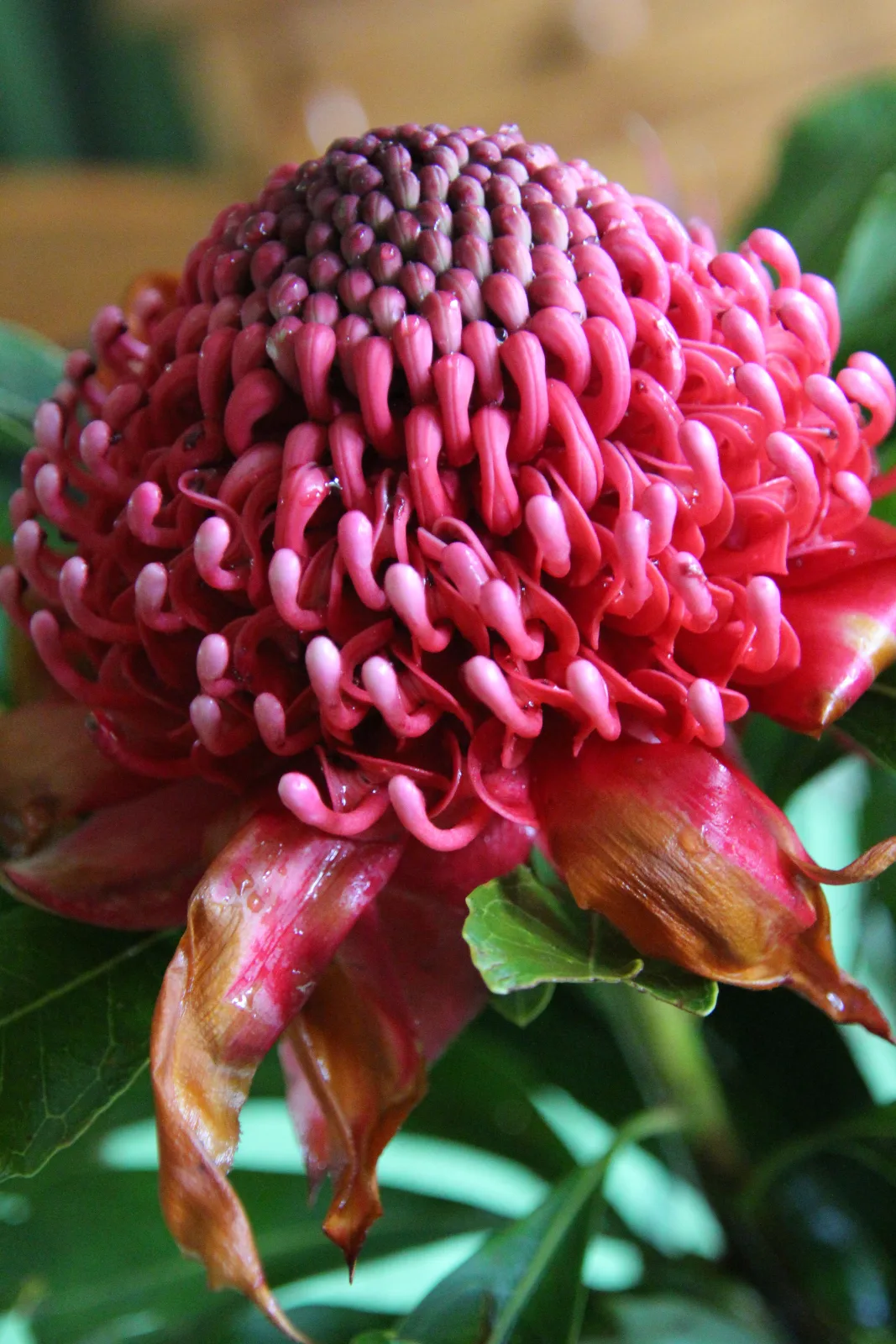
NSW waratah is spectacular in spring, with huge red flowerheads that you can cut for the vase. Give it morning sun, good soil and plenty of room for its roots. You'll love the flowers, and honeyeaters love visiting them too.
 By Elle · Published
- Grows well in
- Temperate, Cool / mountains, Subtropical
- Lifecycle
- Evergreen lignotuber-forming shrub
- Light
- Part shade, Full sun
- Mature size
- Usually 2–4 m tall, about 1.5–2.5 m wide.
- Spacing
- Minimum 1.5 m between plants; leave additional space around tree roots.
- Growth habit
- Long-lived woody shrub, upright branching stems and large terminal flowerheads; basal lignotuber resprouts after fire.
- Native range
- Eastern NSW, chiefly the Greater Sydney sandstone region, Blue Mountains, Southern Highlands, nearby coast and Watagan Mountains.
- Natural habitat
- Sandstone heath, open eucalypt woodland, dry sclerophyll forest and creekside margins, especially on sandy, well-draining substrates.
When to plant
Subtropical
March–May
Temperate
March–May
Cool / mountain
September–November
Planting
If you'd love a waratah in your garden, start by finding a spot with morning sun, some afternoon shade and good drainage. Botanic Gardens of Sydney recommends leaving at least 1.5 m between plants. I'd give one even more room if you've got the space. Plant in autumn in mild areas, or spring after severe frost. Set the root ball at the same level as the nursery pot and water well. If you've got heavy clay, try a broad raised bed or a really big pot, such as a half wine barrel, filled with a well-draining native mix.
Position and light
NSW waratah loves bright morning sun with a little protection from the hottest afternoon light. That's a lovely combination in a temperate garden, especially with an open tree canopy nearby that doesn't crowd its roots. It naturally grows in NSW sandstone country, from open woodland to heath. You can grow it in full sun in a cooler garden if the roots stay moist, but deep shade usually means fewer flowers. It's not a reliable choice for a hot, wet tropical garden.
Soil
Waratah loves good sandy loam with plenty of air around the roots. At Bilpin in the Blue Mountains, Max Hewett described healthy waratahs growing in deep basalt-derived loam. Mulch with leaves or bark to help the soil hold moisture. Keep the mulch a little away from the stem base. If rain sits in your clay soil for hours, I'd make a raised bed before planting.
Watering
Keep a newly planted waratah watered through its first couple of summers. Give it a deep drink whenever the soil starts drying, and don't let a young root ball dry out completely. Once established, keep an eye on it through very hot weather and while flower buds are developing. In a large pot you'll need to check more often, particularly on windy days.
Feeding
Give it a light application of slow-release fertiliser made for phosphorus-sensitive Australian natives when fresh growth starts after flowering. Waratah belongs to the Proteaceae family, so ordinary high-phosphorus fertiliser and manure-rich products aren't suitable. A layer of leaf litter mulch helps maintain the soil beneath the shrub without needing lots of extra feeding.
Pruning
Waratahs respond beautifully to pruning after flowering. Cut the spent flowering stems well back on a healthy established shrub, leaving vigorous shoots to grow the next season's display. Botanic Gardens of Sydney recommends strong pruning of mature cultivated plants to encourage more flowers. For a young plant that's still establishing, I'd start with smaller cuts. Removing old bare canes is an option once the plant has a strong base and plenty of fresh shoots.

Practical uses
Cut flowers and dried arrangements
Waratahs make gorgeous cut flowers! One big red flowerhead can be the centre of an arrangement, and picking flowering stems also helps prune the shrub for next year. For a dried display, Botanic Gardens of Sydney recommends hanging cut flowers upside down in a dark, airy spot. Try them in wreaths or mixed with dried native foliage.
A spring feature or loose flowering screen
Plant a waratah where you can enjoy the flowers from the house or a garden path. Several shrubs can make a loose flowering screen, with plenty of room between them for air and for each plant's roots.
Different flower colours
Most NSW waratahs are red, but there are named selections with different colours. 'Wirrimbirra White' has creamy yellow-green flowers. Look for a named cutting-grown plant if you want a particular colour; seed-grown plants vary, and some nursery waratahs are hybrids with other Telopea species.

Permaculture uses
Spring nectar for wildlife
NSW waratah gives you a spectacular spring-flowering layer in a wildlife-friendly garden. Honeyeaters visit the big nectar-rich flowerheads, and eastern pygmy possums are also known to forage among waratah flowers. Combine it with other locally native shrubs that flower earlier and later, so visiting wildlife can find food beyond the waratah season.
Flowers to cut, flowers to leave
Waratahs are handy in a productive ornamental garden because picking the flowers doubles as pruning. Cut some for the vase and leave others for nectar-feeding birds and seed. After the display, prune established shrubs to encourage leafy new shoots that can flower the following year. Chip healthy woody prunings for mulch or add smaller pieces to compost.
Growing your own seed
At Barren Grounds Nature Reserve, near Wollongong, Dr Robert Whelan and Ross Goldingay found that waratahs needed pollen from genetically different plants to set seed. If you want to collect seed from your own garden, grow two or more genetically different waratahs. Two cuttings from the same original plant won't provide that diversity.
Bushland regeneration
In its natural NSW sandstone forests, waratah grows among other native shrubs and can regenerate after bushfire from the woody lignotuber at its base. Where it belongs to the local vegetation community, you can include locally sourced waratahs in mixed bushland restoration plantings. Choose companion species from the same habitat and leave room for each shrub to mature.

Wildlife and pollinators
Honeyeaters
NSW waratahs provide plenty of nectar for birds. At Barren Grounds Nature Reserve near Wollongong, Dr Robert Whelan and Ross Goldingay watched New Holland honeyeaters visiting the flowerheads regularly. Interestingly, the birds carried relatively little waratah pollen, so frequent feeding didn't always mean effective pollination.
The Australian Native Plants Society's Birds and Native Plants Study Group also names little wattlebirds, eastern spinebills and white-cheeked honeyeaters visiting NSW waratah flowers in the Sydney region. Leave some flowerheads for the birds when you're cutting stems for the house.
Eastern pygmy possums
Here's a lovely connection! Eastern pygmy possums (Cercartetus nanus) also visit waratah flowers. The State Library of NSW identifies them as waratah flower visitors, while Whelan and Goldingay recorded marsupials at the flowerheads in their Barren Grounds research. These tiny nocturnal possums are nectar-and-pollen feeders, although their role in pollinating waratah specifically hasn't been established. In suitable habitat, a mix of flowering local shrubs is far more useful to them than a single plant.
Waratah bud and stem borer
Waratah is also a food plant for the caterpillars of the moth Xylorycta luteotactella. NSW Department of Primary Industries researchers Victor Rajakulendran and Bettina Gollnow described how larvae tunnel into young stems and developing flower buds. You may notice wilted shoots or buds that fail to develop. It's a genuine wildlife relationship, even though growers don't welcome damage to their flowers.
Other insects
The Aboriginal-owned IndigiGrow nursery at La Perouse lists native bees and other insects among visitors to NSW waratah. IndigiGrow also lists butterflies visiting waratah flowers.
Harvest
Waratahs are magnificent cut flowers! Pick a head when it's well coloured and the little flowers are starting to open. Botanic Gardens of Sydney recommends cutting about 20–30 cm below the flowerhead and removing the lower leaves before putting it in water. Change the water regularly and you may enjoy the flowers indoors for two or even three weeks. Leave some heads on the shrub for visiting birds and developing seed.
Propagation
You can grow the straight NSW waratah from fresh seed. Sow the winged seed shallowly into a clean, well-draining mix and keep it lightly moist. The Australian National Botanic Gardens reports germination in around two to three weeks with fresh seed. Pot seedlings on while small so their young roots have room. To keep a particular colour, like 'Wirrimbirra White', grow it from cuttings or buy a nursery-propagated plant. Take healthy spring or early-summer shoots about 15–20 cm long, strip off the lower leaves and root them in a very open propagation mix. Seedlings may take about five years to flower; cutting-grown plants can bloom sooner.
Common problems
A waratah suddenly wilting: Check the roots and soil moisture. Poor drainage and Phytophthora root disease are serious problems, especially when a plant looks dry but the root area is wet. Few flowerheads: Look for deep shade, nearby tree roots or pruning done long after the spring flowering period. Brown flower bracts: Strong sun can damage the coloured outer parts of developing flowers. Try a little afternoon protection in very exposed gardens. Wilted young shoots or damaged flower buds: Check for the waratah bud and stem borer (Xylorycta luteotactella). Caterpillars can tunnel into young stems and buds. Remove badly affected material, and check fresh growth for further damage. Seedlings collapsing: Use clean pots, fresh propagation mix and enough airflow to reduce fungal damping off.
Companion and understory planting
A real waratah and banksia garden in Sydney
Jim Hoffman from North Carlingford has heavy clay soil, so he built a broad raised mound about 3 × 5 m and 50 cm high. He mixed washed river sand with his existing topsoil and planted seven NSW waratahs among small banksias, including Banksia blechnifolia and the cultivars 'Coastal Cushion', 'Honey Pots' and 'Birthday Candles'. He mulched the bed with fallen leaves, including leaves from a nearby Banksia serrata.
Three waratahs survived; others died during drought, and Jim suspected the raised mound had become too dry. If you try his raised-bed approach, keep checking moisture below the mulch through hot weather. Raised sandy beds drain quickly, including during times when a waratah still needs water.
I'd try compact banksias around the edges of a waratah bed, leaving a generous mulched area immediately around the waratah itself. Low native grasses or daisies can also work in the sunny outer spots.
What other growers found
Max Hewett wrote about growing NSW waratahs after talking with Frank Stone of Waratah Park at Bilpin. His established plants produced vigorous new shoots when nearby shrub foliage was cleared and the soil around the plants was loosened. He was working with mature plants that already had lignotubers; prepare good soil before planting a young waratah instead of digging into its roots later.
Tradition and history
The name waratah comes from an Aboriginal language of the Sydney region. Botanic Gardens of Sydney notes that Lieutenant William Dawes recorded the Aboriginal name in his notebooks during the early years of European settlement.
Waratahs feature in Dharawal storytelling, including the story of how the white waratah became red. Historical accounts also describe Aboriginal people using the nectar-rich flowers to make sweet drinks by soaking them in water; the Aboriginal-owned IndigiGrow nursery at La Perouse records this use.
Early European settlers used the flexible young branches for basket making. Botanist Cathy Offord discusses this historical use in her Australian Museum article on waratahs.
NSW waratah became the official floral emblem of New South Wales in 1962. Its flowers have featured in Australian painting, ceramics, jewellery, stained glass and other decorative crafts for generations.
Growth and roots
NSW waratah grows from a woody base called a lignotuber, which contains dormant buds that can produce new stems after bushfire or heavy pruning. This permanent woody structure enlarges as the shrub grows. Waratahs also form fine feeding roots and specialised cluster roots, many short roots together that help collect nutrients from soil.
Researchers Carol Wenzel, A. E. Ashford and Brett Summerell studied bacteria associated with waratah cluster roots and found some capable of dissolving phosphate compounds under laboratory conditions.
Near paths, walls and paving
Give the lignotuber and surrounding roots a generous area of open soil. Keep the woody base away from paving edges and walls so it can develop without being restricted, and allow room to reach the plant for mulching and pruning.
Pipes and septic systems
Keep waratahs clear of septic tanks, absorption trenches and buried services, and leave access for maintenance. Lismore City Council's septic guidance also advises against shrubs over absorption trenches.
Max Hewett's root-zone observations
After speaking with Frank Stone of Waratah Park at Bilpin, Max Hewett tested the effect of loose, crumbly soil around mature waratahs in his garden. After the plants had been established for about two years and formed lignotubers, he cultivated approximately 20 cm deep to a metre from the stems, twice a year. He reported stronger growth and more fresh shoots, and also saw plants improve when overhanging shrubs were cleared away.
For a new planting, the useful lesson is to prepare a generous, well-draining root area and keep other shrubs from shading it.
References
- Wild about Waratahs — Botanic Gardens of Sydney
- NSW Waratah — Australian Plants Society NSW
- Telopea speciosissima and Cultivars — Australian Native Plants Society
- Growing the Sydney Waratah — Max Hewett, Australian Plants
- Growing Waratahs — Australian National Botanic Gardens
- Horticulturist's guide — Botanic Gardens of Sydney
- Telopea speciosissima — Kew Plants of the World Online
- Offord (2004) — Reproductive biology of NSW waratah
- Growing Waratahs — APS NSW members' real garden trials (2025)
- Paul Nixon (2009) — The NSW waratah, Australian Plants
- Pollination in Waratah — Robert Whelan & Ross Goldingay, Australian Flora Foundation
- Birds and Native Plants Study Group — NSW waratah bird visitors, ANPSA Wildlife Bulletin 14
- Wa-ra-ta (Telopea speciosissima) — State Library of NSW, historical waratah exhibition
- NSW Waratah — IndigiGrow, La Perouse
- Waratah (Telopea speciosissima) plant listing — IndigiGrow
- Improved on-farm management of waratah bud and stem borer — Victor Rajakulendran & Bettina Gollnow, NSW DPI (2009)
- Ecology of Sydney Plant Species: Telopea speciosissima — Cunninghamia 6(4)
- Cluster-root bacteria in NSW waratah — Wenzel, Ashford & Summerell (1994)
- Study Groups updates: Summer/Autumn 2026 — Australian Plants Society, experimental waratah graft
- Septic tank and absorption trench system — Lismore City Council
- The Magnificent Waratah — Dr Cathy Offord, Australian Museum
Featured In

Grow NSW waratah with Brancho
Add it to My Garden and Brancho works out what it needs next, timed for your climate.
How it grows around Australia
Growing this too? Share what you've noticed in your garden.
Updates appear in My Brancho. Email alerts are not available yet.
Grow a Little Wild
New plants to try, useful growing tips and a few garden jobs based on what you grow.